
Review · GODAFOSS TOURS
From Akureyri: Godafoss and Lake Myvatn
Iceland packs drama into every mile. This six-hour trip from Akureyri brings together Goðafoss, the pseudo craters at Skútustaðagígar, Dimmuborgir, Grjótagjá, and Hverir in one well-paced day. I like the variety: you see falling water, volcanic rock, a cave, steam, and bubbling mud without changing hotels. I also like the local guides, especially Ingi, Lilja, Graham, and Asta, who have been praised for their stories, local insight, and careful driving. The main drawback is the price, $141 per person, with lunch and the Forest Lagoon charged separately.
This is a strong choice if you want to see the main sights around Lake Mývatn without renting a car or dealing with Icelandic roads in winter. You travel by minibus, receive hotel or harbor pickup, and get a guide who can explain what you are seeing rather than simply pointing at it. Just keep your expectations clear: this is a sightseeing day, not a long soak at a geothermal spa.
In This Review
- The tour at a glance
- Why this Akureyri day trip works so well
- Starting in Akureyri and crossing Eyjafjörður
- Goðafoss: 45 minutes beside the Waterfall of the Gods
- Skútustaðagígar and the curious pseudo craters
- Dimmuborgir: an hour among lava towers and caves
- Grjótagjá: a short cave stop with a big setting
- Hverir: sulphur, steam, and a warning to watch your step
- The optional Forest Lagoon finish
- Winter conditions, clothing, and comfort
- Is $141 good value from Akureyri?
- Who should book this Mývatn tour?
- Should you book it?
- FAQ
- How long is the Goðafoss and Lake Mývatn tour?
- What is included in the tour price?
- Is lunch included?
- Is Forest Lagoon admission included?
- Where does pickup take place?
- How early should I wait for pickup?
- What language is the tour guide?
- What should I bring?
The tour at a glance
- Goðafoss gets 45 minutes, enough time to walk to viewpoints and hear why the waterfall matters in Icelandic history.
- Dimmuborgir receives the longest stop, with about an hour for lava pillars, caves, and troll stories.
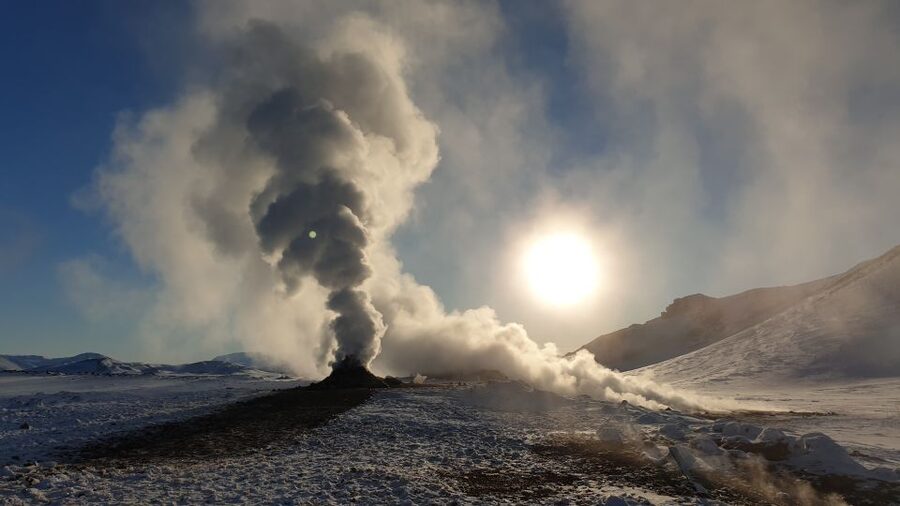
- Hverir is brief but intense, offering bubbling sulphur mud and steaming vents in a compact visit.
- The route works well in winter, when snow, frost, and low sunlight change the look of the volcanic country.
- Lunch is not included, though there is a break with a view toward Dimmuborgir.
- The Forest Lagoon is optional, and its entrance fee is not part of the $141 price.
Why this Akureyri day trip works so well
I like this outing because it gives you a clear picture of northeastern Iceland’s volcanic character in a relatively short time. The stops are not variations on one theme. Goðafoss is all moving water and open views. Dimmuborgir is a maze of hardened lava. Hverir feels active, noisy, and slightly dangerous.
The route also gives you context. A good guide can connect the waterfall to Icelandic history, explain how lava formed Dimmuborgir around 2,500 years ago, and point out how the Krafla eruption of 1984 left fresh volcanic rock around Mývatn. That makes the day more than a sequence of photo stops.
The guides are a major part of the experience. Ingi was praised for humor, geology, local history, and personal stories. Lilja was repeatedly singled out for warmth, folklore, and care for people who needed a little help walking. Graham was valued for his knowledge of the area and his willingness to make extra photo stops when conditions allowed.
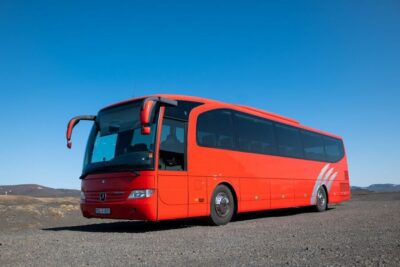
Group size can vary, but some departures have been very small, with only four or five people plus the guide. That makes it easier to ask questions and adjust the pace. A full minibus will feel less personal, and one complaint described a dirty van with poor air conditioning and worn tires. That appears to be an exception within an otherwise strong transport record, but it is fair to keep in mind.
More Lake Myvatn trips:
- Mývatn: Myvatn Nature Baths Admission Ticket
★ 4.5 · 1,562 reviews - From Akureyri: Myvatn Lake, Craters, & Waterfall Tour
★ 4.6 · 793 reviews - Lake Myvatn, Hot-Springs & Godafoss Waterfall Tour from Akureyri
★ 4.5 · 478 reviews
Starting in Akureyri and crossing Eyjafjörður
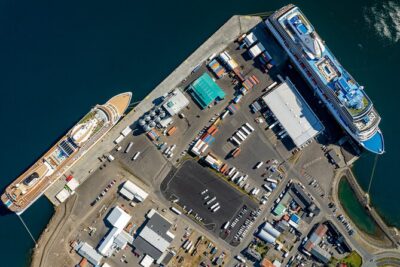
Pickup begins about 15 minutes before departure. You can be collected from a long list of hotels, guesthouses, apartments, the Akureyri harbor cruise terminal, Hof Cultural and Conference Centre, or Akureyri Airport Wetlands.
The first drive takes about 35 minutes. Before reaching Goðafoss, the guide makes a short photo stop with views over Akureyri and Eyjafjörður. This is a useful opening pause. You get your bearings, see the town from above, and begin to understand how closely Akureyri is tied to its fjord.
The exact road can depend on weather and conditions. On one clear day, the guide chose the older road instead of the newer tunnel, giving the group more views. In winter, wind, snow, and short daylight may shape the route and timing. Lilja received special praise for driving carefully in difficult snow conditions, while another guide adjusted the order of stops to make the most of limited light.
Goðafoss: 45 minutes beside the Waterfall of the Gods
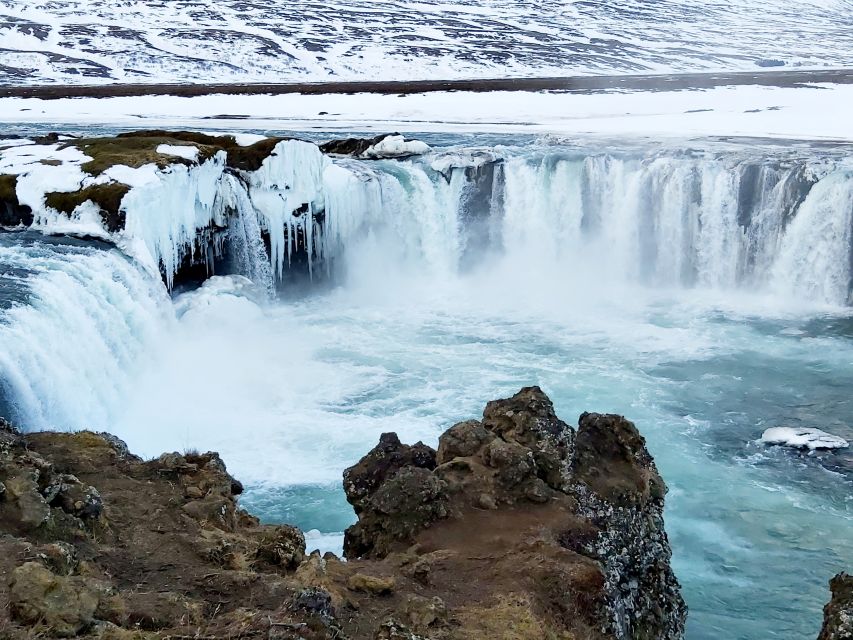
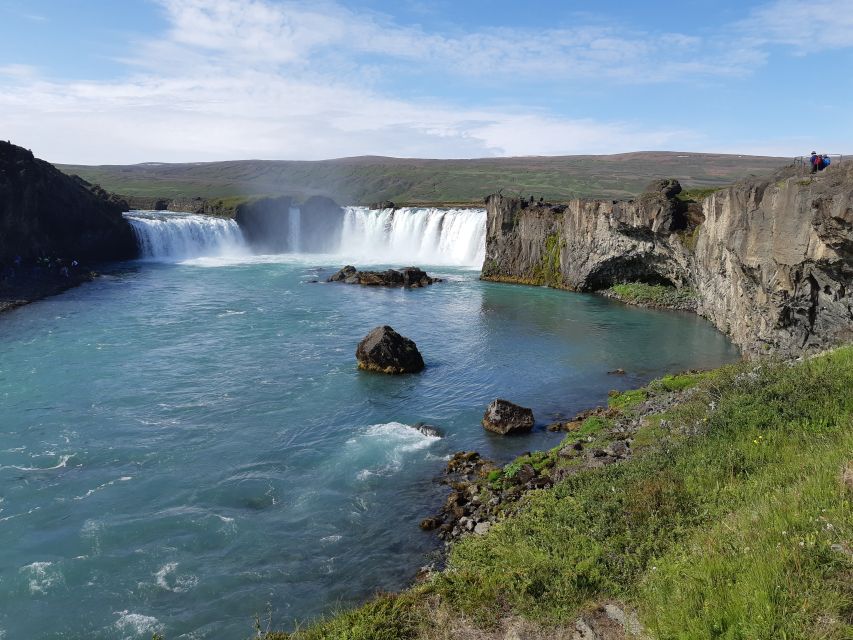
Goðafoss is the first major stop, and it earns the generous 45 minutes. The waterfall spreads across a broad, curved section of the Skjálfandafljót River, with several rocky drops rather than one narrow plunge. You can walk close to the viewing areas, take photographs, and see the water from different angles.
The name means Waterfall of the Gods. Your guide explains the connection to Iceland’s conversion to Christianity, which gives the site a useful human story alongside its physical power. You are not simply looking at water rushing over rock. You are standing at a place tied to a major turning point in Icelandic culture.
Weather changes the mood completely. In summer, the falls have a clean, open setting. In winter, ice, snow, and pale sunlight can make the scene more severe and dramatic. Wear shoes with a firm grip, since paths and viewing areas can be slippery.
Goðafoss was the favorite stop for several people, and I can see why. It is visually immediate, easy to appreciate, and spacious enough to avoid feeling rushed. If waterfall photography is important to you, use this stop well, since later visits are shorter and more focused on geology.
Skútustaðagígar and the curious pseudo craters
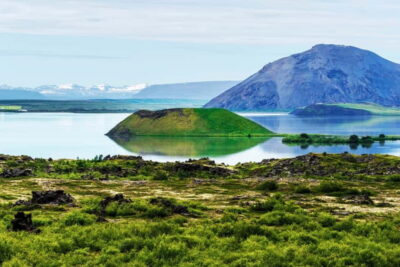
After another drive of about 35 minutes, the minibus reaches Skútustaðagígar for roughly 15 minutes. These are pseudo craters, formed when hot lava met wet ground and steam explosions shaped the surface. They look like volcanic craters, but they were not created by lava rising from a conventional volcanic vent.
Fifteen minutes is enough for a quick walk and photographs, but not for a long circuit. I would treat this as a short introduction to the Mývatn area rather than a full hike. Listen closely to the guide here, because the explanation makes the rounded formations far more interesting than their modest size might suggest.
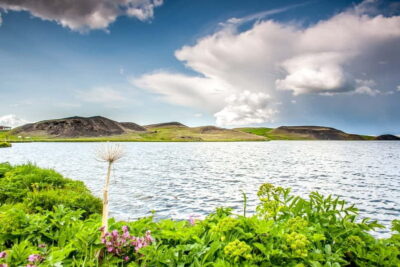
This stop also gives you a first proper sense of the lake region. Mývatn is Iceland’s fourth-largest lake and is surrounded by lava fields, craters, wide views, and bird life. The tour does not spend a long block of time simply sitting beside the water, so the value comes from seeing how the lake and volcanic features fit together.
More Godafoss trips:
- Lake Myvatn Day Tour and Godafoss Waterfall for Cruise Ships from Akureyri Port
★ 4.5 · 473 reviews - Goðafoss Waterfall Tour from Akureyri Port
★ 4.7 · 383 reviews - Akureyri Port: Lake Mývatn and Godafoss Waterfall Tour
★ 4.8 · 334 reviews - Goðafoss Waterfall from Akureyri Port
★ 5.0 · 279 reviews
Dimmuborgir: an hour among lava towers and caves
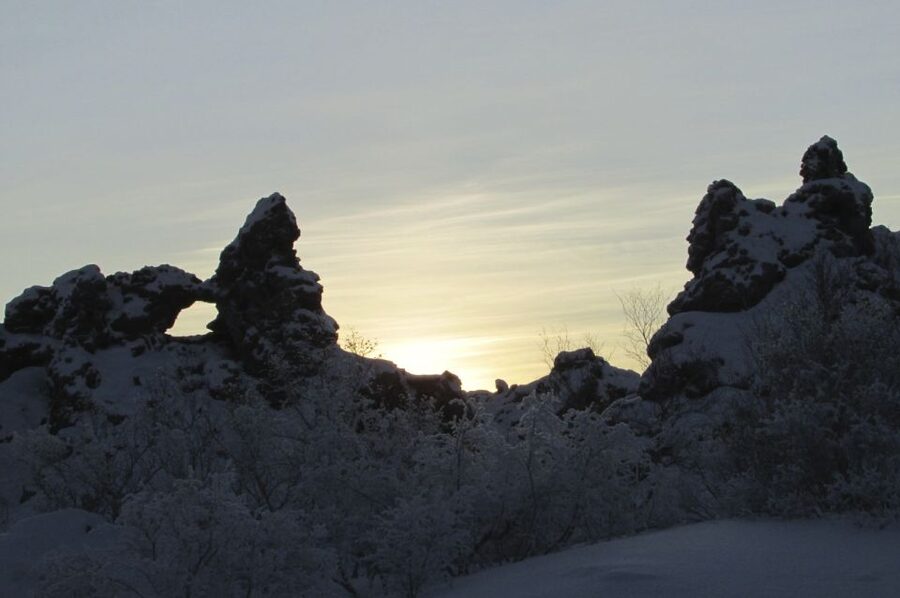
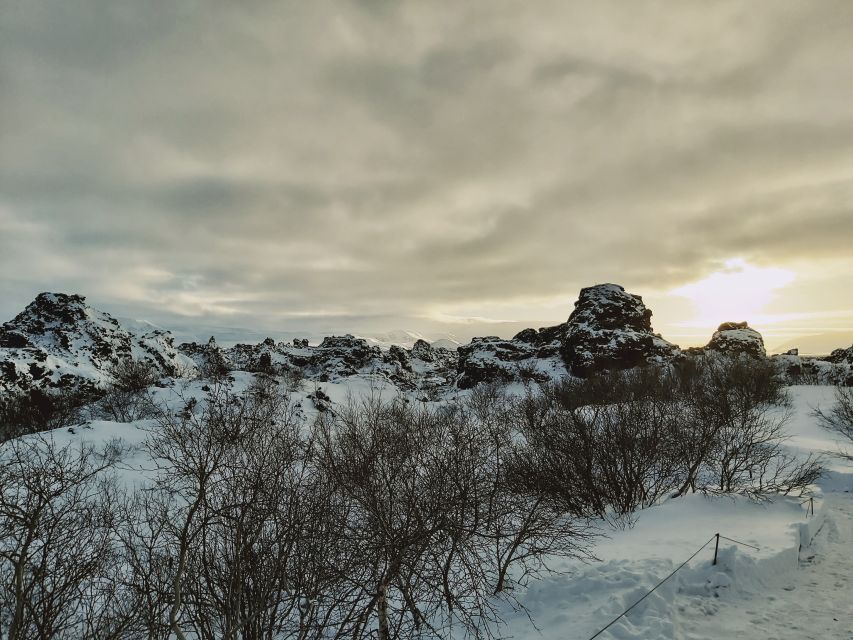
Dimmuborgir receives about an hour, and this is the most substantial walking stop. The name is often translated as Dark Fortress, a fitting description for the black pillars, arches, hollows, and rough lava shapes spread across the area.
The formations began when lava flowed over wet ground and trapped steam created unusual structures. As the lava cooled and parts collapsed, it left behind the strange rock shapes you walk among today. Your guide may explain how the area formed about 2,500 years ago, then add Icelandic folktales about trolls.
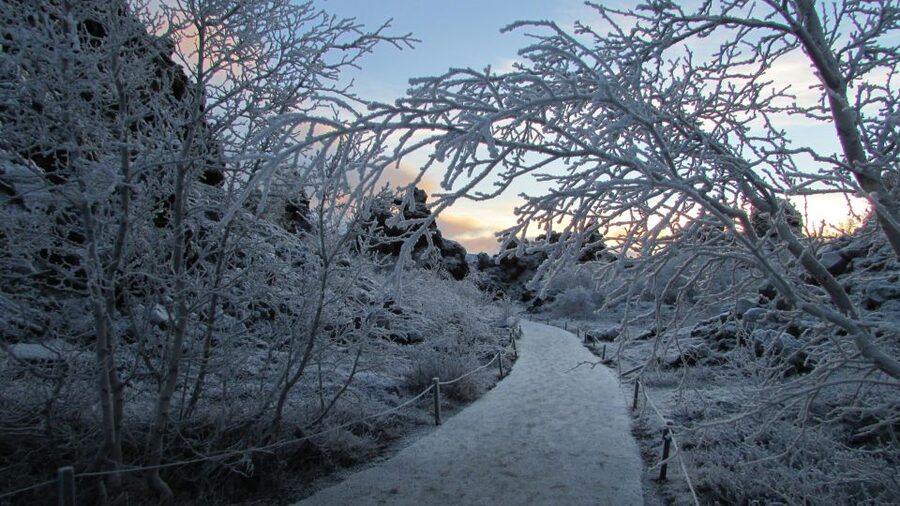
That mix of geology and folklore works especially well here. The rocks already look like characters or buildings, so stories of trolls feel natural rather than forced. In winter, snow gathers on the dark lava and gives the paths a strong contrast. In autumn, wild blueberries have been spotted along the route.
The walk is not a strenuous mountain hike, but the ground is uneven. Bring comfortable shoes and warm clothing. Stay near marked paths and follow your guide’s instructions, since the formations include holes, narrow passages, and unstable-looking edges.
A lunch break follows, with a view toward Dimmuborgir. Lunch is not included. There is a restaurant at the stop, but it may be small and slow when busy. I would carry a snack and a reusable water bottle, then use the stop to eat without sacrificing too much time on the walking route.
Grjótagjá: a short cave stop with a big setting
The minibus ride to Grjótagjá takes about 10 minutes, followed by a 15-minute visit. This is a short stop, so think of it as a close look rather than an extended cave exploration.
Grjótagjá is an underground cave shaped by volcanic activity. The guide can explain the relationship between the cave, the tectonic plates, and the wider Mývatn volcanic area. The tour information also connects the region with eruptions from Krafla, including the 1984 eruption whose lava remains visible around the area.
You may find this stop less dramatic than Goðafoss or Hverir, especially if you prefer wide views. Its value is in the detail: a sudden opening in the volcanic ground, dark rock, and a reminder that much of Iceland’s activity happens below your feet.
The brief timing is sensible. It keeps the day moving and leaves room for the more open geothermal stop at Hverir.
Hverir: sulphur, steam, and a warning to watch your step
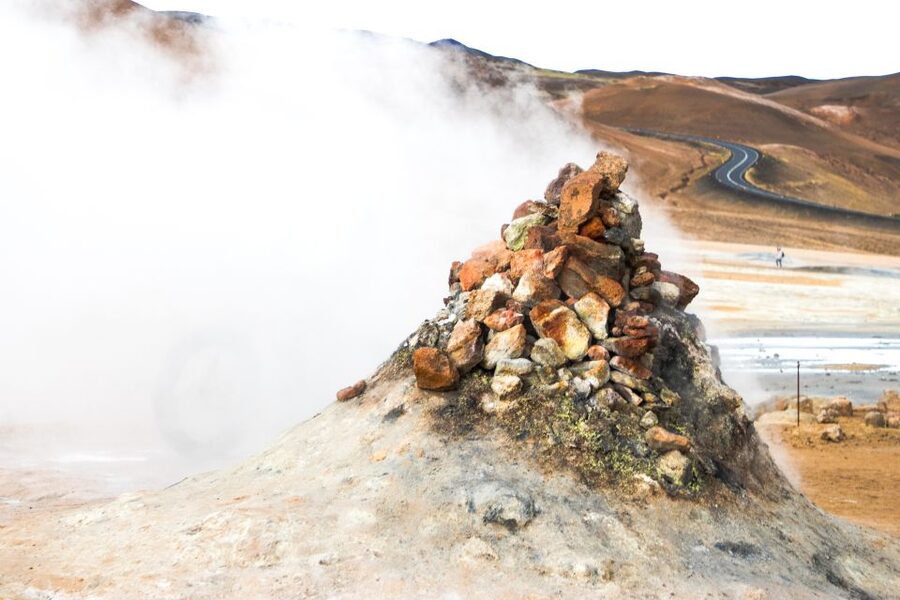
Hverir is a 20-minute stop, but it makes a strong impression. The ground is marked by bubbling sulphur mud pits, steaming vents, and vivid mineral colors. The air can smell strongly of sulphur, often compared to rotten eggs. That is not a flaw. It is part of the point.
This is one place where you should obey every sign and stay on the paths. The ground can look dry and harmless beside an active mud pool, but the geothermal activity is real. Keep your hands away from the mud and vents, and do not wander beyond designated areas for a better photograph.
I find Hverir valuable because it shows Iceland’s volcanic power in a more direct form than a cooled lava field. Dimmuborgir reveals what happened after lava hardened. Hverir shows heat, gas, and mineral-rich ground still at work.
Twenty minutes gives you enough time for photographs and a close look at the main features. You will not need a long visit unless you are especially interested in geology or photography. Wind can spread the sulphur smell, so a scarf or high collar may be useful in cold weather.
The optional Forest Lagoon finish
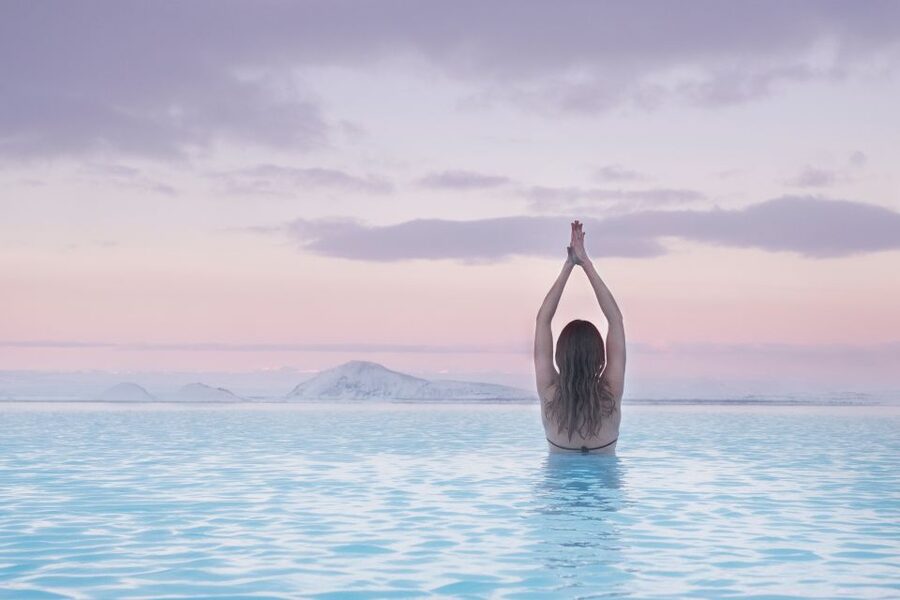
After Hverir, the listed return drive to Akureyri takes about 80 minutes. You can ask about finishing at the Forest Lagoon on the outskirts of town, but admission is not included.
This option needs careful planning. The tour itself is built around sightseeing, and the lagoon is an add-on rather than a guaranteed part of the standard price. One winter outing allowed only about half an hour in the baths, while another person skipped them after visiting on a separate day.
I would choose the lagoon only if you confirm the timing and want a short soak more than extra time back in Akureyri. If you already have a spa booking, do not assume this tour includes it. The Forest Lagoon entrance fee is separate, and the available bathing time can be limited by the day’s road and weather conditions.
Winter conditions, clothing, and comfort
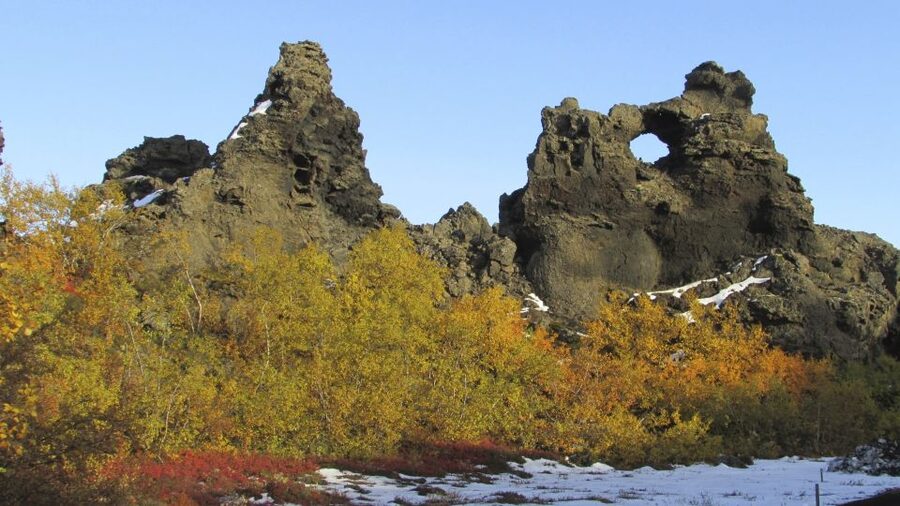
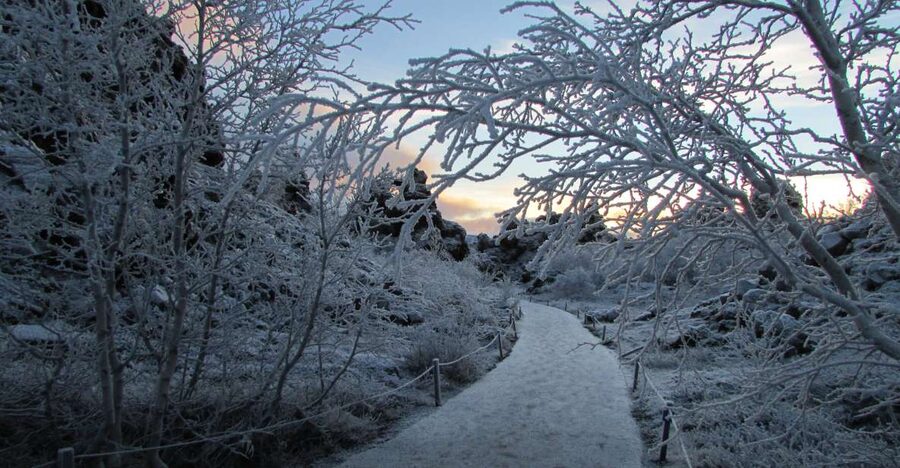
Winter can be an excellent time for this route. Snow on Dimmuborgir, ice near Goðafoss, and low sunlight over the volcanic ground create scenes that feel very different from summer. You also might encounter fewer people at the stops.
The trade-off is less daylight and more chance of wind, snow, or road changes. Guides have adjusted the order of stops, added short photo breaks, and extended the day when needed to make up for weather-related changes. One outing returned around 4:30 p.m. after extra stops.
Bring warm layers, comfortable walking shoes, and a reusable water bottle. Gloves and a hat are sensible in winter, though only warm clothing and sturdy footwear are specifically required. You should be ready to walk on uneven ground and stand outside in exposed weather.
Summer offers longer daylight and easier conditions, but the sites can feel busier. The tour remains useful then because the guide handles the driving and connects the stops with local stories.
Is $141 good value from Akureyri?
At $141 per person, this is not a cheap day out. Iceland is expensive, and you still need to pay for lunch and any Forest Lagoon entry. The question is what you would spend to rent a car, fuel it, navigate unfamiliar roads, and drive in winter conditions.
I think the price is reasonable for you if you want a guided, no-hassle visit to several far-flung sights. Hotel or harbor pickup, minibus transport, and an English-speaking local guide are included. The six-hour length also fits well into a short stay in Akureyri or a cruise call.
The value rises when the group is small and the guide adds short photo stops or personal stories. It falls if you want long walks, private touring, or a spa session included in the price. The transport complaint about one dirty, full van is worth noting, but the overall transport rating was very strong, with 92 percent giving it a perfect score.
Who should book this Mývatn tour?
I would recommend it to first-time visitors based in Akureyri, cruise passengers with a suitable amount of time, solo visitors who do not want to drive, and anyone who wants a broad introduction to volcanic northeastern Iceland.
It is also a good match for people who enjoy stories. Guides such as Lilja and Ingi have been praised for explaining local life, childhood memories, Icelandic folklore, geology, and history in a lively way. That personal connection can make the route feel much more memorable.
You may want another option if your priority is bathing, serious hiking, or spending a long time at one site. The stops are deliberately varied and fairly short. Dimmuborgir gets an hour, but Skútustaðagígar, Grjótagjá, and Hverir are quick visits.
The activity has a 4.8 rating from 118 reviews, and the praise is unusually consistent about the guides. I would book it for the combination of scenery and interpretation, not simply for transport from point to point.
Should you book it?
Book this tour if you want to see Goðafoss and the main Mývatn sights in one organized day, especially during winter or a cruise stop. The strongest reason to go is the guide: a good local host turns lava, steam, and folklore into a connected story.
Skip it if $141 feels too high once lunch and spa admission are added, or if you need a long, unhurried visit at each stop. For most people with limited time in Akureyri, though, this is a well-chosen route with excellent variety and a fair return for the cost.
FAQ
How long is the Goðafoss and Lake Mývatn tour?
The tour lasts six hours. The listed return drive from Hverir to Akureyri takes about 80 minutes, while the full timing can change with weather and extra photo stops.
What is included in the tour price?
Hotel pickup and drop-off, minibus transport, and an English-speaking local guide are included.
Is lunch included?
No. Lunch is not included, but the tour includes a lunch break with a view toward Dimmuborgir. A restaurant is available at the stop.
Is Forest Lagoon admission included?
No. The entrance fee for Forest Lagoon is separate. You can ask about ending the tour there, but bathing is an optional addition.
Where does pickup take place?
Pickup is available from listed hotels, guesthouses, apartments, Akureyri Airport Wetlands, the Akureyri harbor cruise terminal, Hof Cultural and Conference Centre, and other central locations in Akureyri.
How early should I wait for pickup?
You should wait in your hotel lobby or outside your accommodation 15 minutes before departure. Pickup begins 15 minutes before the scheduled departure time.
What language is the tour guide?
The live tour is conducted in English.
What should I bring?
Bring comfortable shoes, warm clothing, and a reusable water bottle. Sturdy footwear is particularly useful at Dimmuborgir and the geothermal ground at Hverir.
Added around Akureyri recently
- Akureyri: Whale Watching Shore Excursions★ 4.6 · 250 reviews
- Akureyri: Whale Watching Tour & Forest Lagoon Entrance★ 3.8 · 4 reviews
- West Glacial River Family Rafting★ 5.0 · 9 reviews
- Varmahlíð: Guided Family Rafting Trip★ 5.0 · 14 reviews
- Varmahlíð: East Glacial River Whitewater Rafting★ 5.0 · 6 reviews
- Dog Sledding and Mushing Experience by Siberian Husky in Iceland★ 5.0 · 23 reviews
- 2-Hour UTV Buggy Tour in Myvatn★ 5.0 · 12 reviews
- 1 hrs ATV quad trip down with glacier river Northeast of Iceland★ 5.0 · 1 review
Godafoss Tours, compared.
Lake Myvatn, Hot-Springs & Godafoss Waterfall Tour from Akureyri
Read our review →
Lake Myvatn Day Tour and Godafoss Waterfall for Cruise Ships from Akureyri Port
Read our review →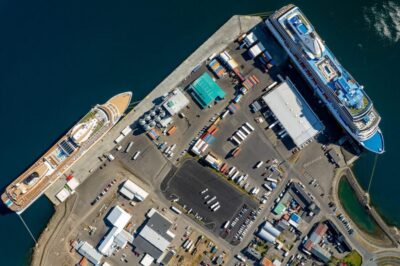
Goðafoss, Laufas & The Christmas House Combo Tour
Read our review →Browse the lists this tour appears in