
Review · VOLCANO AND CRATER TOURS
Volcano Exhibition and Cinema – Lava Centre Iceland
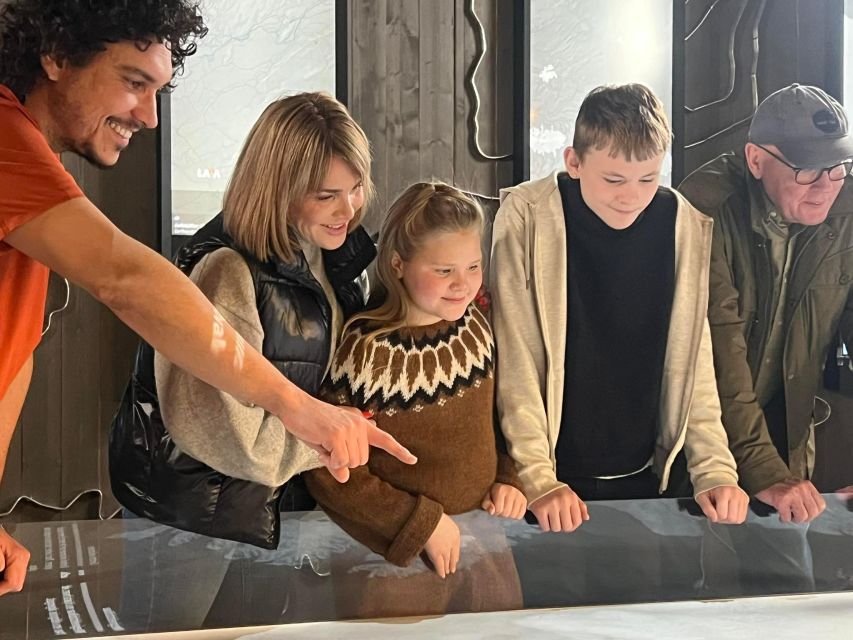
Watch Iceland shake. Lava Centre turns the country’s fire and ice into an engaging indoor experience, with interactive exhibits, eruption films, and views toward Eyjafjallajökull, Katla, and Hekla. I especially like the live earthquake map and the chance to see recent eruptions in Grindavík and near the Blue Lagoon.
I also like that the exhibition explains the reasons behind Iceland’s black sand, geysers, colorful mountains, and ever-changing terrain rather than simply showing dramatic pictures. The main drawback is size: you may spend only about an hour here, so the $42 admission makes the most sense if you value clear science, family-friendly displays, and a useful stop on a South Iceland drive.
In This Review
- Key things to know before visiting Lava Centre
- Why Lava Centre makes sense in South Iceland
- The Trembling Earth section puts earthquakes first
- The Fiery Heart of Iceland explains the source
- The Magma Learning Center shows many kinds of volcanoes
- The eruption cinema brings recent Iceland into focus
- The Local Volcano section connects the displays to the view
- How long the visit takes and how to plan it
- Is $42 a fair price?
- Who will get the most from this experience?
- Practical verdict on the Lava Centre experience
- Should you book Lava Centre?
- FAQ
- Where is Lava Centre located?
- What does the admission include?
- How long should I allow for a visit?
- Can I see recent eruptions at Lava Centre?
- Is Lava Centre wheelchair accessible?
- What languages are available?
Key things to know before visiting Lava Centre
- See Iceland’s major volcanoes from one building: The observation deck looks toward four large active but quiet volcanoes and a group of volcanic islands.
- Feel an earthquake in the simulator: The Trembling Earth section turns plate movement into something you can physically experience.
- Watch recent eruptions on the big screen: The cinema covers eruptions around Grindavík and the Blue Lagoon.
- Learn why Iceland looks the way it does: Displays connect magma, lava, tephra, black sand, geysers, and colorful mountains.
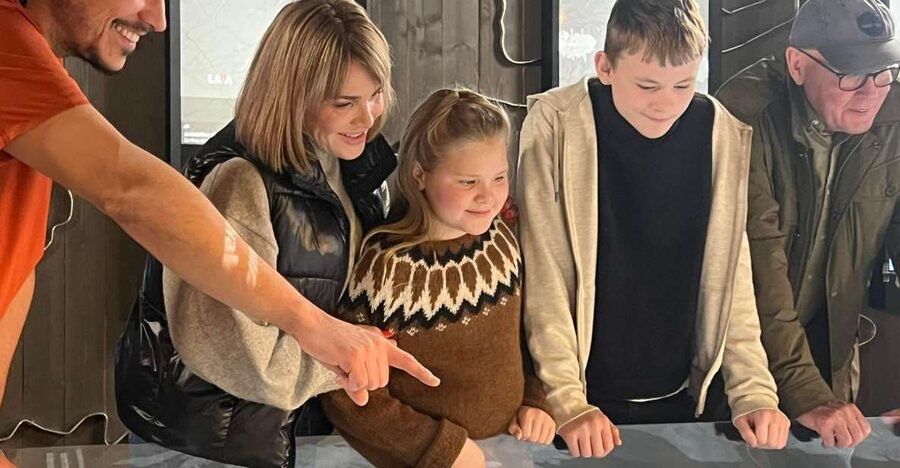
- Good for mixed ages: Children can use the supplied ear muffs, flashlights, and support teddy bears, while adults get a serious introduction to Icelandic geology.
- Plan for roughly one hour: You can stay longer, but the exhibition is a focused stop rather than a full-day attraction.
Why Lava Centre makes sense in South Iceland
Iceland can make geology feel unavoidable. You see steam rising from the ground, rivers cutting through black rock, and mountains shaped by forces that are still active. Yet it is not always easy to understand what you are seeing from a roadside viewpoint.
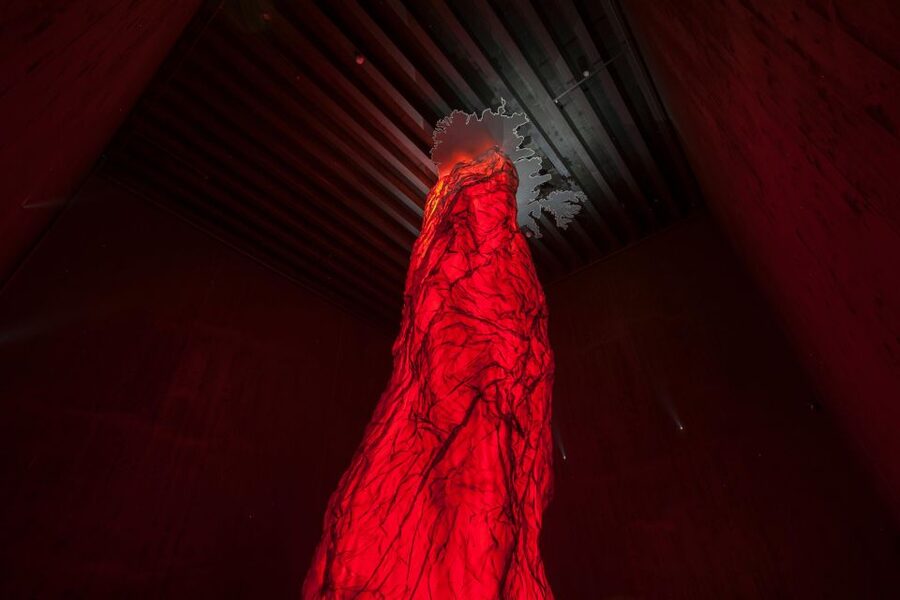
Lava Centre helps put those sights in order. It explains Iceland as a country formed by the meeting of a diverging tectonic plate boundary and a mantle plume, a hot area beneath the island that feeds magma upward. You do not need a science background to follow the story. The information is presented through video, models, lighting, maps, and hands-on stations.
That matters because Iceland’s volcanoes are not all the same. The country contains 30 volcanic systems, with different types of volcanoes and different patterns of activity. After visiting, black sand is no longer just a striking beach feature. You can connect it to volcanic rock and tephra, the airborne material produced when magma breaks into pieces during an eruption.
The center is in the Southern Region, surrounded by some of Iceland’s best-known volcanoes. Its location gives the visit a useful sense of place. You are not learning about volcanoes in a city museum far from the action. You are looking toward the mountains discussed inside the building.
More Volcano and Crater Tours in South Iceland:
- Kerið Volcanic Crater Admission Ticket
★ 4.5 · 106 reviews - Small Group Day Tour to Lakagigar volcano by Super Jeep from Klaustur
★ 5.0 · 44 reviews - From REYKJAVIK: 4×4 Private Volcanic Way to Þórsmörk Valley
★ 5.0 · 1 review
The Trembling Earth section puts earthquakes first
The experience begins with the restless ground beneath Iceland. In the Trembling Earth section, you learn how the movement of diverging tectonic plates and rising magma create frequent earthquakes.
The strongest feature here is the earthquake simulator. It turns an abstract explanation into a physical moment. Maps and diagrams can show how the plates move, but feeling a simulated tremor makes the idea easier to remember, especially for children and anyone who has never experienced an earthquake.
You can also see live earthquakes on a map. This gives the subject a current, almost immediate quality. Icelandic geology is not presented as something that happened millions of years ago and then stopped. The ground continues to move.
I like this opening because it begins with a force you cannot normally see. Volcanoes get the dramatic headlines, but earthquakes are part of the same system. The display helps you understand that magma, faults, and plate movement are linked.
The simulator may be less appealing if you prefer quiet museum displays or have a strong dislike of shaking sensations. Still, it is brief and central to the educational purpose of the center. The presentation does not treat earthquakes as a stunt. It uses the sensation to support the explanation.
The Fiery Heart of Iceland explains the source
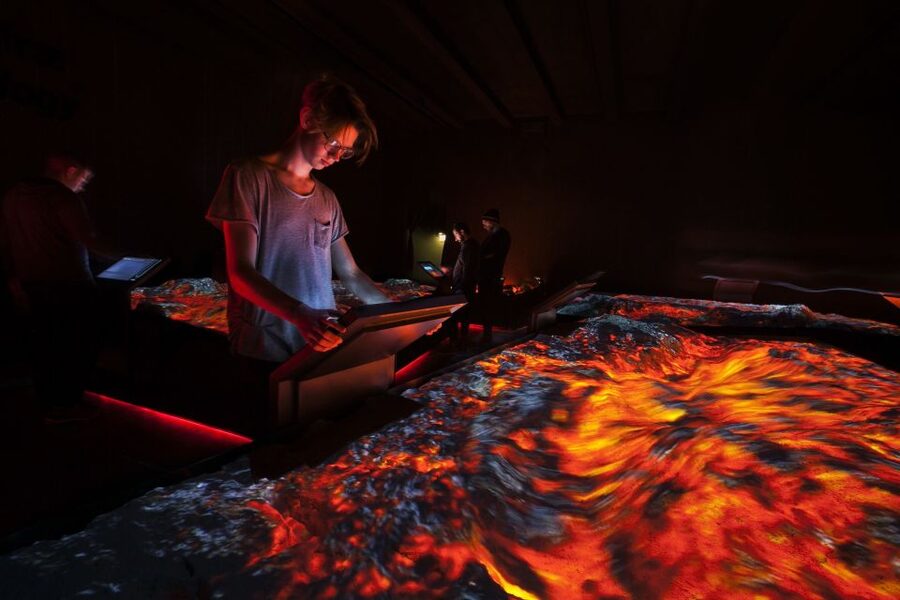
At the Fiery Heart of Iceland display, the focus shifts from movement in the crust to the source of Iceland’s volcanic activity. You learn about the normal upward flow of magma along the diverging plate boundary and how it interacts with a mantle plume beneath Iceland.
The display is useful because it separates terms that are often mixed together. Magma is molten rock below the surface. Once that material reaches the surface during an eruption, it is called lava. Airborne fragments are called tephra.
That distinction becomes important later when you look at Iceland’s volcanic terrain. Lava can form broad fields and new rock surfaces. Tephra can travel through the air and spread over wide areas. If magma meets water or ice, or if it is especially gas-filled and thick, it can break apart with great force.
You do not need to memorize every term. The value is in gaining a working vocabulary. After this section, a volcanic eruption film becomes easier to understand because you can identify what is moving through the air, what is flowing on the ground, and what is happening below it all.
The Magma Learning Center shows many kinds of volcanoes
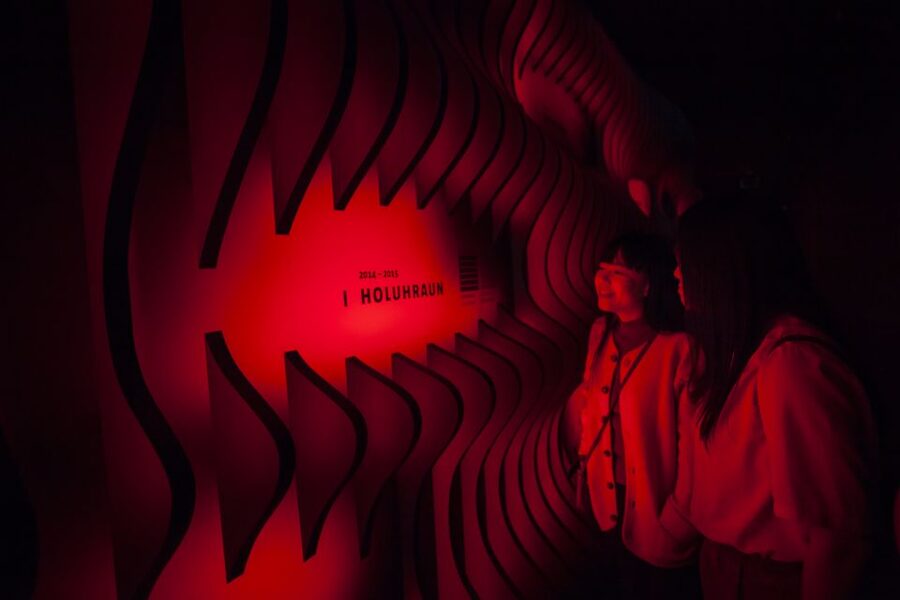
The Magma Learning Center looks at volcanic structures and the ways they form. Iceland is often reduced to a single picture of a cone-shaped mountain, but the center shows that volcanic systems can take several forms.
This is one of the more useful parts of the visit for anyone planning to see volcanoes around the country. Two volcanoes can both be called active while behaving in very different ways. Some produce lava, some send ash and tephra into the air, and some are shaped by the interaction of magma with ice or water.
The displays connect those processes with the scenery you will see outside. Black beaches, volcanic islands, rough lava fields, craters, geysers, and colorful mountains all come from different combinations of rock, heat, water, ice, and time.
The center does not need to take you to the edge of a crater to make the subject interesting. Instead, it gives you the tools to read the terrain. That is a strong reason to visit before or during a South Iceland road trip.
More museums in South Iceland:
- Hellisheiði Geothermal Exhibition: Entry and Audio Tour
★ 4.6 · 88 reviews - Geothermal Energy Exhibition Entry Ticket
★ 4.5 · 34 reviews - Reykjavik: Perlan Museum Wonders of Iceland Entrance Ticket
★ 4.7 · 2,575 reviews - Reykjavík: Hop-On Hop-Off Bus and Perlan Museum Entry Ticket
★ 4.3 · 719 reviews
The eruption cinema brings recent Iceland into focus
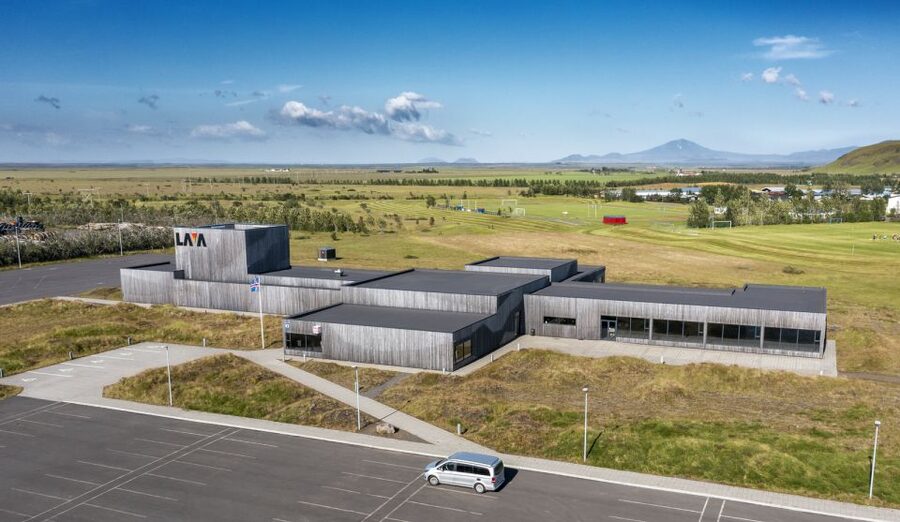
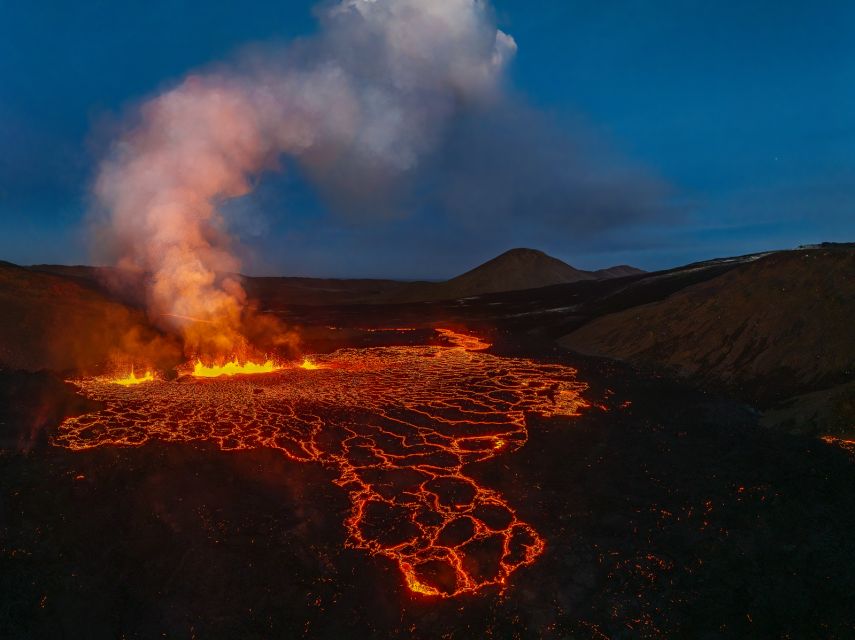
The cinema shows the latest eruptions, including activity around Grindavík and the Blue Lagoon. These events have made Iceland’s volcanic forces feel especially immediate, and the film gives you a controlled way to see the drama.
The cinema is worth your time even if you have already watched eruption footage online. A film presented as part of the exhibition places those eruptions within Iceland’s wider geology. You are not just watching glowing lava and clouds of ash. You are seeing how an eruption affects a town, a tourist area, and the surrounding ground.
I would make sure not to rush past this section. The interactive displays reward a slow look, but the cinema provides the emotional center of the experience. One recent assessment called the film impressive, and that matches its role here: it gives scale and energy to the scientific information.
Keep your expectations sensible. This is a film inside a volcano exhibition, not an outdoor eruption expedition. You will not be standing near active lava. The advantage is safety and context, especially when current volcanic activity makes direct access impossible or inappropriate.
The Local Volcano section connects the displays to the view
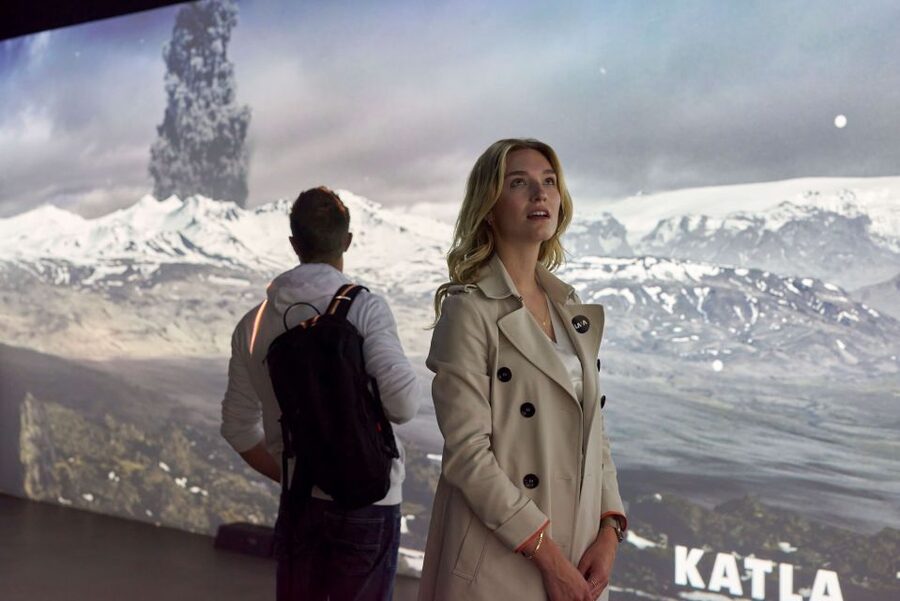
The Local Volcano section presents four large volcanoes that are active but dormant, along with a group of volcanic islands. From the observation deck, you can look toward Eyjafjallajökull, Katla, and Hekla, among other volcanic features in the region.
The view is a major part of the visit, but weather will matter. On a clear day, the deck helps you connect the names inside the center with real mountains beyond the windows. On a cloudy day, the exhibition still works, but the outside portion may be limited.
Eyjafjallajökull is familiar to many people because of its 2010 eruption and the air travel disruption that followed. Katla is another major South Iceland volcano, while Hekla has a long record of eruptions. Seeing them from the center gives you a broad regional picture rather than a close-up view of one peak.
I like this design choice. The deck is not just a photo stop added at the end. It reinforces the central lesson: Iceland’s geology is visible in every direction, and the volcanoes are part of a connected system.
Bring realistic expectations about distance. You are viewing large volcanoes from a platform, not approaching their craters. The reward is the wide setting and the chance to identify several important volcanic systems at once.
How long the visit takes and how to plan it
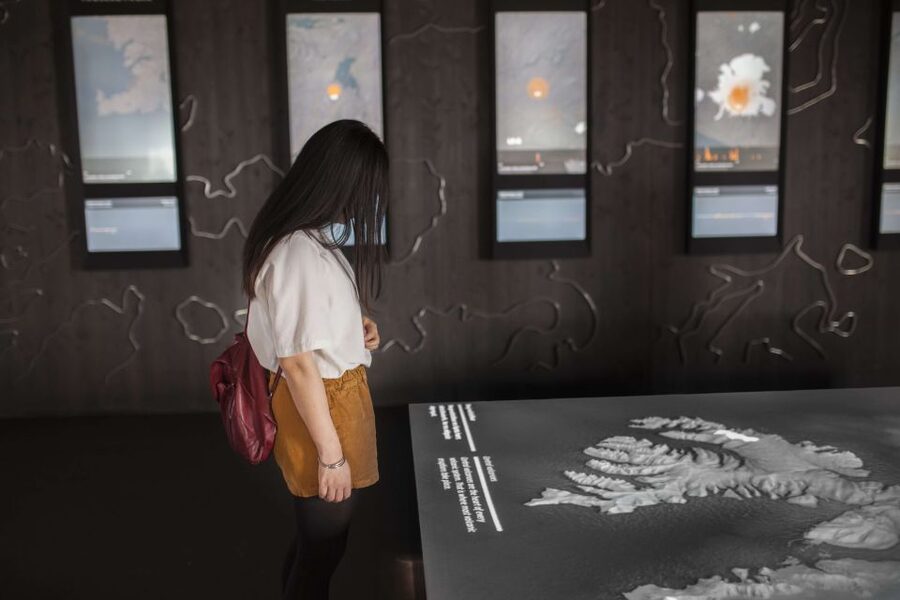
The admission is valid for one day, but the exhibition itself is compact. A visit of about one hour is a reasonable target, based on the time needed to move through the stations, watch the film, use the earthquake simulator, and step onto the deck.
You can stay longer if you read every panel and spend time with the interactive displays. Families may need extra time because children can move between the hands-on features at their own pace. The supplied ear muffs, flashlights, and support teddy bears are thoughtful touches for younger children.
At the same time, do not treat this as an all-day attraction unless you have a special interest in volcanology. The center is best used as a focused stop between other South Iceland sights. It can give you a better grasp of waterfalls, glaciers, black beaches, and volcanic mountains you see elsewhere.
There are no food or drinks included. Plan to eat before or after your visit, rather than expecting the ticket to cover refreshments. Wheelchair access is available, and the experience is listed as wheelchair accessible, which makes it practical for a wider range of visitors.
The host languages are English and Icelandic. The material is designed to explain complex subjects through visuals and interactive features, so you do not need a specialist guide to get value from the visit.
Is $42 a fair price?
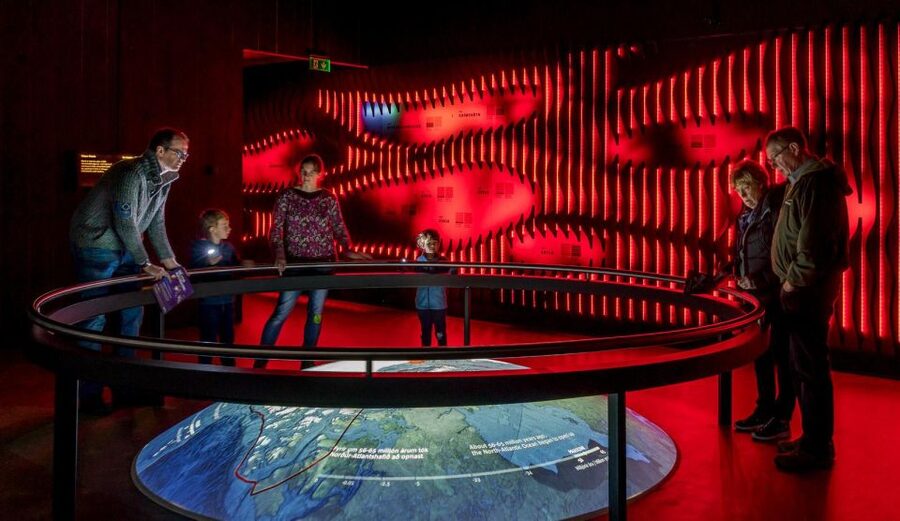
At $42 per person, Lava Centre is not a cheap roadside stop. For a one-hour visit, the cost may feel high if you are mainly interested in taking photographs or seeing volcanoes from the deck.
The value improves if you use the entire experience. Your admission covers the exhibition, cinema, and observation deck, not just a viewing platform. You are also getting a structured explanation of why Iceland has its unusual rock, sand, mountains, and geothermal features.
I see it as better value for families, curious first-time visitors, and anyone who wants context before seeing more of South Iceland. The earthquake simulator and interactive stations give the visit more substance than a standard display of signs and photographs.
It is less compelling for repeat visitors who already know Iceland’s volcanic systems well, or for anyone working through a packed sightseeing schedule. If your day already includes several major stops and you have only a short window, the outdoor sights may come first.
The flexible booking terms help reduce the risk. You can reserve now and pay later, and you can cancel up to 24 hours ahead for a full refund. Those details are useful in Iceland, where weather and road plans can change, though they do not alter the basic question of whether the admission fits your budget.
Who will get the most from this experience?
I would recommend Lava Centre most strongly to:
- Families who want science presented in a way children can touch, watch, and feel.
- First-time visitors who want to understand Iceland’s volcanoes before seeing the countryside.
- Adults who enjoy geology but do not want a technical lecture.
- Anyone visiting South Iceland in poor weather, when an indoor stop is especially welcome.
- People interested in recent eruptions around Grindavík and the Blue Lagoon.
- Visitors who want a clear view toward several major volcanoes from one platform.
You may want to skip it if you have almost no time, dislike museums, or are only looking for an outdoor adventure. The center is educational first. The deck and cinema add drama, but this is not a guided hike, a crater walk, or an eruption viewing trip.
Practical verdict on the Lava Centre experience
Lava Centre succeeds because it makes Iceland’s geology understandable without stripping away the drama. The earthquake simulator gives you a physical sense of the ground in motion, the cinema shows the force of recent eruptions, and the deck puts major volcanoes in front of you.
I especially like the way the displays explain familiar Iceland sights. Black sands, geysers, colorful mountains, lava, and volcanic islands stop looking like unrelated attractions. They become parts of one active story.
The main question is value. At $42, you should plan to spend enough time with the interactive stations and film to justify the ticket. If you do, the center gives you useful context that can sharpen the rest of your South Iceland journey.
Should you book Lava Centre?
Book it if you want a clear, family-friendly explanation of Iceland’s volcanic forces, especially if your itinerary includes South Iceland and you have about an hour to spare. The recent eruption film, live earthquake map, simulator, and mountain views give the visit several different ways to hold your attention.
Skip it if you are rushing between outdoor sights or already have a strong understanding of Icelandic geology. For most first-time visitors, though, Lava Centre is a worthwhile educational stop, with enough visual drama to keep it from feeling like homework.
FAQ
Where is Lava Centre located?
Lava Centre is in the Southern Region of Iceland, surrounded by views toward major volcanoes including Eyjafjallajökull, Katla, and Hekla.
What does the admission include?
Admission includes the LAVA Centre exhibition, the cinema, and the observation deck.
How long should I allow for a visit?
You can spend about one hour at the center, though you may stay longer if you take time with every interactive station, the film, and the viewing deck.
Can I see recent eruptions at Lava Centre?
Yes. The cinema presents recent eruptions in Grindavík and around the Blue Lagoon.
Is Lava Centre wheelchair accessible?
Yes. The experience is wheelchair accessible, and wheelchairs are included among the available facilities.
What languages are available?
The host or greeter languages are English and Icelandic.
Added around South Iceland recently
- Westman Islands Day Tour from Reykjavik★ 5.0 · 2 reviews
- One-Hour Horseback Riding Tour in the Icelandic Countryside★ 5.0 · 28 reviews
- Reykjavik Shore Excursion: The Golden Circle Full Day Tour★ 4.5 · 12 reviews
- The Siggi Tour from Reykjavík: 1.5 to 2-Hour Ride★ 4.5 · 27 reviews
- Glacier Rush – Fast pace snowmobile – SnoMo Glacier★ 5.0 · 10 reviews
- Icelandic Horse Riding and Whale Watching Cruise from Reykjavík★ 4.0 · 14 reviews
- Snowmobiling on Langjökull Glacier from Geysir Area★ 5.0 · 34 reviews
- Geothermal Energy Exhibition Entry Ticket★ 4.5 · 34 reviews
Volcano and Crater Tours, compared.
Golden Circle Full-Day Tour with Kerid Crater
Read our review →
Small-Group Golden Circle, Blue Lagoon with Ticket & Kerid Crater
Read our review →
Golden Circle, Kerid Crater, & Blue Lagoon Tour
Read our review →
Golden Circle with Kerid Volcanic Crater Day Tour from Reykjavik
Read our review →
Golden Circle, Volcano Crater and Blue Lagoon Small-Group Tour
Read our review →
Golden Circle, Secret Lagoon and Kerid Crater Tour from Reykjavik
Read our review →
Golden Circle, Crater & Blue Lagoon Minibus Tour
Read our review →
Golden Circle, Kerid Crater & Geothermal Lagoon -Small Group Tour
Read our review →Browse the lists this tour appears in