
Review · VOLCANO AND CRATER TOURS
Volcano Movie – Experience the Latest Eruptions in Iceland
Volcanoes make Iceland feel alive. At the LAVA Centre in Hvolsvöllur, this film brings recent eruptions to the screen in sharp 4K, with powerful natural sound and no voice-over to get between you and the action. I like the clear picture and the film’s sweep from early 20th-century eruptions to Fagradalsfjall.
I also like how it puts Iceland’s volcanic events into order, especially the 2010 eruption that stopped air traffic across Europe and the lesser-known Holuhraun eruption of 2014 to 2015. The main consideration is simple: this is a cinema visit, not a live volcano outing, and the lack of narration may leave you wanting more explanation.
In This Review
- Key points about Iceland’s eruption film
- Starting at LAVA Centre in Hvolsvöllur
- The opening timeline, from Katla to Krafla
- Fimmvörðuháls and Eyjafjallajökull in 2010
- Grímsvötn and the Holuhraun eruption
- The latest Fagradalsfjall eruptions on screen
- Why the lack of narration matters
- Who will get the most from the $16 price
- Fitting the film into a southern Iceland day
- Should you book Volcano Movie?
- FAQ
- Where is Volcano Movie shown?
- How much does the experience cost?
- How long is the activity valid?
- What eruptions are shown?
- Is there a voice-over?
- Is food included?
- Can I bring food or drinks into the cinema?
- Is the cinema wheelchair accessible?
Key points about Iceland’s eruption film
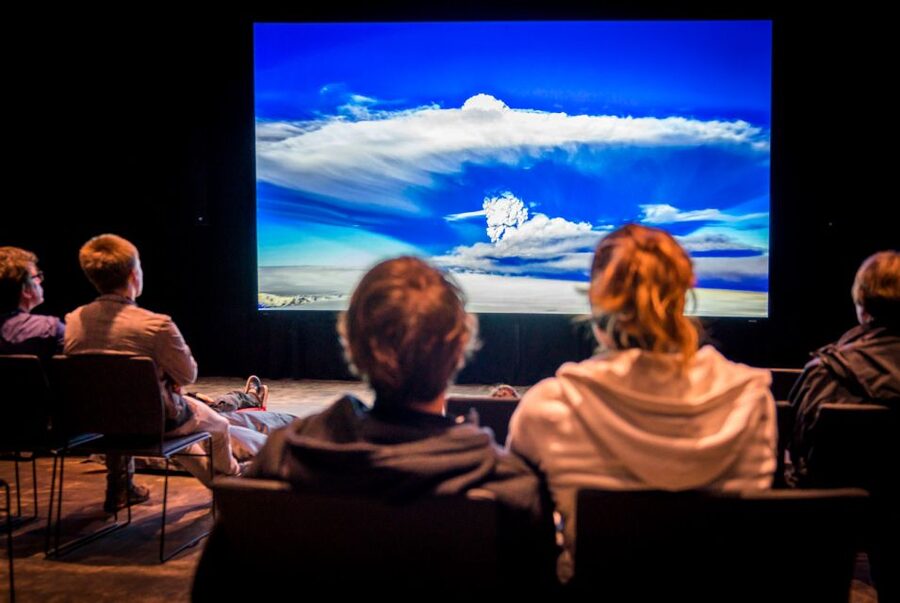
- 4K eruption footage: The film uses footage shot in 4K or better, giving lava, ash, smoke, and fire a strong presence on the cinema screen.
- A useful historical timeline: The story begins with Katla in 1918 and moves through Hekla, Askja, Surtsey, the Westman Islands, Krafla, and later eruptions.
- Eyjafjallajökull gets proper attention: You see the 2010 Fimmvörðuháls eruption and the later eruption that disrupted air travel across Europe.
- Holuhraun is part of the story: The huge 2014 to 2015 eruption receives attention even though it caused less international alarm than Eyjafjallajökull.
- No spoken narration: Video and sound carry the story, which creates an atmospheric experience but offers less scientific explanation.
- Easy stop in southern Iceland: LAVA Centre is on Austurvegur 14 in Hvolsvöllur, the first building on the left when driving from Reykjavík or the Golden Circle.
Starting at LAVA Centre in Hvolsvöllur
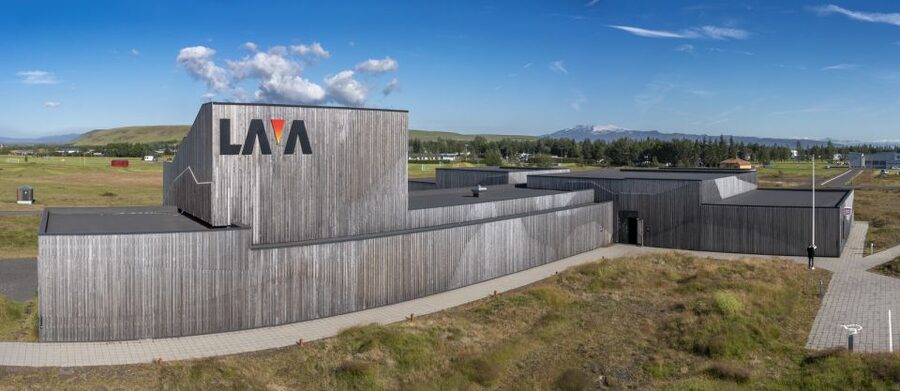
The film is shown at the LAVA Centre, Austurvegur 14, in Hvolsvöllur. If you are driving from Reykjavík or from the Golden Circle, it is the first building on the left. The location is designed to be easy to spot, which matters on a driving day when Iceland’s roads and weather may already demand plenty of attention.
The admission price is $16 per person. I consider that a fair price if you are already stopping at the LAVA Centre and want a focused look at Icelandic eruptions. It is less compelling as a stand-alone destination if you expect a full guided museum program, a long activity, or a chance to see molten rock in person.
Your ticket covers the cinema entrance only. Food is not included, but you can buy food at the in-house Katla restaurant and shop. Food and drinks are not allowed inside the cinema, so plan to finish anything you purchase before taking your seat.
At the entrance, you can also find free information about earthquakes in Iceland and the major volcanoes around the LAVA Centre. I would allow time for this material, even though it is not part of the paid film. It gives useful context before the screen begins showing eruption footage.
More Volcano and Crater Tours in Vik
- Ice Cave by Katla Volcano Super Jeep Tour from Vik
★ 4.5 · 1,100 reviews - Lava Centre Interactive Volcano Exhibition
★ 4.5 · 209 reviews - Katla Volcano Ice Cave – Super Jeep Tour from Vik
★ 4.5 · 199 reviews
The opening timeline, from Katla to Krafla
The film begins with a short historical overview. It starts with the Katla eruption of 1918, then moves through Hekla in 1947, Askja in 1961, Surtsey in 1963, the Westman Islands in 1973, and Krafla from 1975 onward.
This opening works as a quick reminder that Iceland’s volcanic story is not one isolated event. Eruptions have affected farming communities, islands, roads, air travel, and the shape of the country itself. You get a sense of repeated activity across different parts of Iceland rather than focusing only on the famous 2010 event.
The timeline also helps you place the later footage. Without it, the film could feel like a collection of dramatic clips. With it, you can follow a progression from older eruptions to modern events recorded with far better cameras.
The information remains brief, though. Since there is no vocal narrative, you should not expect a presenter to explain the geology, point out locations, or describe what you are seeing. The film relies on images and sound, so the historical sequence is more visual than instructional.
Fimmvörðuháls and Eyjafjallajökull in 2010
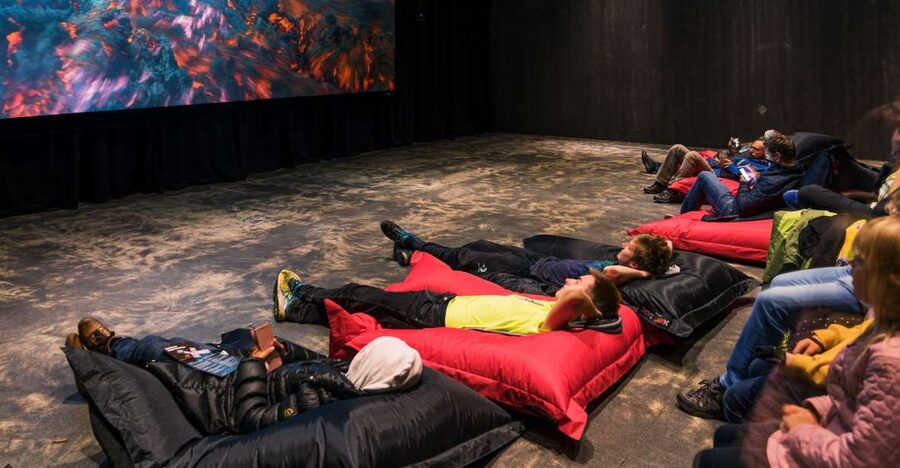
The 2010 section is likely to be the most familiar part of the film. It covers the Fimmvörðuháls eruption and then the Eyjafjallajökull eruption, the event that blocked air traffic over Europe for days.
The value here is seeing the two eruptions as connected parts of the same period of activity. Eyjafjallajökull became an international news story because of its ash cloud and the disruption to flights. The film gives you a chance to consider the eruption as an event in Iceland itself, not only as a travel problem elsewhere.
The footage also helps explain why volcanic activity in Iceland can affect people far beyond the eruption site. The effects are not limited to lava or smoke. Ash can interfere with transport, daily life, and the plans of people who live thousands of miles away.
I like this section because it links dramatic images with an event you may already remember. The drawback is that the movie does not provide a spoken guide to the science. If you want a detailed explanation of why Eyjafjallajökull produced such a disruptive ash cloud, the free earthquake and volcano information at the entrance may be more useful than the film alone.
Grímsvötn and the Holuhraun eruption
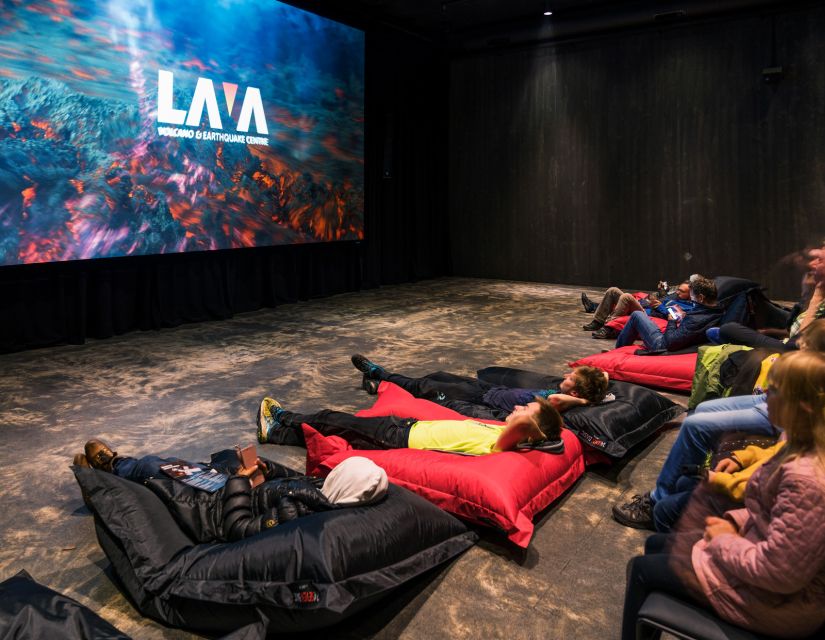
After 2010, the film turns to the Grímsvötn eruption of 2011 and Holuhraun from 2014 to 2015. Holuhraun is especially worthwhile because it did not receive the same level of global attention as Eyjafjallajökull, despite being a massive eruption.
This part broadens the picture of what an important Icelandic eruption can look like. Not every major event becomes a worldwide news story. You see that Iceland’s volcanic activity has many scales and consequences, and the most famous event is not always the largest or most revealing.
For me, the Holuhraun material is one of the strongest reasons to watch the film. It gives you a better sense of the forces involved and reminds you that Iceland’s volcanic story continues even when international headlines have moved on.
Again, sound and footage do the work. You will not hear a presenter explain the eruption’s exact sequence or provide a detailed account of its effects. The film aims to leave you with a direct impression of scale, movement, and power rather than a classroom-style lesson.
Now for something with a completely different feel:
- Reykjavik: Jokulsarlon Glacier Lagoon Full-Day Guided Trip
★ 4.7 · 3,302 reviews - South Coast Classic: Full-Day Tour from Reykjavik
★ 4.6 · 2,457 reviews - From Vik: Katla Ice Cave and Super Jeep Tour
★ 4.6 · 2,110 reviews - Skaftafell: Ice Cave Tour and Glacier Hike
★ 4.5 · 1,746 reviews
The latest Fagradalsfjall eruptions on screen
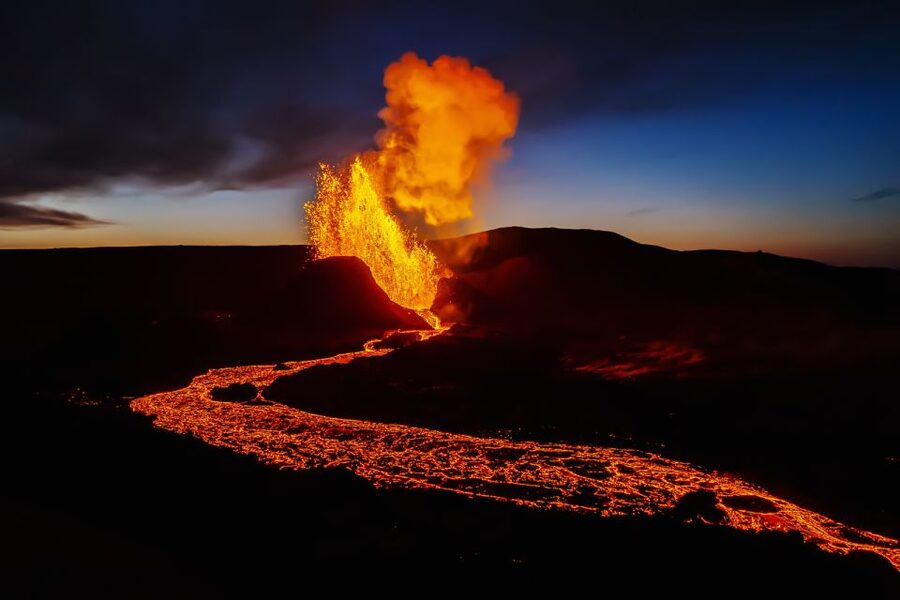
The final part covers the recent eruptions at Fagradalsfjall, also called Fagradalseldar for the series of eruptions. This brings the film from older historical events into the period that feels closest to the present.
That ending gives the program a clear sense of continuity. Iceland’s volcanoes are not just part of the past, and the modern footage shows how quickly an eruption can become a national and international point of attention.
The 4K format matters most here. Lava movement, glowing vents, smoke, and changing light benefit from a high-quality screen. You are not watching a fuzzy archive clip. You are seeing modern eruption footage presented with enough clarity to appreciate the patterns and scale.
Still, you should keep your expectations realistic. The information provided does not promise an interactive presentation, a live feed, or an outdoor viewing point. This is a prepared cinema experience using recorded footage. Its strength is the quality and sequence of the film, not personal access to an active eruption.
Why the lack of narration matters
The film uses no voice-over. Video and sound tell the story, creating a more direct and atmospheric presentation.
I can see this working very well for you if you enjoy nature films and prefer to watch without constant commentary. The sound of volcanic activity can carry real force, and the absence of a narrator keeps the focus on what appears on screen.
You may find it less satisfying if you want facts delivered as you watch. There are no spoken explanations to identify every eruption, explain the geology, or describe the effects on local communities. The historical order provides some structure, but you need to bring your own curiosity.
That is why I would use the free earthquake and volcano information at the entrance as part of the stop. Read it before the film if you want more context, or afterward if the footage leaves you with questions. The two parts complement each other, even though the entrance information is free and the film requires its own ticket.
Who will get the most from the $16 price
At $16, the experience offers reasonable value for several kinds of visitors. It suits you best if you are already passing through Hvolsvöllur, want a weather-proof activity, or have an interest in Iceland’s eruptions but cannot visit an active volcanic site safely or conveniently.
It is also a good choice for families and mixed groups with different interests. A cinema program is easier to fit into a driving day than a demanding hike, and the film gives you a shared introduction to several major events.
The wheelchair-accessible venue adds practical value for visitors who need an easier indoor stop. The supplied information does not describe seating arrangements or the exact film running time, so you should check the available start time and current details before booking.
I would be more cautious if you are looking for a highly detailed geology lesson. The admission includes only entry to the cinema, and there is no guide giving a spoken explanation during the screening. You are paying for high-quality footage and an atmospheric presentation, not a full guided tour of volcanic science.
The published rating is 3.6 from three ratings, while one verified German booking from August 30, 2023 described the experience as short, entertaining, and very interesting. That fits the available details well: this appears to be a compact, focused film rather than an all-day attraction with many separate activities.
Fitting the film into a southern Iceland day
The LAVA Centre makes the film especially easy to add to a southern Iceland road trip. You can stop in Hvolsvöllur while driving from Reykjavík or after visiting the Golden Circle, then continue your route through the Southern Region.
Because the ticket is valid for one day and starting times depend on availability, check the schedule before you build the rest of your route. I would avoid treating the film as a fixed-length tour unless the current booking information gives you the exact screening time.
The venue’s clear location helps, but you should still leave room in your plan for the film, the entrance information, and a possible food stop at Katla. Food and drinks cannot go into the cinema, so this is a place to organize your stop rather than rush through it.
The activity has free cancellation up to 24 hours in advance, and you can reserve now while paying later. Those terms are useful in Iceland, where weather and road conditions can force changes to a driving plan. The host or greeter languages are English and Icelandic.
Should you book Volcano Movie?
Book it if you want a short, affordable indoor stop that shows Iceland’s recent eruptions in strong 4K quality. I especially recommend it if Eyjafjallajökull, Holuhraun, or the newer Fagradalsfjall eruptions are already part of your interest in Iceland.
Skip it if you want a live volcanic outing, a long guided lecture, or detailed scientific commentary. The film gives you sight and sound, plus a clear historical sequence, but it leaves much of the explanation to you.
For most people, the best plan is to combine the screening with the free earthquake and volcano information at the entrance and, if needed, a meal at Katla. At $16, that makes the LAVA Centre a practical way to add volcanic context to a southern Iceland driving day without committing to a demanding excursion.
FAQ
Where is Volcano Movie shown?
It is shown at the LAVA Centre, Austurvegur 14, 860 Hvolsvöllur, Iceland. It is the first building on the left when coming from Reykjavík or the Golden Circle.
How much does the experience cost?
The price is $16 per person. This covers the entrance fee to the cinema.
How long is the activity valid?
The booking is valid for one day. You should check availability for the available starting times.
What eruptions are shown?
The film covers eruptions including Katla in 1918, Hekla in 1947, Askja in 1961, Surtsey in 1963, the Westman Islands in 1973, Krafla from 1975, Fimmvörðuháls and Eyjafjallajökull in 2010, Grímsvötn in 2011, Holuhraun from 2014 to 2015, and the latest Fagradalsfjall eruptions.
Is there a voice-over?
No. The film uses video and sound without a vocal narrative.
Is food included?
No. Food is not included in the cinema ticket. You can buy food at the in-house Katla restaurant and shop.
Can I bring food or drinks into the cinema?
No. Food and drinks are not allowed inside.
Is the cinema wheelchair accessible?
Yes. The activity is listed as wheelchair accessible.
Added around Vik recently
- Vik: Guided Sólheimajökull Glacier Hike★ 4.7 · 233 reviews
- Private Tour to þórsmörk glaciers and waterfalls★ 5.0 · 2 reviews
- Thorsmork Hike Day Tour★ 5.0 · 79 reviews
- Private Day Trip in Landmannalaugar South Region area on a 4×4 truck★ 5.0 · 7 reviews
- Tandem Paragliding Flights from Vik★ 5.0 · 63 reviews
- Thorsmork by Super Jeep with Optional Hike★ 5.0 · 74 reviews
- Þórsmörk Buggy Adventure Tour in Southern Iceland★ 5.0 · 4 reviews
- Þórsmörk Adventure w. Golden Circle – 3 days★ 5.0 · 1 review
Volcano and Crater Tours, compared.
Golden Circle Full-Day Tour with Kerid Crater
Read our review →
Small-Group Golden Circle, Blue Lagoon with Ticket & Kerid Crater
Read our review →
Golden Circle, Kerid Crater, & Blue Lagoon Tour
Read our review →
Golden Circle with Kerid Volcanic Crater Day Tour from Reykjavik
Read our review →
Golden Circle, Volcano Crater and Blue Lagoon Small-Group Tour
Read our review →
Golden Circle, Secret Lagoon and Kerid Crater Tour from Reykjavik
Read our review →
Golden Circle, Crater & Blue Lagoon Minibus Tour
Read our review →
Golden Circle, Kerid Crater & Geothermal Lagoon -Small Group Tour
Read our review →Browse the lists this tour appears in