
Review · HORSE RIDING TOURS
From Reykjavík: Viking Horseback Tour in Hafnarfjörður
Feel the Icelandic horse move. This Hafnarfjörður ride gives you a real taste of the breed’s unusual gaits, not just a slow walk around a paddock. I like the wild lava-field scenery and the chance to ride the smooth tölt, while the small groups make horse matching and instruction more personal. The main catch is simple: this is for strong intermediate riders, not beginners.
Íshestar’s stables sit only about 10 minutes from Reykjavík, yet the countryside quickly feels far removed from the capital. I also like the thoughtful cold-weather setup, with helmets, riding boots, rainwear, and warm overalls supplied. Still, you need to be comfortable and in control at walk, trot, canter, and tölt, and riders must weigh no more than 110 kilograms, or 243 pounds.
In This Review
- At a glance: what makes this ride special
- Why this Icelandic horse ride is different
- From Reykjavík to the Íshestar stables
- Getting ready in warm riding gear
- Meeting your horse and guide
- Riding through Hafnarfjörður’s volcanic country
- Tölt, trot, and canter: what you need to handle
- What the small group changes
- Safety, limits, and comfort
- The best time to book
- Who should book this ride?
- Practical booking advice
- Should you book the Viking Horseback Tour?
- FAQ
- How long is the Viking Horseback Tour?
- Where does the ride begin?
- Is hotel pickup available from Reykjavík?
- What riding ability do I need?
- What is the minimum age?
- What equipment is provided?
- Is there a weight limit?
At a glance: what makes this ride special
- The tölt is the star: Icelandic horses can move in a smooth four-beat gait that feels different from an ordinary trot.
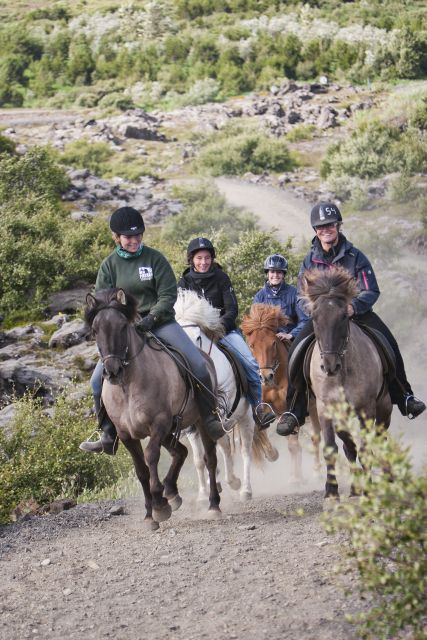
- Lava fields and mountains: You ride through the Reykjanes preservation area, with volcanic ground, a small stretch of forest, a lake, mountains, and volcanoes in view.
- A proper riding tour: The route includes plenty of faster work, including cantering, rather than a short walking circuit.
- Small groups matter: The maximum is 12 riders, and groups can be much smaller, giving the guide more time to match horses and help riders.
- Useful winter equipment: Warm clothing, rainwear, helmets, and boots are supplied, which is important in Iceland’s changeable weather.
- Close to Reykjavík: Hafnarfjörður is near enough for an easy half-day outing, with optional hotel or bus-stop pickup.
Why this Icelandic horse ride is different
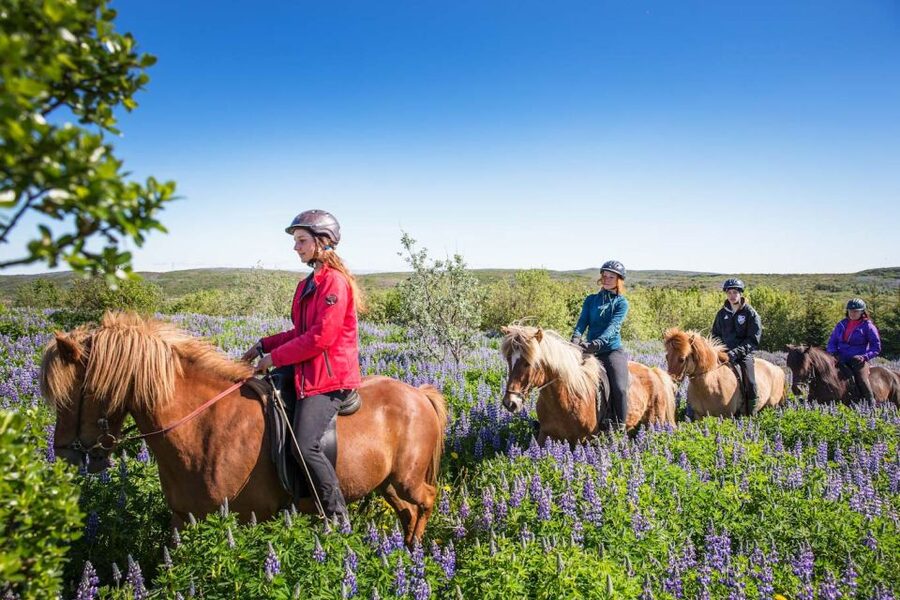
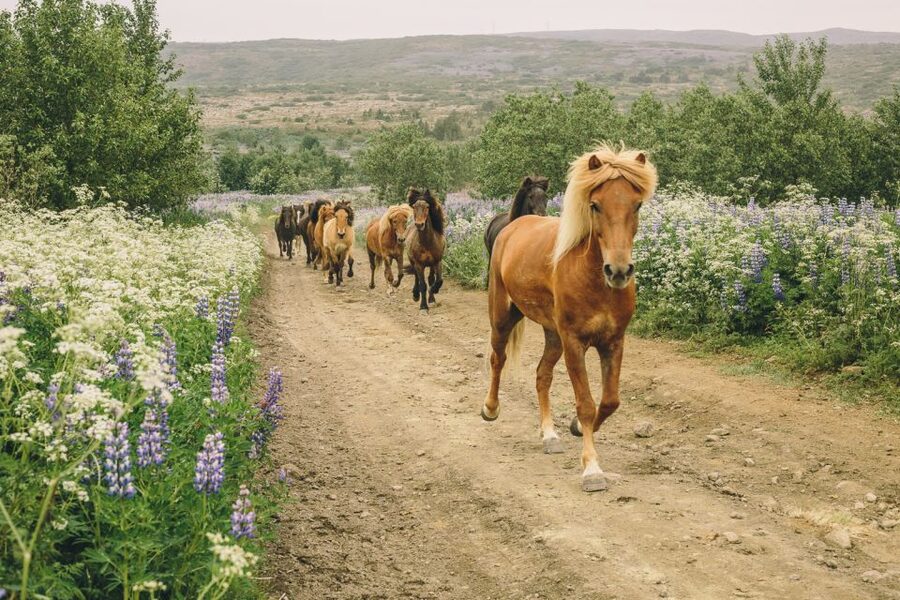
Icelandic horses are small, sturdy, and bred for more than one way of moving. The gait most riders want to feel is the tölt, a smooth four-beat movement that can be quick without the bounce many people associate with a trot.
You should not book this ride simply because you like horses. You should book it because you already know how to ride and want to spend a solid stretch moving through open country. The horses may be friendly and calm, but the ground is uneven and the pace can rise quickly.
The ride is described as lasting three hours, with roughly 2.5 to 3 hours of actual riding, including stops. Another description gives a longer overall trip time, so allow extra time for transport, changing, horse preparation, and return to Reykjavík. The riding itself is the important part, and it is much longer than a basic introductory outing.
More Horse Riding Tours in Reykjavik:
- Reykjavik: Red Lava Horse Riding Tour
★ 4.8 · 2,383 reviews - From Reykjavík: Icelandic Horse Riding Tour in Lava Fields
★ 4.7 · 1,356 reviews - Icelandic Horseback Riding Tour with Pickup Option from Reykjavik
★ 5.0 · 1,145 reviews
From Reykjavík to the Íshestar stables
The riding centre is at Sörlaskeið 26 in Hafnarfjörður, about a 10-minute drive from Reykjavík. If you arrange transport, pickup is available from selected hotels and designated city bus stops, not from every private address.
The listed drop-off points include central locations such as Harpa, the BSI Bus Terminal, City Hall, Lækjargata, the Culture House, Hotel Viking, Hilton Reykjavík Nordica, and several Reykjavík hotels and bus stops. If you are staying in a private apartment, the closest pickup point is sent by email.
You need to arrive at the centre 30 minutes before departure. That buffer is useful, not ceremonial. You have to check in, change into riding equipment, and get ready without rushing.
The schedule depends on the season and selected option. The ride is offered on Mondays and Fridays in winter, and every day in summer. The supplied timing information lists a 1:00 p.m. Friday departure and also refers to a 9:00 a.m. Monday tour, so confirm the exact time when booking. Pickup instructions also vary by departure.
Getting ready in warm riding gear
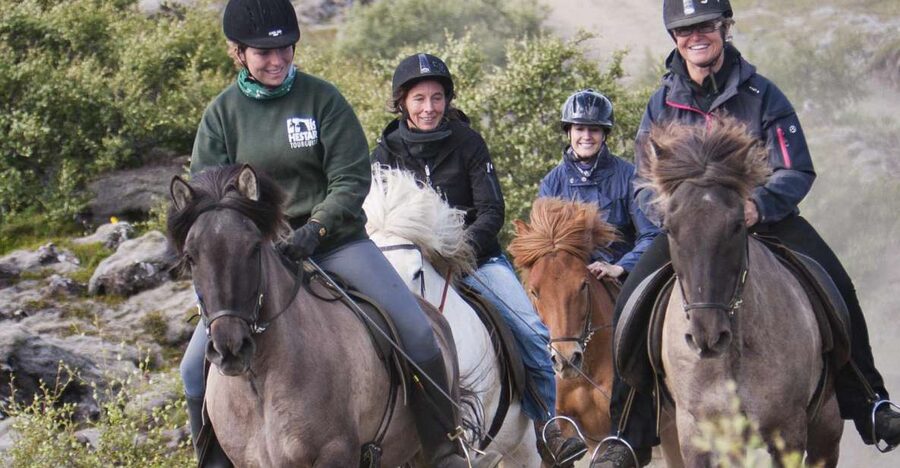
Íshestar supplies a helmet, rubber riding boots, rainwear, and either warm overalls or another warm outfit suited to the ride. This is one of the tour’s strongest practical features. Icelandic weather can turn cold, wet, or windy even when the forecast looks harmless.
You should still bring sunglasses, a hat, gloves, and weather-appropriate clothing. Wear layers underneath the supplied gear so you can adjust if conditions change. Sunglasses help with glare, wind, and volcanic dust, while gloves are especially useful when handling reins in cold air.
Large backpacks, bags, and cameras cannot go on the ride. Safety boxes are available at the riding centre for valuables. This is sensible, since a bag bouncing against your back becomes annoying quickly, and a large camera is not a good companion when you need both hands for riding.
There is one important Icelandic biosecurity rule. Riding clothing and equipment brought into the country must be washed at 40 degrees Celsius, dry cleaned, or disinfected. Used leather riding equipment cannot be brought into Iceland. For most people, using the centre’s gear is the easiest option.
Meeting your horse and guide
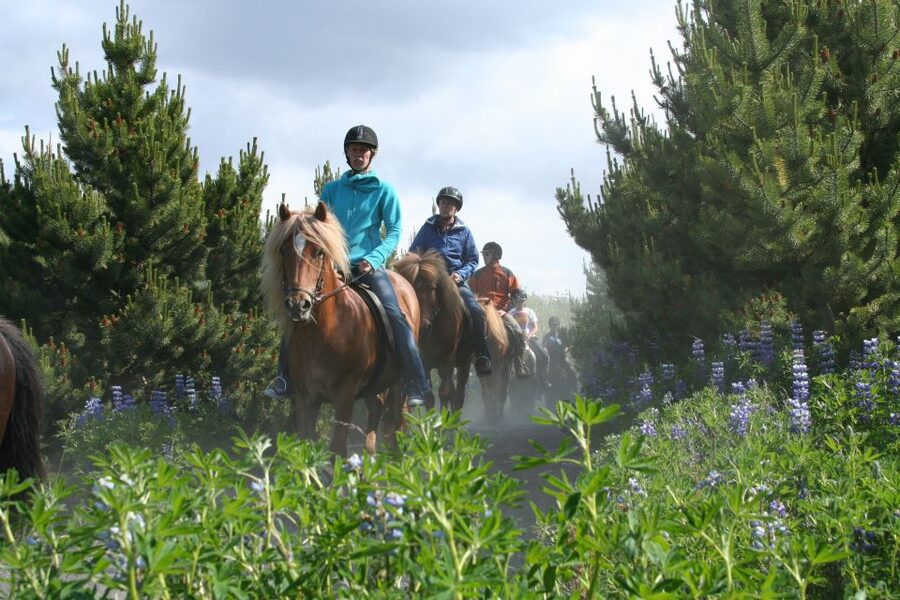
The staff aim to match each rider with a suitable horse. That matters more here than on a gentle beginner ride because the group needs to move together at several gaits.
Individual horses can have very different personalities. Some are more forward, some more relaxed, and some respond quickly to small signals. Riders have described being paired with gentle but capable horses, including a laid-back mount that still had enough speed for faster sections.
The horses are well cared for, and the centre lets riders spend time near them before or after riding when conditions allow. That small chance to meet the horses on the ground adds something human to the outing. You are not simply climbing onto a nameless animal and heading out.
The guide leads the group and helps keep riders together. Guides may speak English, Icelandic, or German, and some also speak other languages. The guide’s job is not only to point out scenery. It is to set the pace, explain the gaits, help with horse control, and respond to weather and ground conditions.
Worth a second look around Reykjavik
- Reykjavik: Golden Circle Full-Day Tour with Kerid Crater
★ 4.8 · 24,485 reviews - Reykjavik Food Walk – Local Foodie Adventure in Iceland
★ 5.0 · 18,952 reviews - Iceland: Northern Lights Bus Tour from Reykjavik
★ 4.1 · 11,161 reviews - Reykjavík: South Coast Waterfalls, Black Sand & Glacier Tour
★ 4.8 · 11,030 reviews
Riding through Hafnarfjörður’s volcanic country
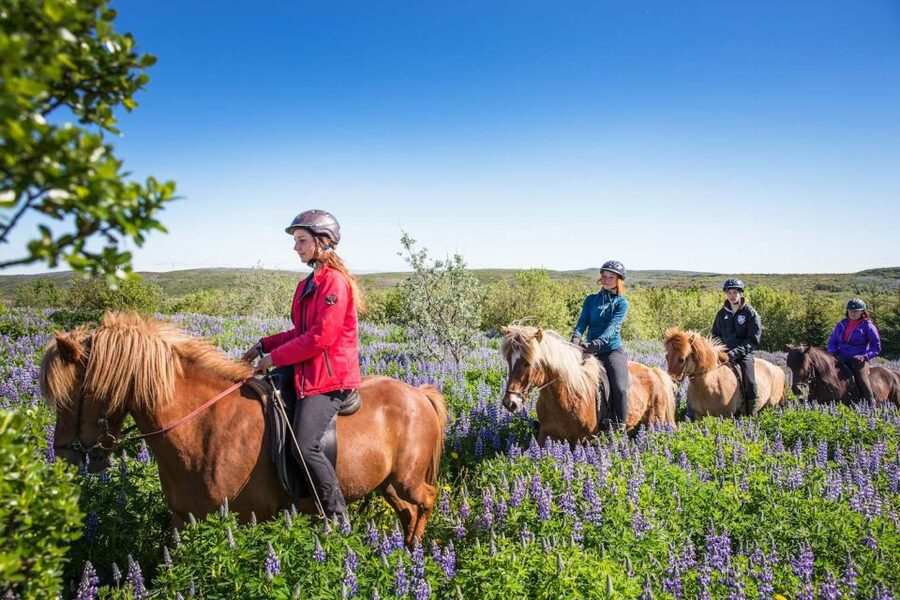
Once out of the stable area, the ride heads into the Reykjanes preservation area around Hafnarfjörður. The setting gives you a quick change from Reykjavík’s streets to open Icelandic country.
The scenery can include lava fields, mountains, a lake, and volcanic peaks in the distance. A short section of forest is also part of the route, an amusing contrast in a country better known for bare volcanic ground than thick woodland.
Lava fields are beautiful, but they are not smooth. The uneven surface is one reason this ride requires a strong intermediate level. You need a steady seat, good balance, and enough control to manage your horse when the ground changes.
Weather can alter the feel of the outing. Wind is common in Iceland, and a strong gust can make horses more alert. The horses used for the ride are selected for their ability to work in a group, but you still need to stay focused and follow the guide’s directions.
The volcanic setting is the real payoff. Riding gives you a lower, slower view than a bus window, yet you cover more ground than you would on foot. You notice the dark lava, open spaces, and mountain shapes while moving with the horse instead of simply stopping at a viewpoint.
Tölt, trot, and canter: what you need to handle
This is not a walk-only experience. The route includes the different gaits of the Icelandic horse, with tölt and canter forming much of the appeal.
The tölt is usually the main reason experienced riders choose this particular outing. It is a four-beat gait, and many riders find it remarkably smooth. One rider compared the feeling to butter, which is a fair image for the low-bounce sensation when the horse finds its rhythm.
You may also trot and canter. The exact amount depends on the group, weather, terrain, and guide, but the ride is designed for riders who can stay in control at all paces. Several accounts describe long stretches of faster work, so do not assume the word afternoon ride means a relaxed plod.
You should have ridden approximately 30 times or more in your life and be comfortable with cantering. You do not need to be a competition rider, but you should know how to balance, regulate speed, steer, and stop without constant help.
If you are confident only at a walk, or still uncertain in a canter, choose one of Íshestar’s beginner-friendly rides instead. The centre offers other options, and you will have a better time on the ride that matches your ability. A nervous rider can affect the horse and the whole group.
What the small group changes
The maximum group size is 12, but the ride may be much smaller. A group of three with one guide can feel almost private, especially when the guide has time to make careful horse matches and offer individual help.
Small groups also help at faster gaits. The guide can watch spacing, pace, and rider confidence more closely than on a large trail ride. If the group needs to divide, parents must remain with their children, and the guide manages the groups.
The experience is best when riders have similar ability. A group of experienced riders can spend more time tölting and cantering. If abilities vary widely, the guide may need to keep the pace conservative for safety.
That is an important value point. You are paying $246 per person, so this is not a cheap way to sit on a horse for an hour. The price makes more sense if you want 2.5 to 3 hours in the saddle, supplied gear, transport when selected, horse matching, and a proper chance to ride the breed’s special gaits.
Safety, limits, and comfort
The riding centre supplies helmets and takes safety seriously, but the responsibility is shared. You must tell the guide about any condition that could affect your ability to ride.
Pregnant women cannot participate because of the risk of injury to an unborn child. Anyone under the influence of alcohol or intoxicating drugs will not be allowed to ride. The minimum age is 12, and the maximum weight is 110 kilograms, or 243 pounds.
People with joint or mobility concerns should think carefully about mounting, dismounting, and riding over uneven ground. Assistance may be available, but the tour remains an active ride. One rider with replaced knees received help mounting and dismounting, yet the experience still demands enough mobility to sit and control a horse for several hours.
The operator may change the route, schedule, or itinerary because of weather or road conditions. That is normal for outdoor activities in Iceland. The route described here should be treated as a plan, not a guarantee of exact scenery or exact riding time.
The best time to book
Summer offers the widest schedule, since departures are available every day. That makes it easier to fit the ride around Reykjavík sightseeing or a day trip.
Winter departures are more limited, with the Viking Tour Express offered on Mondays and Fridays according to the supplied details. Winter brings shorter days and colder conditions, but the stable provides warm and waterproof riding gear. You should still bring gloves and dress carefully.
A clear day may give you broad views of mountains, volcanic peaks, and the lake. Wind or rain can make the ride harder, though the scenery can still feel dramatic. Do not book this outing only for perfect weather. Book it if you are prepared to ride in Icelandic conditions.
The ride is also a good choice for a horse-focused half-day. You can leave Reykjavík, ride in open country, and return without giving up an entire day. Just leave enough space around it if you have a fixed airport transfer, timed attraction, or evening booking.
Who should book this ride?
I would choose it for an intermediate or experienced rider who wants movement, not a symbolic horseback photo. It suits you if you can canter confidently, manage a horse in a group, and stay balanced over uneven volcanic ground.
It is also a good fit if you want to see countryside close to Reykjavík without committing to a full-day excursion. Families can participate if children are at least 12 and ride at the required level, but age alone does not make someone suitable.
I would not choose it for a first horseback ride, a rider who is uncomfortable at speed, or anyone hoping for a short, gentle introduction. The word Viking may sound playful, but the ride itself is a serious outing for capable riders.
Practical booking advice
The activity allows free cancellation up to 24 hours before departure, and you can reserve now and pay later. That gives you some flexibility while building an Iceland itinerary, especially when weather can affect outdoor plans.
Check the departure time, pickup point, and season before finalizing. Arrive 30 minutes early, bring gloves and layers, and do not plan to carry a large bag or camera.
At $246, I see the value in the riding time and the small-group format, provided you will use the faster gaits. If you only want to sit on an Icelandic horse and enjoy the view at a walk, a shorter beginner ride should cost less and suit you better.
Should you book the Viking Horseback Tour?
Book it if the thought of tölting across volcanic country makes you sit up straighter. The combination of Icelandic horses, lava fields, mountain views, supplied cold-weather gear, and a small group gives experienced riders a memorable way to get beyond Reykjavík.
Skip it if you are a beginner, uneasy at a canter, over the weight limit, pregnant, or looking for a quick family pony ride. For the right rider, this is one of the more active and satisfying ways to meet Icelandic horses and see the Reykjanes countryside.
FAQ
How long is the Viking Horseback Tour?
The activity duration is listed as three hours. Actual riding time is approximately 2.5 to 3 hours, including stops. Allow additional time if you use pickup and drop-off transportation or need time to change.
Where does the ride begin?
The meeting point is Íshestar Riding Tours at Sörlaskeið 26, 220 Hafnarfjörður. You should arrive 30 minutes before departure.
Is hotel pickup available from Reykjavík?
Optional pickup is available from selected Reykjavík hotels and designated bus stops. Private apartment occupants receive the closest pickup point by email.
What riding ability do I need?
This ride is for strong intermediate riders who have ridden approximately 30 times or more and are comfortable and in control at all gaits, including canter.
What is the minimum age?
The minimum age is 12 years. Children must remain in the same riding group as their parents if the group is divided.
What equipment is provided?
The centre provides a riding helmet, rubber boots, rainwear, and warm riding clothing or overalls. You should bring sunglasses, a hat, gloves, and clothing suited to the weather.
Is there a weight limit?
Yes. Riders must weigh no more than 110 kilograms, or 243 pounds. Pregnant women and anyone under the influence of alcohol or intoxicating drugs cannot participate.
Added around Reykjavik recently
- Reykjavik: Whale and Puffin Watching RIB Boat Tour★ 4.6 · 179 reviews
- Reykjavik: Whale Watching & Lava Show★ 5.0 · 4 reviews
- Reykjavik: Whale Watching Express★ 4.3 · 227 reviews
- Reykjavik: Whale & Marine Adventure Tour★ 4.3 · 71 reviews
- Reykjavík: Horse Riding Tours★ 4.9 · 127 reviews
- Day Trip to Snæfellsness Peninsula from Reykjavik★ 5.0 · 7 reviews
- Private Luxury Transfer from Reykjavik to Blue Lagoon★ 5.0 · 1 review
- Whales Of Iceland Admission Ticket★ 4.0 · 239 reviews
Horse Riding Tours, compared.
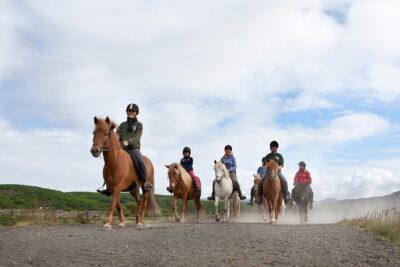
Icelandic Horseback Riding Tour with Pickup Option from Reykjavik
Read our review →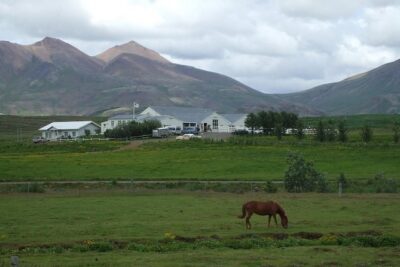
Icelandic Horseback Riding Tour Including Pick Up from Reykjavik
Read our review →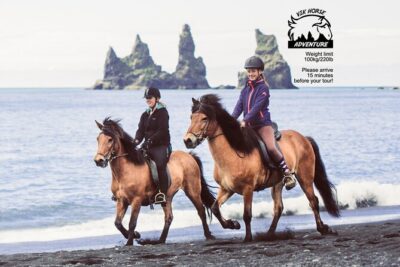
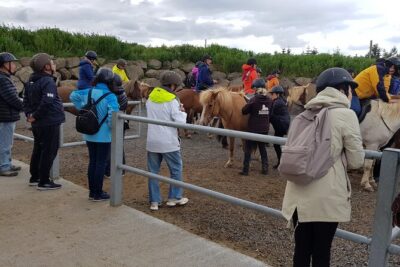
Golden Circle, Fridheimar Farm & Horses Small Group Tour from Reykjavik
Read our review →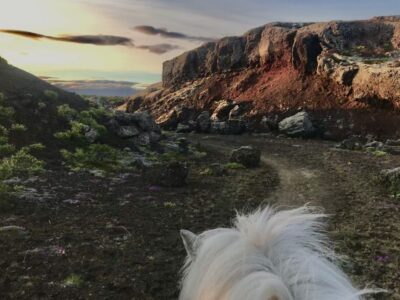
Small-Group Horse Volcano Riding Tour with Pickup
Read our review →Browse the lists this tour appears in