
Review · 7-DAY EXPERIENCES
7-Day Small Group Journey Around Iceland
Iceland rewards anyone who skips the steering wheel. This seven-day loop gives you Ring Road access without driving, from the turf farms of the north to the glaciers, waterfalls, and black beaches of the south. I especially like the included six nights of accommodation and the amphibian boat ride on Jökulsárlón Glacier Lagoon. The main drawback is the pace: you cover a lot of ground, and central Reykjavík receives little attention.
You travel in a small group, with a maximum of 25 people and often fewer. Past departures have had about 17 people in a medium-sized coach, leaving room for bags and giving you a more personal feel than a large sightseeing bus. You should still expect several long driving days, changing hotels, and weather that can turn a sunny stop into a cold, wet one.
The price is $2,221.59 per person. That is not cheap, but it includes transport, six nights with private bathrooms, breakfast, a local English-speaking guide, Wi-Fi, Glaumbær Folk Museum, and the Jökulsárlón boat trip. For many people, the real value is avoiding the work of driving, booking hotels, checking road conditions, and finding parking.
In This Review
- Key points at a glance
- Starting in Reykjavík, then heading north
- Glaumbær and the horse country of Skagafjörður
- Mývatn’s volcanoes, caves, and steaming ground
- The Eastfjords reward patience
- Jökulsárlón and the south coast’s big sights
- The Golden Circle brings the loop home
- Hotels, meals, and life on the coach
- Who will get the most from this seven-day loop?
- Practical value at $2,221.59
- Should you book this Iceland Ring Road tour?
- FAQ
- Where does the tour start?
- Is airport transportation included?
- How many people can join the tour?
- What accommodation is included?
- Is the Jökulsárlón boat ride included?
- Are meals included?
Key points at a glance
- Jökulsárlón includes an amphibian boat ride: You get more than a roadside view of the glacier lagoon.
- The route covers Iceland’s major regions: The journey links western Iceland, the north, Eastfjords, southeast coast, Golden Circle, and Reykjavík.
- Glaumbær adds cultural depth: The preserved turf farm shows how Icelanders adapted to a demanding climate.
- Small-group transport keeps the days manageable: The vehicle includes Wi-Fi and has no stated luggage restriction.
- The guide can make or break the trip: Previous guides such as Arni, Ellert, Guðren, Bettina, and Ívar received especially warm praise for local stories, safety, and clear communication.
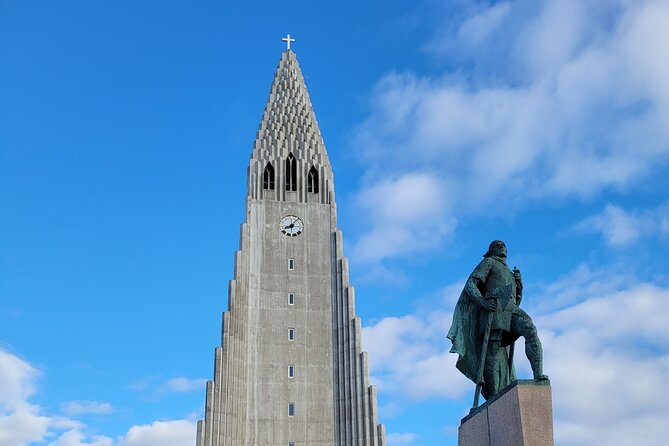
- Reykjavík is only lightly covered: Add personal time in the capital if museums, restaurants, Perlan, or Harpa matter to you.
Starting in Reykjavík, then heading north
Day one is deliberately easy. You land at Keflavík International Airport and make your own way to your Reykjavík accommodation. There is no included airport transfer, so plan that first connection before you arrive.
The tour itself begins at Reykjavík Natura, Berjaya Iceland Hotels, at 9:00 a.m. on day two. This location is outside the city center, so allow time to reach it if you are staying elsewhere. The first night is a useful chance to rest, but I would not treat it as your Reykjavík sightseeing time. You will have only a short return visit at the end.
The group heads north through the Hvalfjörður tunnel toward Borgarnes. Near town, Grábrók Volcano provides an early introduction to Iceland’s volcanic past. This volcanic fissure erupted roughly 3,000 years ago, and the stop gives you a chance to stretch your legs after the morning departure.
The route then crosses Holtavörðuheiði, a highland plateau, before entering northwest Iceland. This is a long day in the vehicle, but the changing scenery helps. You move from volcanic ground to open farming country, with the guide explaining the places that pass outside your window.
Worth a second look around Reykjavik
- Reykjavik: Golden Circle Full-Day Tour with Kerid Crater
★ 4.8 · 24,485 reviews - Reykjavik Food Walk – Local Foodie Adventure in Iceland
★ 5.0 · 18,952 reviews - Iceland: Northern Lights Bus Tour from Reykjavik
★ 4.1 · 11,161 reviews
Glaumbær and the horse country of Skagafjörður
Skagafjörður is known for dairy and sheep farming, along with Icelandic horses. The area has more horses than people, a detail that helps explain why the animals are such a visible part of local life.
The most meaningful stop here is Glaumbær Museum. Its old turf houses, dating from the 18th and 19th centuries, show how Icelanders built homes suited to a cold, wind-exposed environment. The farmhouse has been restored and furnished with period items, so this is not just a quick photo stop. You get a clearer sense of everyday rural life before modern heating, roads, and building materials changed the country.
I like this pause because it breaks up the parade of waterfalls and volcanic sites. Iceland’s scenery is the headline, but Glaumbær explains how people lived beside it.
The day ends in Akureyri, the main town of northern Iceland. You stay there overnight. The schedule allows about two hours for the final portion of the route, but this is primarily a touring day rather than a free evening in town.
Mývatn’s volcanoes, caves, and steaming ground
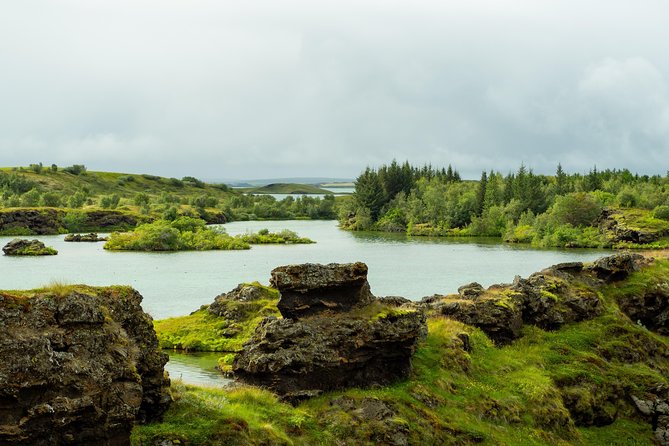
Day three is one of the busiest and most varied parts of the journey. The route focuses on the Lake Mývatn area, a shallow lake shaped by active volcanic forces and known for strong biological activity.
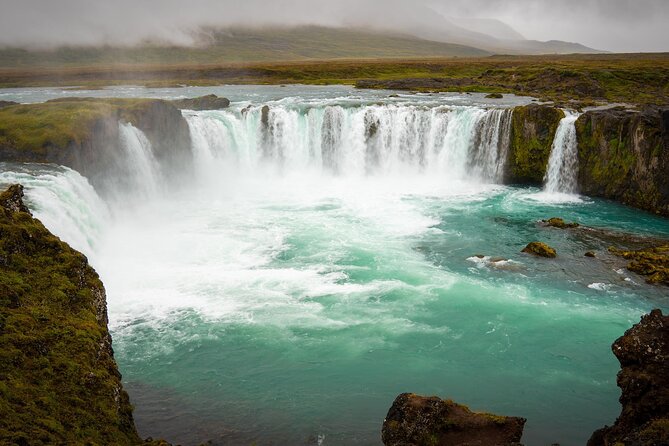
Goðafoss is a major early stop. Its name means Waterfall of the Gods, and the broad cascade has both visual power and historical meaning. You can expect time to walk around, take photographs, and hear the guide explain why the waterfall matters in Icelandic culture.
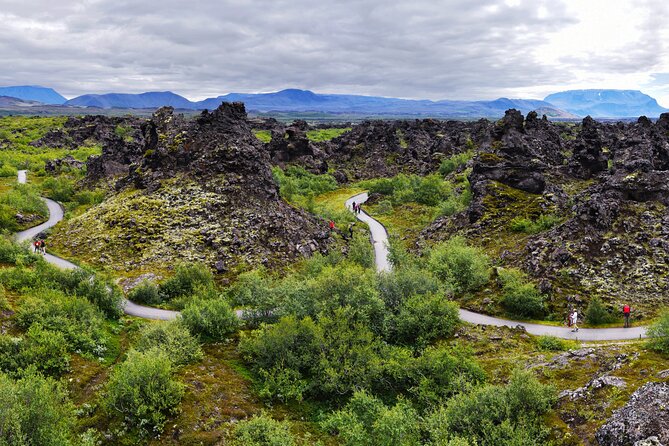
At Dimmuborgir, lava formations create a field of dark shapes often called the Dark Castles. The paths let you see how cooling lava can form walls, arches, and strange towers. This is a better stop for walking than simply viewing scenery from the bus, so wear shoes that can handle uneven ground.
Skútustaðagígar offers another volcanic puzzle. These pseudocraters formed when hot lava moved across wet ground and caused steam explosions. They look like volcanoes, but they are not true volcanic craters. The stroll is fairly gentle in character, though Icelandic weather can make any outdoor path feel harder.
Grjótagjá is a small lava cave with a thermal spring inside. The water is not generally available for bathing because volcanic activity has caused temperature changes and access is less simple than it once was. The cave is also known as a filming site for Game of Thrones, but its geology is the stronger reason to visit.
At Námaskarð, steam rises from fumaroles and mud bubbles in shallow pools. The colors and smells can feel almost unreal. Stay on marked paths and follow the guide’s instructions, since geothermal ground is not a place for casual wandering.
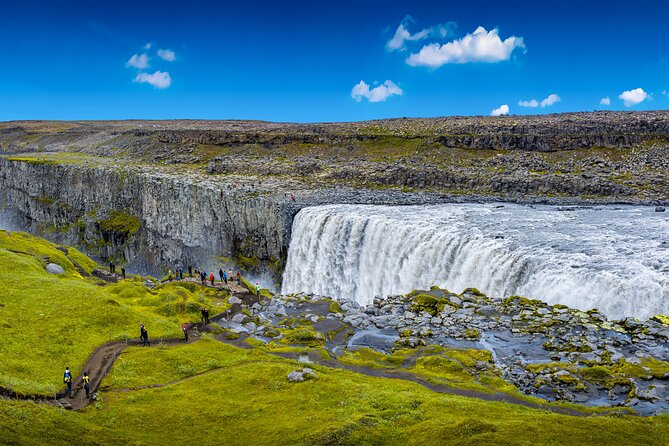
The day continues to Dettifoss, one of Europe’s most powerful waterfalls. The water has a raw, forceful quality that contrasts with the delicate ice and calm ponds seen earlier. From there, you cross the Möðrudalsöræfi highland desert through Jökuldalur before reaching Egilsstaðir.
This is a demanding day. You see many important sites, but you do not get long, slow visits at each one. If you prefer one or two places per day, this tour may feel rushed.
The Eastfjords reward patience
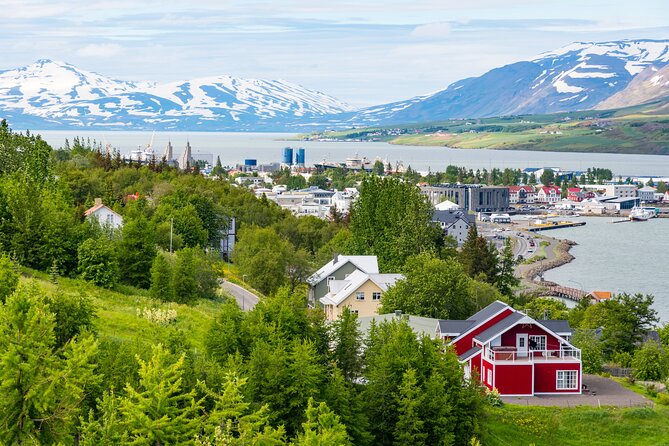
Day four is largely a scenic drive from Egilsstaðir to Höfn í Hornafirði. The Eastfjords are made for looking out the window. Narrow fjords cut between steep cliffs, and small fishing villages appear in quiet bays.
This part of Iceland is less famous than the Golden Circle, but that is part of its appeal. You pass traditional farms, lakes, remote settlements, and wide stretches with few buildings. The route feels more remote than the tourist-heavy stops near Reykjavík.
The Eastfjords are also associated with Iceland’s only wild reindeer herds. They originated from animals brought to Iceland for farming, but the farming plan failed and the reindeer were left to roam. Seeing them is not guaranteed, but the fact adds an interesting local detail to the drive.
Weather matters here. Summer can bring some of Iceland’s sunniest conditions, while winter may hide the fjords in heavy fog. The tour operates in changing conditions, so bring a warm layer, waterproof outerwear, hat, and gloves in your day bag rather than buried in your luggage.
You spend the night in Höfn. The town is a practical base for the glacier lagoon the next morning.
Now for something with a completely different feel:
- Reykjavík: South Coast Waterfalls, Black Sand & Glacier Tour
★ 4.8 · 11,030 reviews - Reykjavík: Whale Watching and Marine Life Cruise
★ 4.6 · 9,838 reviews - Reykjavik: Sky Lagoon Entrance Pass With 7-Step Spa Ritual
★ 4.8 · 6,166 reviews - From Reykjavik: Golden Circle, Kerid, & Secret Lagoon Tour
★ 4.8 · 6,009 reviews
Jökulsárlón and the south coast’s big sights
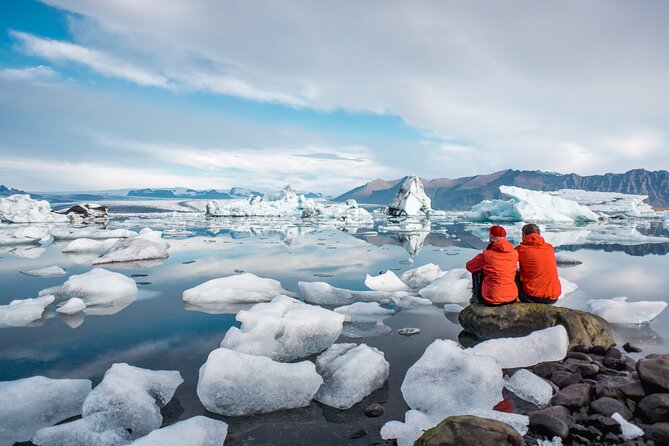
Day five begins with one of the strongest moments on the route: Jökulsárlón Glacier Lagoon. Ice calves from Breiðamerkurjökull and floats through the lagoon before moving toward the sea. The ice can appear milky white or blue, depending on light and the air trapped in its crystals.
The included amphibian boat ride is a real advantage. You do not merely stop at a viewing area and leave. The boat moves among the floating ice, giving you a closer look at the lagoon’s scale and changing shapes. The ride is included in the tour price, which improves the overall value.
Across the road, Diamond Beach offers a sharp contrast. Pieces of ice wash onto the black shore, where they can look like glass or polished stones. The ice varies from small fragments to larger rounded forms, and the scene changes with the tide and weather.
The route continues through Vatnajökull National Park, passing near Hvannadalshnúkur, Iceland’s highest peak at 2,119 meters. You then cross the Eldhraun lava fields and the black glacial plains of Mýrdalssandur. These long stretches help you understand Iceland as a country shaped by fire, ice, water, and wind.
At Reynisfjara, the black sand beach is backed by unusual rock formations and powerful surf. Puffins are associated with the area, but wildlife sightings are never something you should count on. The waves are the serious issue here. Do not approach the waterline, even if the sea looks calm. Sudden waves can reach much farther up the beach than expected.
Dyrhólaey, the rock promontory nearby, offers views of an enormous sea-carved opening. It adds height and a wider coastal perspective after the flat black beach.
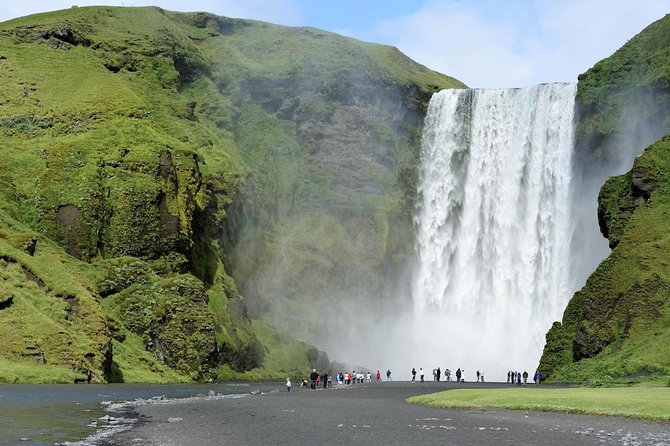
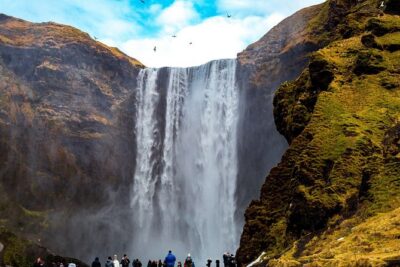
The waterfalls come in quick succession. Skógafoss drops 60 meters and often throws up rainbows in sunlight. Seljalandsfoss lets you walk behind the falling water, but waterproof clothing is not optional if you want to stay comfortable. These stops are highly photogenic, though crowds and mist can make cameras and phones difficult to manage.
This is another full day. The reward is the sheer variety: icebergs, black sand, lava, cliffs, sea stacks, and waterfalls. The cost is limited quiet time at each location.
The Golden Circle brings the loop home
Day six covers Iceland’s most famous trio. Gullfoss is a two-tiered waterfall plunging into a rugged canyon along the Hvítá River. Its power is easy to appreciate from the viewpoints, and you have a longer visit here than at some of the smaller stops.
At the Geysir geothermal area, the original Geysir is largely inactive, but Strokkur erupts every few minutes. You do not need to guess when the action will happen. Wait near the viewing area and you will likely see repeated bursts, though the height and timing vary.
Þingvellir National Park combines geology and national history. The North American and European tectonic plates are pulling apart here, creating a rift valley. The site also hosted Alþingi, Iceland’s ancient parliament, established in 930. That makes Þingvellir more than a scenic stop. It is one of the clearest places to connect Iceland’s natural setting with its political past.
After Þingvellir, the coach returns to Reykjavík. If you book an optional Blue Lagoon visit, you continue there before reaching the hotel. If not, you go directly to your accommodation.
The optional extras deserve careful thought. The Forest Lagoon was praised as a relaxing addition, while the whale-watching trip was described as long and cold in poor weather, with a large, full boat. That does not make whale watching a bad choice, but after five busy touring days, you may prefer a warm evening and an earlier night. Optional activities have separate costs, so check the available price choices before booking.
Hotels, meals, and life on the coach
Accommodation is included for six nights, with private bathrooms and breakfast at the hotels. The hotels are described as basic but clean and comfortable, often within the Berjaya group. This is practical touring accommodation, not a luxury hotel holiday.
Breakfast matters because the days begin early and often include long road sections. Meals other than breakfast are not included, so budget carefully. Food in Iceland can be much more expensive than you expect, sometimes double or triple the prices you pay at home. Your guide can point out dinner choices when the group arrives in each town, but you should plan for a serious food budget.
The vehicle includes free Wi-Fi and USB charging points have been available on past departures. There is no stated luggage allowance restriction, a useful feature when you are carrying cold-weather clothing for a week.
The coach usually stops for bathroom breaks at least every couple of hours, sometimes for around 30 minutes. That makes the long drives easier, though you should still bring water, snacks, and a small day bag with weather gear.
The guide is central to the experience. Arni was praised for combining history, geography, language, and personal stories, while Ellert was singled out for explaining geology, weather, mythology, and difficult road conditions. Guðren was appreciated for her local perspective and affection for Icelandic culture. Bettina and Ívar were also praised for clear guidance and strong local knowledge on another departure.
Your exact guide will vary, but these examples show the kind of value a good guide can add. A guide can also adjust small details when conditions allow, such as adding a walk toward a glacier or stopping to see Icelandic horses more closely. Those extras are not guaranteed, but flexibility is a useful benefit of a guided loop.
Who will get the most from this seven-day loop?
I would choose this tour if you want to see nearly all of Iceland’s major regions without driving. It suits first-time visitors, solo travelers, parents traveling with older children, and anyone who would rather watch the scenery than study road signs and weather alerts.
It also works well for mixed-age groups. One person traveled with a 73-year-old mother and valued not having to manage driving, parking, timings, or hotel planning. Most people can participate, but you should be comfortable getting on and off the coach and walking at outdoor sites.
You should think twice if your main goal is Reykjavík, glacier walking, long hikes, or a slow rural stay. The route does not include a glacier walk, and the capital is not a major focus. You may want to add a night or two in central Reykjavík before or after the loop.
If you stay near Reykjavík Natura, allow about ten minutes to walk to Perlan. Its exhibits and city views make it a useful extra visit, especially because the organized route gives you little time downtown. A sleep mask is sensible in summer, when daylight lasts late into the night.
Practical value at $2,221.59
At $2,221.59, this is a substantial purchase. Still, compare it with the combined cost of a rental car, fuel, six hotel nights, breakfast, parking, museum admission, the glacier lagoon boat, and the time needed to plan a Ring Road route.
The strongest value comes from the logistics. You can sit back during difficult weather, hear local explanations, and arrive at accommodation without worrying about where to stay. The group size also keeps the trip from feeling like a huge tour operation.
The price is less appealing if you would happily drive yourself, choose simple guesthouses, cook some meals, and spend several days in one region. Independent touring can give you more freedom and more time at individual stops.
The cancellation terms are worth noting before payment. You can receive a full refund when cancelling at least six full days before the start time. Cancellations two to six full days ahead receive 50 percent, while cancellations less than two full days ahead are not refunded. Airport transfers and meals beyond hotel breakfast are extra.
Should you book this Iceland Ring Road tour?
Book it if you want broad Iceland coverage with minimal planning. The route packs in the north, Eastfjords, glacier country, south coast, Golden Circle, and the essential volcanic sites around Mývatn. The included boat ride and six hotel nights make the cost easier to justify.
I would add personal time in Reykjavík, pack serious rain and wind gear, and keep optional activities selective. Choose this tour for access, context, and peace of mind, not for slow mornings or long hikes. If that trade suits you, this is a strong way to see Iceland’s best-known natural sights without putting yourself behind the wheel.
FAQ
Where does the tour start?
The tour starts at Reykjavík Natura, Berjaya Iceland Hotels, at Nauthólsvegur 52 in Reykjavík. The departure time is 9:00 a.m.
Is airport transportation included?
No. You make your own way from Keflavík International Airport to your Reykjavík accommodation on arrival, and your transfer from Reykjavík to Keflavík on day seven is also individual and not included.
How many people can join the tour?
The maximum group size is 25 people. Previous departures described in the supplied information had about 17 people.
What accommodation is included?
Six nights of accommodation are included. The hotels have private bathrooms, and breakfast is included each morning.
Is the Jökulsárlón boat ride included?
Yes. The amphibian boat tour on Jökulsárlón Glacier Lagoon is included in the experience.
Are meals included?
Hotel breakfasts are included. Other meals are not included, so you pay separately for lunch, dinner, snacks, and drinks.
Added around Reykjavik recently
- Reykjavik: Whale and Puffin Watching RIB Boat Tour★ 4.6 · 179 reviews
- Reykjavik: Whale Watching & Lava Show★ 5.0 · 4 reviews
- Reykjavik: Whale & Marine Adventure Tour★ 4.3 · 71 reviews
- Reykjavik: Whale Watching Express★ 4.3 · 227 reviews
- From Reykjavík: Viking Horseback Tour in Hafnarfjörður★ 4.9 · 112 reviews
- Reykjavík: Horse Riding Tours★ 4.9 · 127 reviews
- Day Trip to Snæfellsness Peninsula from Reykjavik★ 5.0 · 7 reviews
- Private Luxury Transfer from Reykjavik to Blue Lagoon★ 5.0 · 1 review
7-Day Experiences, compared.
7-Day Complete Iceland: South Coast, Golden Circle, Akureyri & Snaefellsnes
Read our review →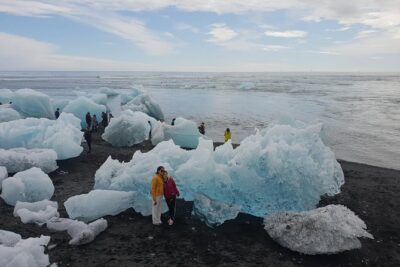
4, 5, 6 or 7-Day Small-Group Ring Road Tour from Reykjavik
Read our review →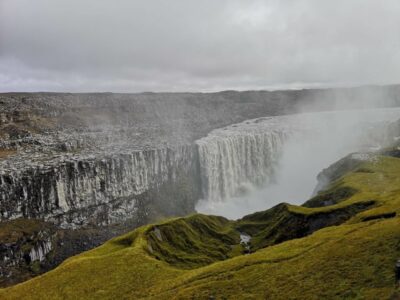
7-Day Self-Drive Private Tour Northern Lights Adventure – Iceland South & West
Read our review →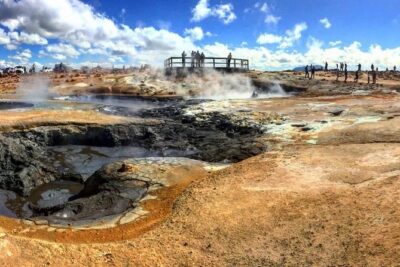
7 Day Iceland with Reykjavik Northern Light | Blue Lagoon | Golden Circle ……
Read our review →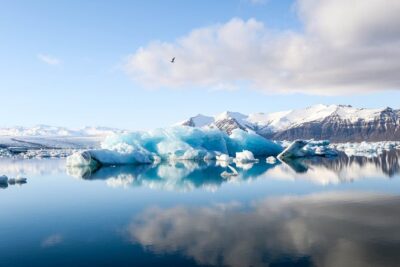
7 Day Iceland with Reykjavik Blue Lagoon Snæfellsnes | Golden Circle | South….
Read our review →Browse the lists this tour appears in