
Review · VOLCANO AND CRATER TOURS
Reykjavik: 45-Minute Volcano Sightseeing Helicopter Tour
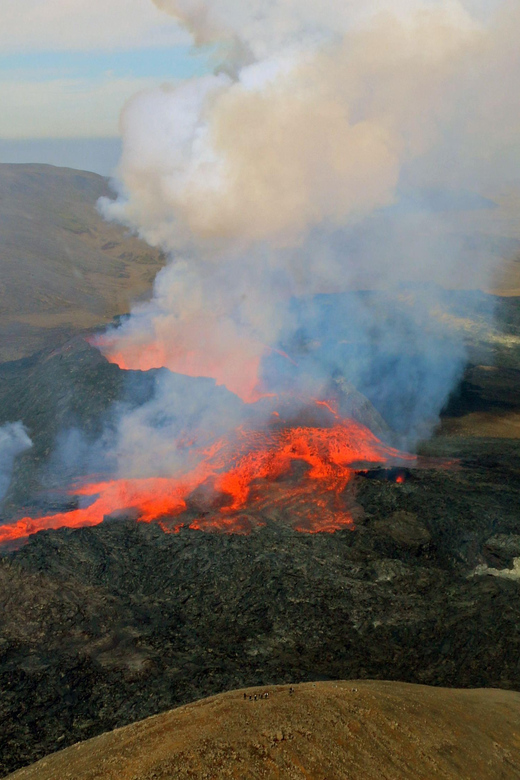
Volcanoes look different from the sky. This 45-minute flight from Reykjavik Airport gives you a clear view of the Reykjanes Peninsula, including the Sundhnúkahraun eruption area from March 2024 and the older Fagradalsfjall and Geldingadalir sites. I especially like the small group of up to five people and the way the route combines city views, volcanic craters, lava fields, and a possible glimpse of flowing lava.
I also like that every passenger gets a good view from the helicopter, rather than being stuck behind a window or another person. The pilots add useful information about Iceland’s volcanic activity and guide the flight around the eruption sites. The main drawback is simple: visible lava is never guaranteed, and weather or official safety rules can cancel the flight.
- The flight leaves from Reykjavik Domestic Airport, only about five minutes from the city center.
- The Reykjanes Peninsula receives about 30 minutes of sightseeing time, with the newest eruption area as the main focus.
- The route includes Sundhnúkahraun, the site associated with the March 2024 eruption.
- The helicopter circles the lava fields, giving you views that are difficult to match from the ground.
- The group is limited to five participants, which keeps the experience quieter and makes it easier to hear the pilot.
- The flight returns over Bessastadir, the president’s home, if you know where to look.
In This Review
- A Fast Way to Reach Iceland’s Volcanic South
- Reykjavik From the Air in Five Minutes
- Old Lava Fields Before the New Eruptions
- Sundhnúkahraun and the March 2024 Eruption Area
- Fagradalsfjall and Geldingadalir From Above
- Why the Helicopter View Matters
- The Pilot Makes the Short Route More Useful
- Bessastadir on the Return Flight
- Is $624 a Good Value?
- Weather, Safety, and the Lava Question
- Who Will Enjoy This Flight Most?
- Practical Tips Before You Book
- Should You Book the Reykjavik Volcano Helicopter Tour?
- FAQ
- Where does the helicopter tour start?
- How long does the experience last?
- How much does the tour cost?
- What language is the tour conducted in?
- How many people can join the flight?
- Which volcanic sites can I see?
- Will I definitely see flowing lava?
- Is the flight affected by weather?
- What happens if the flight is cancelled?
- Can children under two join the tour?
A Fast Way to Reach Iceland’s Volcanic South
The experience begins at the Reykjavik FBO, a small airport building marked with the operator’s sign. It is next to the Berjaya hotel, making the meeting point easy to reach from central Reykjavik.
You meet the airport staff and pilot there before receiving a short briefing about the route. Then you walk onto the tarmac and board the helicopter. This is not a long airport process, which matters when the entire outing lasts less than an hour.
The location is one of the tour’s practical strengths. You do not need to spend most of a day driving to the Reykjanes Peninsula, waiting at a roadside viewpoint, or walking across rough volcanic ground. You get from central Reykjavik to the volcanic area quickly, then return to the city before much of your day is gone.
The flight is conducted in English, and the pilot acts as both your guide and your captain. The group limit of five helps keep the briefing personal. It also means you should not expect a large sightseeing aircraft with a guide speaking to a crowd.
Reykjavik From the Air in Five Minutes
Once airborne, the helicopter first crosses the capital area. The city looks compact from above, with the surrounding coast and open ground quickly replacing the urban view.
This opening section lasts about five minutes, so it is not the main reason to book the tour. Still, it gives you a useful sense of scale. You see how quickly Reykjavik gives way to open terrain, and you begin to notice the contrast between the city and the dark volcanic ground beyond it.
I would treat this part as a pleasant introduction rather than a full city tour. If you want detailed information about Reykjavik’s buildings, neighborhoods, or landmarks, this flight is not designed for that. Its purpose is to get you to the volcanic sites while giving you a short aerial view of the capital.
More Volcano and Crater Tours in Reykjavik:
- Reykjavik: Golden Circle Full-Day Tour with Kerid Crater
★ 4.8 · 24,485 reviews - Small-Group Golden Circle, Blue Lagoon with Ticket & Kerid Crater
★ 5.0 · 5,631 reviews - Reykjavik: Golden Circle, Kerid Crater, & Blue Lagoon Tour
★ 4.9 · 4,351 reviews
Old Lava Fields Before the New Eruptions
As the helicopter heads toward the Reykjanes Peninsula, the pilot points out older lava fields. Some formed hundreds of years ago, creating a useful timeline before you reach the much newer eruption areas.
From ground level, one lava field can look much like another. From the air, the age and shape of the flows become easier to compare. You can see how dark rock spreads across the peninsula and how craters interrupt the surrounding terrain.
This is where the pilot’s commentary adds real value. The flight is short, so you will not receive a long geology lesson, but you do get context for the sites ahead. The volcanic story is not limited to one dramatic eruption. The older fields help explain why the Reykjanes Peninsula continues to attract so much attention.
Sundhnúkahraun and the March 2024 Eruption Area
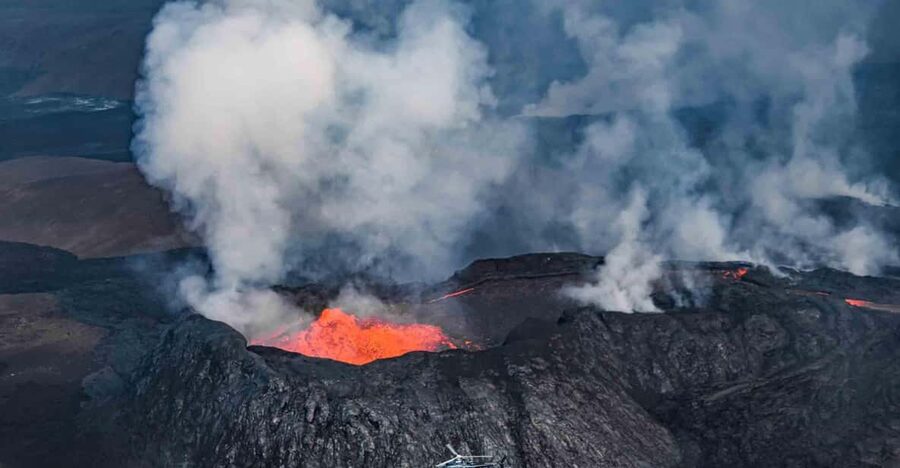
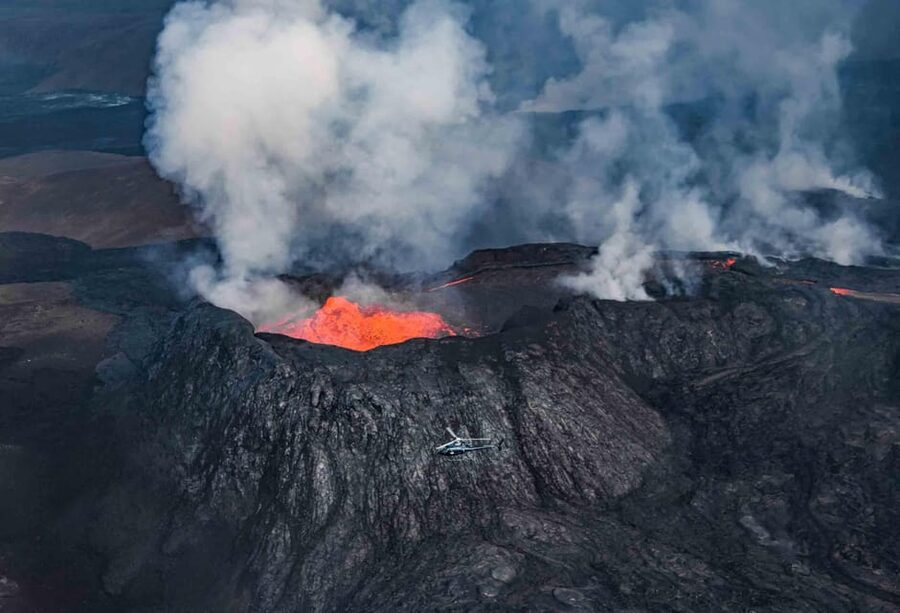
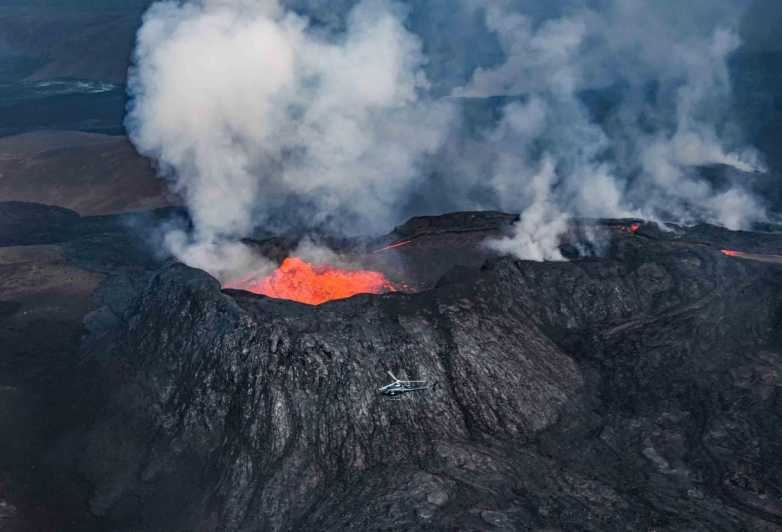
The main part of the outing takes place over the Reykjanes Peninsula, with around 30 minutes set aside for sightseeing. The route includes Sundhnúkahraun, linked to the most recent eruption site described for this experience, from March 2024.
The helicopter circles the lava fields so you can see their shape from several angles. That repeated view matters. A single pass can be over in seconds, but circling gives you time to take in the craters, fresh-looking rock, and the way the lava spreads across the ground.
If lava is flowing during your flight, this is the moment that can turn a very good trip into a remarkable one. You may see glowing activity within the dark lava field, though you must plan with realistic expectations. Eruptions are natural events, and the activity can change. There is no promise that flowing lava will be visible during your departure.
That uncertainty is not a flaw in the operator’s control. It is simply part of visiting an active volcanic area. I would book this flight for the aerial view of the volcanoes and lava fields, then treat flowing lava as a bonus.
Fagradalsfjall and Geldingadalir From Above
The route also takes in the major craters formed during the Fagradalsfjall and Geldingadalir eruptions from 2021 and 2022. These sites provide an important comparison with Sundhnúkahraun.
The newer eruption area may attract most of your attention, but the earlier craters show how quickly the peninsula’s appearance can change. From the helicopter, you can compare several volcanic sites in one outing instead of seeing just one location from a marked viewpoint.
The pilot may make several approaches around the active or recent eruption area, depending on conditions and the approved flight route. This gives you different angles for photographs and helps you understand the shape of the craters.
The helicopter’s height also changes your sense of the sites. On foot, you focus on the rough surface in front of you. From above, you can see the full outline of a crater and how the lava field fits into the wider area.
More Helicopter Tours in Reykjavik:
- From Reykjavik: New Volcanic Area Helicopter Tour
★ 4.8 · 500 reviews - 1-Hour Helicopter Tour in Iceland: The Geothermal Tour
★ 4.9 · 263 reviews - Helicopter Tour with Mountain Summit Landing from Reykjavik
★ 5.0 · 243 reviews - Iceland Volcanic Eruption Area Helicopter Tour from Reykjavík
★ 4.5 · 196 reviews
Why the Helicopter View Matters
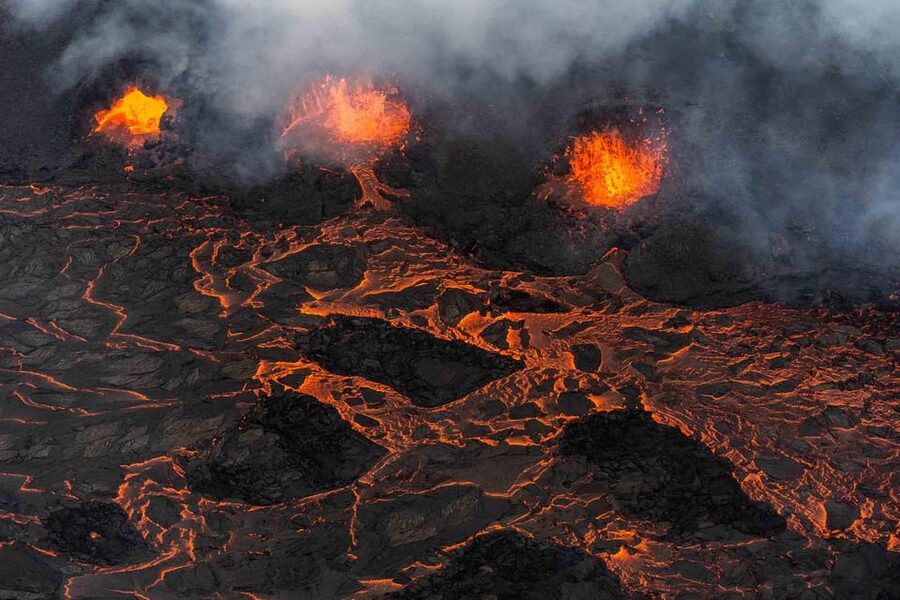
A ground visit gives you texture, smell, and the feeling of walking beside volcanic rock. This helicopter trip offers something different: scale.
You can see the full spread of a lava field, the relationship between several craters, and the distance from the eruption areas back toward Reykjavik. That broad view is the experience’s real strength.
The comfortable flight also saves time and physical effort. You do not need to walk across the lava fields, and the tour does not ask you to spend hours exposed to Iceland’s weather. For someone with limited time in Reykjavik, the flight packs several major volcanic locations into one short outing.
There is a tradeoff. You remain in the helicopter, so you do not touch the rock or stand beside the volcanic ground. If your ideal volcano experience involves hiking and being outdoors, this is a supplement rather than a replacement.
The Pilot Makes the Short Route More Useful
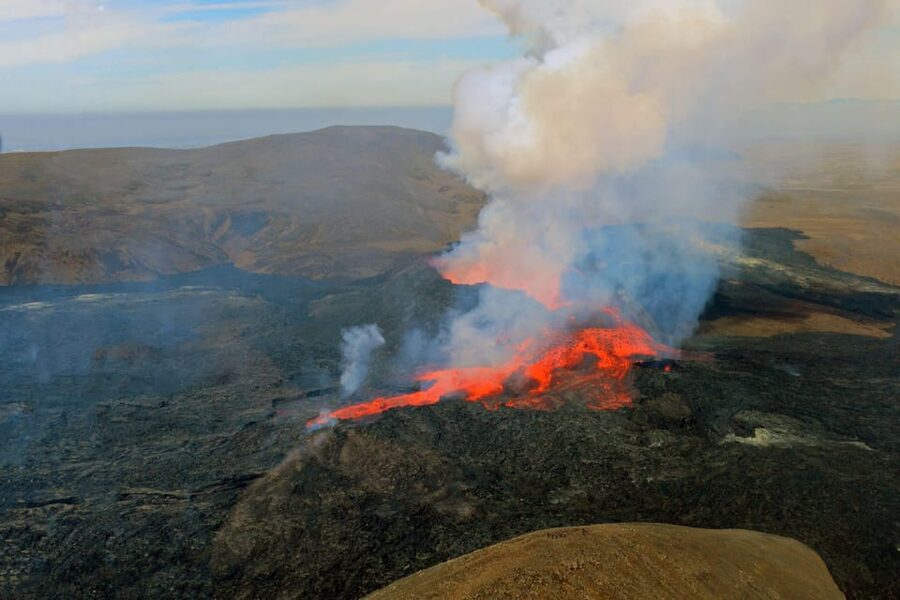
The pilot’s role matters on a tour this brief. You are not simply paying for a helicopter ride and hoping to recognize what you see below.
The pilot explains the volcanic activity and points out the main craters, older lava fields, and recent sites. Strong feedback about the pilots focuses on two things: clear information and a calm, friendly manner. One pilot repeatedly approached the active volcano from different angles, helping passengers see it well and take photographs.
That kind of guidance makes a difference because volcanic terrain can be hard to read from above. A dark patch may be an old lava flow, a crater, or a recent deposit. Without explanation, the view can become a dramatic but confusing pattern of black rock.
The experience has an overall rating of 4.6 from 45 ratings, with particularly strong praise for the pilots, smooth organization, clear timing, and photo opportunities. One useful warning did come up: the meeting building was temporarily locked for more than 30 minutes before a staff member returned. That appears to have been an isolated inconvenience, but I would still arrive with enough time to handle a minor check-in delay.
Bessastadir on the Return Flight
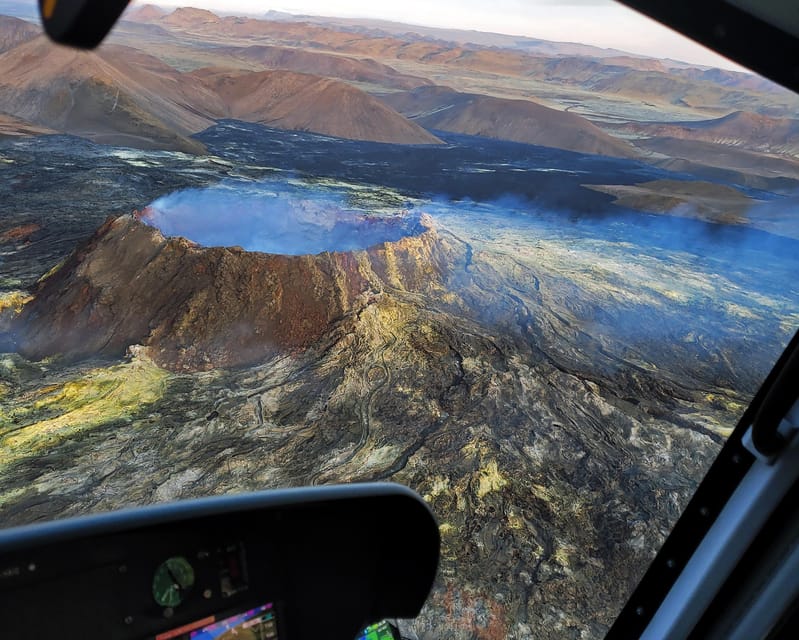
After the Reykjanes sightseeing section, the helicopter turns back toward the capital. The route includes about five minutes over Bessastadir, the home of Iceland’s president.
Bessastadir is not presented as a separate stop where you land or walk around. It is an aerial landmark on the way back to Reykjavik. If you know where to look, you may be able to spot the property from above.
This small detail gives the return flight a little extra interest. It also breaks up the journey back to the airport, so the final minutes do not feel like a simple ride home.
The experience then ends where it began, at the Reykjavik FBO. The complete route is planned as roughly five minutes over the capital region, 30 minutes over the Reykjanes Peninsula, five minutes around Bessastadir, and five minutes returning through Reykjavik.
Is $624 a Good Value?
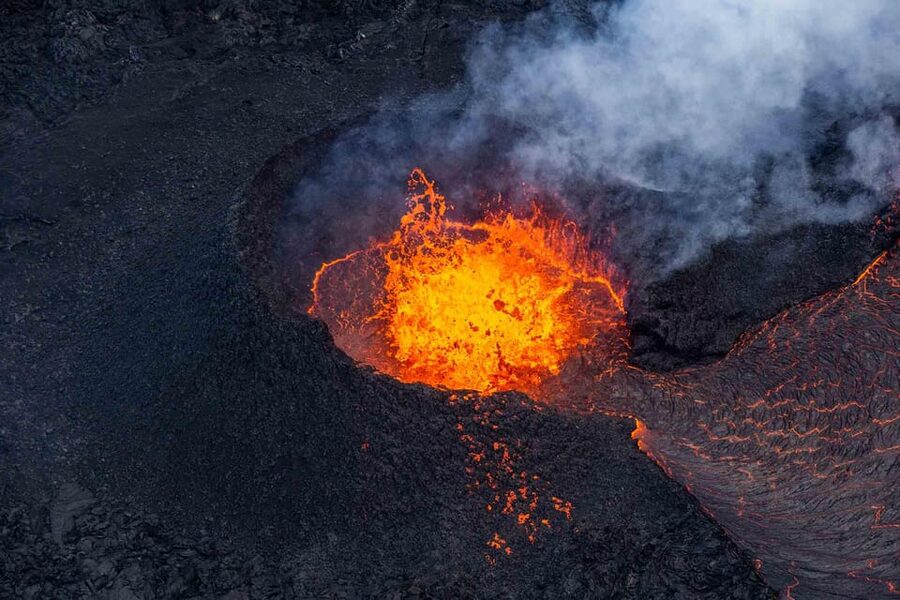
At $624 per person, this is an expensive short tour. The price includes taxes and airport fees, but not a full-day excursion or a ground visit.
The value depends on what you want to buy. You are paying for speed, a small group, a flexible aerial view of several volcanic sites, and the chance to see active lava from a safe distance if conditions allow. You are also paying for access to views that would take much longer to reach and understand from the ground.
I would not call it a budget activity. A 45-minute flight costs more than many full-day outings in Iceland. But the time savings are significant, especially if you have only a few days in Reykjavik or want to fit the volcano experience between other plans.
The price makes more sense for people who value photography, aviation, volcanic geology, or a special occasion. It is harder to justify if you mainly want to say you visited a volcano and are satisfied with a distant viewpoint.
The five-person limit improves the value. You are not sharing the experience with a large group, and the pilot can point out sights without trying to address dozens of people at once. Still, the high cost means you should only book after accepting the possibility of cloudy weather, a changed route, or no visible lava.
Weather, Safety, and the Lava Question
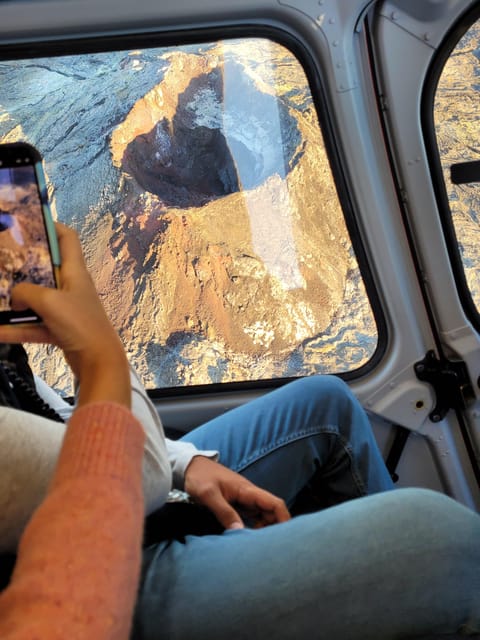
All flights depend on weather. The operator also follows rules set by Iceland’s Department of Civil Protection and Emergency Management.
That means the flight can be cancelled for reasons beyond the company’s control. If that happens, the operator will try to reschedule or provide a full refund. You can also cancel up to 24 hours before departure for a full refund, and the reserve-now, pay-later option lets you hold a place without paying immediately.
The most important safety point is to avoid treating the flight as a guaranteed eruption show. Lava may be visible, or it may not. The site may be quiet during your flight, and official restrictions can affect where the helicopter goes.
I like this straightforward approach. It sets a better expectation than promising a dramatic river of fire. Book the trip because you want to see Iceland’s volcanic terrain from above. If active lava appears, enjoy the rare extra.
Who Will Enjoy This Flight Most?
This tour suits you best if you want a short, high-impact outing from Reykjavik. It is a strong choice for photographers, first-time visitors with limited time, and anyone interested in comparing the 2021 to 2022 eruption sites with the newer Sundhnúkahraun area.
It also suits people who prefer sightseeing without a long hike. You can see the craters and lava fields from the helicopter, with the pilot explaining what lies below.
Families should note that children under two are not permitted. The small group size is useful for couples, solo visitors, or a small party that wants a quieter flight.
I would think twice if you dislike flying, need a guaranteed schedule, or are mainly interested in standing on volcanic ground. Weather can change the plan, and the natural activity cannot be scheduled around your holiday.
Practical Tips Before You Book
Arrive at the Reykjavik FBO with enough time to find the building and complete the meeting process. The building is marked with the operator’s sign and sits next to the Berjaya hotel.
Keep your expectations focused on the whole volcanic area, not just the newest eruption. The older lava fields, Fagradalsfjall and Geldingadalir craters, Sundhnúkahraun, and the views around the peninsula all form part of the experience.
Have your camera ready, but do not let photography take over. The helicopter circles the lava fields, so you should have more than one chance to frame the craters and recent rock.
Finally, keep part of your day flexible. The flight is weather dependent, and a rescheduled departure may be necessary. The operator offers reserve-now, pay-later booking and full refunds for cancellations made at least 24 hours in advance.
Should You Book the Reykjavik Volcano Helicopter Tour?
Book it if you want the best quick aerial view of Iceland’s recent volcanic activity and can accept the $624 price. The combination of a small group, friendly pilot guidance, several eruption sites, and about 30 minutes over the Reykjanes Peninsula gives you far more than a simple sightseeing loop.
Do not book it only for guaranteed flowing lava. That cannot be promised. If you see it, you may get the unforgettable moment advertised by the idea of the tour. If you do not, the wide view of the craters and lava fields still gives you a clear picture of how the Reykjanes Peninsula is changing.
For a short stay in Reykjavik, I consider this a strong special-occasion splurge. For a longer Iceland trip, compare it with a ground visit before spending the money. The helicopter wins on time, scale, and comfort. The ground wins on closeness and atmosphere.
FAQ
Where does the helicopter tour start?
The tour starts at the Reykjavik FBO, the building marked with the operator’s sign next to the Berjaya hotel at Reykjavik Domestic Airport.
How long does the experience last?
The tour lasts 45 minutes, including the sightseeing flight and return to the airport.
How much does the tour cost?
The listed price is $624 per person. Taxes and airport fees are included.
What language is the tour conducted in?
The live tour guide and pilot commentary are provided in English.
How many people can join the flight?
The group is limited to five participants.
Which volcanic sites can I see?
The route includes the Reykjanes Peninsula, Sundhnúkahraun from March 2024, the Fagradalsfjall and Geldingadalir eruption areas from 2021 to 2022, older lava fields, and various volcanic craters.
Will I definitely see flowing lava?
No. Eruptions and lava activity are natural events, so visible flowing lava is not guaranteed.
Is the flight affected by weather?
Yes. Flights are weather dependent and must follow rules set by Iceland’s Department of Civil Protection and Emergency Management.
What happens if the flight is cancelled?
The operator will try to reschedule the flight or provide a full refund if cancellation results from weather or another factor outside its control.
Can children under two join the tour?
No. The activity is not suitable for children under two years old.
Added around Reykjavik recently
- Reykjavik: Whale and Puffin Watching RIB Boat Tour★ 4.6 · 179 reviews
- Reykjavik: Whale Watching & Lava Show★ 5.0 · 4 reviews
- Reykjavik: Whale & Marine Adventure Tour★ 4.3 · 71 reviews
- Reykjavik: Whale Watching Express★ 4.3 · 227 reviews
- From Reykjavík: Viking Horseback Tour in Hafnarfjörður★ 4.9 · 112 reviews
- Reykjavík: Horse Riding Tours★ 4.9 · 127 reviews
- Day Trip to Snæfellsness Peninsula from Reykjavik★ 5.0 · 7 reviews
- Private Luxury Transfer from Reykjavik to Blue Lagoon★ 5.0 · 1 review
Volcano and Crater Tours, compared.
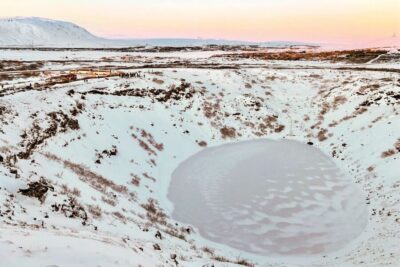
Golden Circle Full-Day Tour with Kerid Crater
Read our review →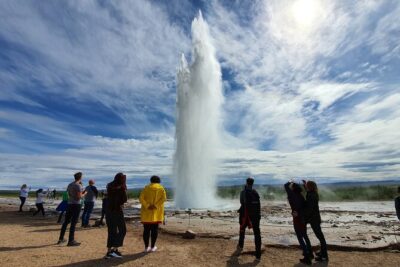
Small-Group Golden Circle, Blue Lagoon with Ticket & Kerid Crater
Read our review →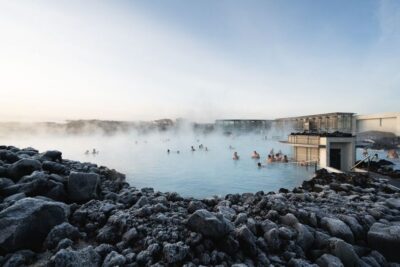
Golden Circle, Kerid Crater, & Blue Lagoon Tour
Read our review →
Golden Circle with Kerid Volcanic Crater Day Tour from Reykjavik
Read our review →
Golden Circle, Volcano Crater and Blue Lagoon Small-Group Tour
Read our review →
Golden Circle, Secret Lagoon and Kerid Crater Tour from Reykjavik
Read our review →
Golden Circle, Crater & Blue Lagoon Minibus Tour
Read our review →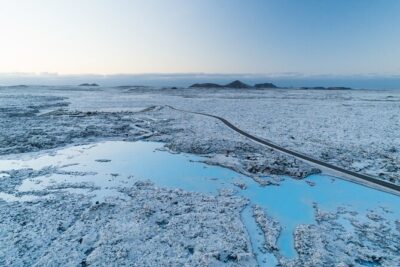
Golden Circle, Kerid Crater & Geothermal Lagoon -Small Group Tour
Read our review →Browse the lists this tour appears in