
Review · GOLDEN CIRCLE TOURS
Dive the Divide: Silfra Fissure Scuba Tour | Meet at Thingvellir
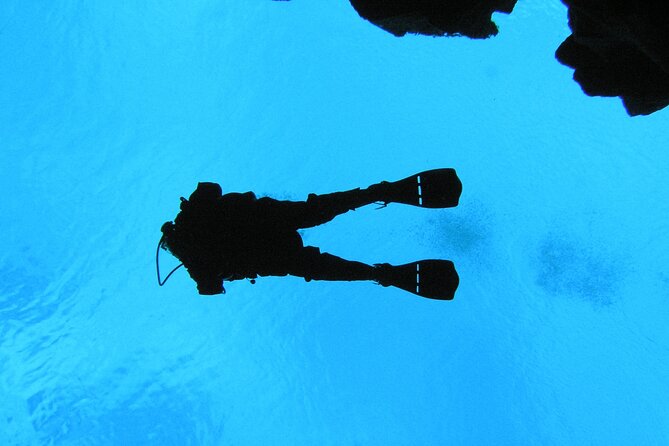
See two continents from underwater. At Silfra in Thingvellir National Park, you move through a narrow crack between the North American and Eurasian plates, with visibility that can reach more than 328 feet. This four-hour Arctic Adventures trip keeps the group to three people or fewer, which I like because cold-water scuba demands close attention from your guide.
I especially like the tiny group size and the fact that all specialist equipment is supplied, including the drysuit, thermal undersuit, tanks, weights, and regulator. The post-tour hot chocolate and cookies are simple but welcome after carrying heavy gear in Icelandic weather. The main drawback is clear: this is a demanding outing, not a casual sightseeing activity. You need recent drysuit experience, strong fitness, and the ability to carry equipment about 400 meters.
In This Review
- Key points to know before booking
- Why Silfra feels different from ordinary scuba
- Meeting at Thingvellir, not Reykjavik
- The physical work begins before you enter the water
- What the drysuit requirement really means
- The two seasonal schedules
- Entering the Silfra Deep Crack
- Silfra Hall and Cathedral
- Silfra Lagoon provides the bright finish
- What the $296.41 price gets you
- How the small group changes the day
- Who should book this Silfra experience?
- Booking timing and cancellation details
- Should you book the Silfra scuba tour?
- FAQ
- Where does the Silfra scuba tour meet?
- Is transportation from Reykjavik included?
- How much does parking cost?
- How long does the experience last?
- How many people can join the tour?
- What certification do I need?
- How old must I be?
- What happens during winter?
- What should I bring?
Key points to know before booking
- Visibility can exceed 100 meters: Silfra’s clear water gives you unusually long views through the fissure.
- Three people or fewer: The small group allows close supervision during a technical cold-water activity.
- Recent drysuit experience is required: You need certification or a logbook showing at least 10 previous drysuit outings, with one within the past two years.
- Winter may mean one underwater session: If temperatures fall below freezing, the guide may replace two 30-minute sessions with one session of about 45 minutes.
- You carry heavy equipment 400 meters: The physical walk to and from the water is a serious part of the outing.
- Parking and transport are separate: Meet at Silfra in Thingvellir, pay the 500 ISK private-car parking charge, and arrange your own way there.
Why Silfra feels different from ordinary scuba
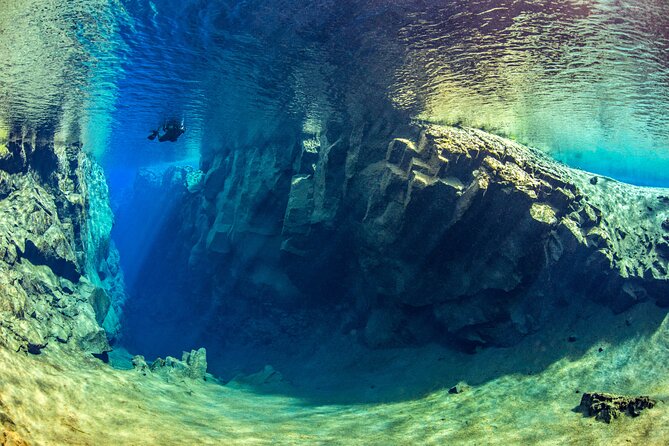
Silfra is not famous for colorful coral, tropical fish, or warm water. Its appeal is geological and visual. You swim through a crack formed where two continental plates pull apart, surrounded by dark volcanic rock and water so clear that distance can be hard to judge.
The electric blue color comes from the way the water filters through underground lava rock before reaching the fissure. The result is a clean, sharp underwater world with very little visual clutter. You can see the shape of the rock, the route ahead, and the unusual geometry of the fissure.
That clarity is the star of the trip. The route includes the Silfra Deep Crack, Silfra Hall, Silfra Cathedral, and Silfra Lagoon. Each section has a different feel. The crack is narrow and enclosed, the hall opens up, the cathedral feels cavernous, and the lagoon provides a bright finish before you return to land.
The water is safe to drink, and you may taste it if you wish. That is a fun detail, though you should not mistake clean water for warm water. This is a cold-water outing from start to finish.
More Golden Circle trips:
- Reykjavik: Golden Circle Full-Day Tour with Kerid Crater
★ 4.8 · 24,485 reviews - From Reykjavik: Golden Circle, Kerid, & Secret Lagoon Tour
★ 4.8 · 6,009 reviews - Small-Group Golden Circle, Blue Lagoon with Ticket & Kerid Crater
★ 5.0 · 5,631 reviews
Meeting at Thingvellir, not Reykjavik
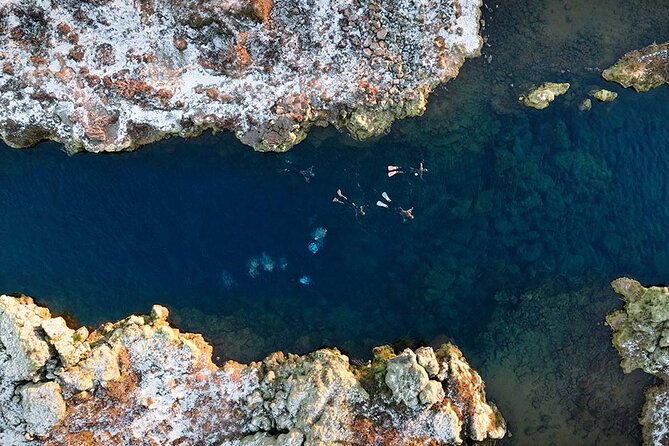
The tour meets at the Silfra meeting point in Thingvellir National Park, at Vallarvegur, 806, Iceland. There is no pickup from Reykjavik, so you need to arrange your own transport to the park.
This matters when planning your day. The listed duration is about four hours, but that does not include getting from Reykjavik to Thingvellir or returning afterward. Book your required start time with enough room around it for road conditions, parking, and changing clothes.
At the park, you pay the private-car parking fee yourself. The listed fee is 500 ISK. Keep this small extra cost in mind when working out the total price.
Your instructor meets you at the Silfra parking area and begins with a full briefing. You go over park rules, underwater signals, the planned route, and the procedures for using the drysuit. This introduction is important because cold-water scuba leaves less room for casual mistakes than a warm-water recreational outing.
The physical work begins before you enter the water
The most useful warning in the tour details is also the easiest to underestimate: you must carry heavy equipment for about 1,312 feet, or 400 meters.
That distance may not sound extreme on paper. It feels different when you are wearing or carrying a tank, weights, regulator, fins, mask, drysuit, and thermal layers. You need a strong level of fitness and must be comfortable handling bulky equipment over the walk to the water.
At the entrance, you descend a ladder to a submerged metal platform. You stand in waist-deep water while you get used to the temperature and check your equipment. The guide also checks your weight and safety setup before you continue.
This careful start is one reason the small group matters. With no more than three people, the guide can focus on equipment checks and help you get settled. One review praised Franceska in particular for warming the gloves, helping with the drysuits, and keeping the group calm in snowy conditions. That kind of practical care can make a large difference when your hands are cold and your clothing feels unfamiliar.
What the drysuit requirement really means
You cannot treat this as your first drysuit outing. The guide must see a drysuit certification card or a logbook showing at least 10 previous drysuit sessions signed by a dive professional. You must also have used a drysuit within the last two years.
That rule protects you, your guide, and the group. A drysuit changes how you manage buoyancy and movement. It also requires you to understand the suit, valves, seals, and thermal layers before entering a narrow cold-water route.
Bring warm undergarments, ideally fleece or wool, and warm socks. These are not optional comfort extras in Iceland. The drysuit keeps water out, but your underlayers provide much of the warmth.
Also bring a complete change of clothes. No drysuit can be guaranteed to stay perfectly dry unless it was made specifically for you. A spare outfit gives you a sensible backup after the session.
If you wear glasses, plan ahead. You cannot wear glasses under the supplied mask. You need to go without them, use contact lenses, or bring prescription goggles that work with the setup. This is a small practical detail, but forgetting it could affect how well you see the route.
More Silfra snorkeling trips:
- Silfra: Snorkeling Between Tectonic Plates – Meet on Location
★ 5.0 · 5,001 reviews - Reykjavík: Silfra Fissure Snorkeling between Two Continents
★ 4.7 · 1,712 reviews - Silfra Drysuit Snorkeling with Free Photos – Meet on Location
★ 5.0 · 1,299 reviews - Silfra: Snorkeling Between Tectonic Plates Pick Up from Reykjavik
★ 5.0 · 1,187 reviews
The two seasonal schedules
During summer, the usual format is two underwater sessions of about 30 minutes each. This gives you time to see the main sections without making one continuous session too long.
In winter, if the water temperature falls below freezing, the guide may change the schedule to one session of about 45 minutes. That is a safety decision, not a reduction in care or value. The water remains cold, and the shorter structure can be more sensible in severe conditions.
The exact experience can also feel different depending on the weather. One review described snow beside the fissure and a group that felt cold despite having a rewarding outing. You should expect the cold to be part of the story, not an unfortunate surprise.
The tour requires good weather. If poor weather causes cancellation, you are offered another date or a full refund. For a fixed Iceland itinerary, that flexibility is useful, though you should still avoid placing this activity on the final morning of your trip if possible.
Entering the Silfra Deep Crack
Once you complete the checks, you descend below the surface and follow the certified PADI Divemaster through the route.
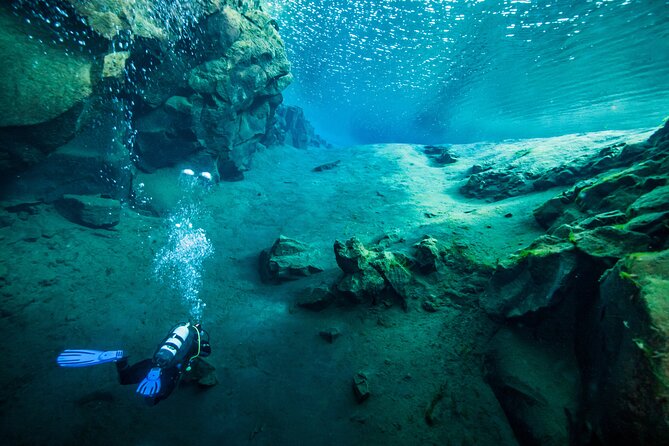
The first section is the Silfra Deep Crack, where the two continental plates are close together. The space feels more intimate than a broad open-water site. You are looking at rock walls and a narrow passage, with the unusual awareness that the geology beneath you is the main attraction.
The clarity changes your sense of distance. With visibility reported beyond 100 meters, the blue water can appear to extend much farther than it really does. Stay close to the guide and pay attention to the signals. In a place this clear, it is easy to focus on the view and forget that you are still managing cold-water equipment.
The narrow passage gradually opens. That change leads into Silfra Hall, where the route feels less confined and the surrounding rock has more room to show itself.
Silfra Hall and Cathedral
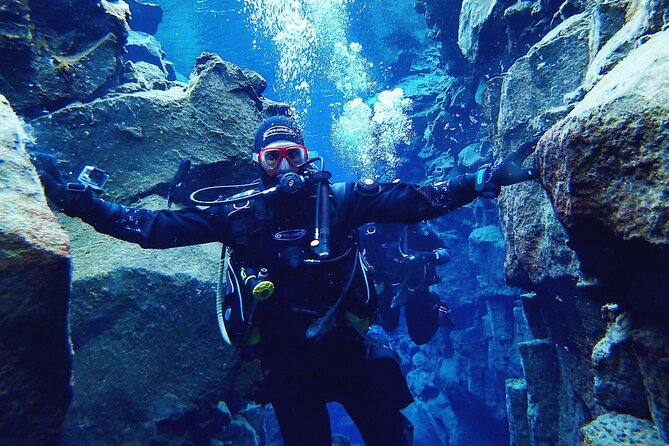
Silfra Hall gives you a chance to appreciate the shape of the fissure rather than simply pass through it. The water remains the main color, while the lava walls provide the dark frame.
The route then continues toward Silfra Cathedral, described as the deepest point at 72 feet, or 22 meters. The tour information also lists a maximum depth of 59 feet, or 18 meters, so the exact route and depth used on the day will be controlled by the guide and operating conditions. You should follow the guide’s briefing rather than rely on a map description alone.
The name cathedral makes sense as a description of scale. This is the point where the route feels most like a cavernous chamber, with plunging rock walls and a long view through clear blue water.
Still, do not expect a cave excursion in the usual sense. You are moving through an open fissure route, not entering a dark cave system. The attraction is the combination of volcanic rock, continental geology, and visibility.
Silfra Lagoon provides the bright finish
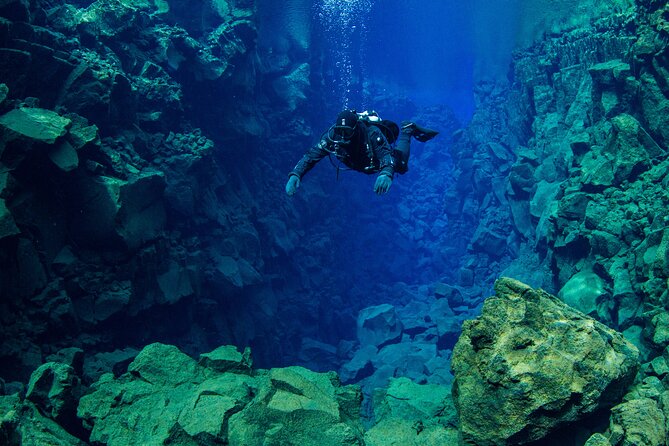
After the narrower sections, Silfra Lagoon opens into a brilliant-blue pool. It is the final underwater section and gives you a different sense of space from the Deep Crack.
The lagoon is described as having seemingly endless visibility. That phrase captures the visual effect, but your actual time and route remain subject to the guide, weather, water temperature, and safety checks.
You finish at the surface in the lagoon. From there, you remove your fins and the heavier equipment before walking back toward the parking area. This return walk is another reason to take the fitness warning seriously. The underwater portion may be the headline, but the equipment handling before and after it is part of the work.
Back at the meeting point, you change into your everyday clothes and receive hot chocolate and cookies. After cold water, wet equipment, and a long walk, this is more than a decorative extra. It gives you a warm pause before you leave the park.
What the $296.41 price gets you
At $296.41 per person, this is a costly half-day activity. The price makes more sense when you consider what is included: a certified PADI Divemaster, a small group, drysuit equipment, thermal undersuit, mask, fins, tanks, weights, and regulator.
You are not renting only a mask and tank for an independent outing. You are paying for specialist gear, instruction, equipment checks, a controlled route, and close supervision in a demanding environment.
The small group is especially valuable here. A maximum of three people means the guide can keep the pace controlled and respond to comfort or equipment issues without managing a large line of participants.
The price does not include transport from Reykjavik, parking, or food and drinks beyond the hot chocolate and cookies. If you need to hire a car or arrange a separate transfer, add that cost before deciding.
I would consider the price fair for a certified drysuit diver who specifically wants Silfra. I would not recommend paying it simply because the fissure is a famous Iceland stop. The entry requirements are strict for a reason, and this will not suit someone looking for an easy activity between sightseeing stops.
How the small group changes the day
The maximum group size is three people. That is one of the strongest features of this outing because the route requires more attention than a standard guided swim.
A small group lets the guide spend time on the drysuit, weight checks, signals, and pace. It also reduces the chance that you spend the underwater session waiting behind a large group.
The review praising Franceska focused on her calm support and practical help. Warming gloves, assisting with drysuits, and keeping a positive attitude are small actions, but they matter in an environment where discomfort can grow quickly.
You should still arrive ready to manage your own equipment and listen closely. A small group gives you better support, but it does not remove the need for recent skills or good physical condition.
Who should book this Silfra experience?
This tour suits you if you:
- Hold the required drysuit certification or have the specified logbook record
- Have used a drysuit within the past two years
- Are at least 18 years old
- Have strong physical fitness
- Enjoy geological scenery more than marine wildlife
- Can carry heavy equipment for about 400 meters
- Are prepared for genuinely cold water
- Want a small, closely guided group
It is not suitable as a first scuba outing or first drysuit session. It also may not suit you if you dislike cold, struggle with heavy equipment, or need glasses under a standard mask.
The minimum age is 18, and the activity is offered in English. Confirmation is provided when you book, and the tour ends back at the Silfra meeting point.
Booking timing and cancellation details
The experience is booked an average of 41 days ahead, so I would not leave it until the last minute, especially if your Iceland dates are fixed.
You can cancel up to 24 hours before the start time for a full refund. Changes made less than 24 hours before the start time are not accepted, and cancellations inside that window are not refunded. The cut-off follows local time.
Because weather can affect the activity, keep your schedule flexible. A weather cancellation brings an offer of another date or a full refund. For the best chance of keeping the outing, schedule it early enough in your Iceland stay to allow a second attempt.
Should you book the Silfra scuba tour?
Book it if you already have solid drysuit skills and want a focused, unusual cold-water outing rather than a relaxed nature stop. The clear water, continental-plate setting, specialist route, and three-person limit give this experience real value for the right person.
Skip it if you lack recent drysuit practice, do not want to carry heavy equipment, or hope for warm-water ease. Silfra rewards preparation. Bring wool or fleece layers, warm socks, spare clothes, a suitable vision solution, and enough time around the four-hour schedule. If you meet the requirements, Arctic Adventures offers a carefully managed way to see one of Iceland’s most unusual underwater places.
FAQ
Where does the Silfra scuba tour meet?
It meets at the Silfra meeting point in Thingvellir National Park, at Vallarvegur, 806, Iceland. The activity also ends at this meeting point.
Is transportation from Reykjavik included?
No. Pickup service from Reykjavik is not included, so you must arrange your own transportation to Thingvellir National Park.
How much does parking cost?
The private-car parking fee is 500 ISK. This charge is not included in the tour price.
How long does the experience last?
The full activity lasts about four hours. This includes the briefing, equipment preparation, underwater session or sessions, return walk, changing, and refreshments.
How many people can join the tour?
The maximum group size is three people.
What certification do I need?
You need drysuit certification, or a logbook showing at least 10 previous drysuit sessions signed by a dive professional. You must also have used a drysuit within the last two years.
How old must I be?
The minimum age is 18 years old.
What happens during winter?
In winter, if the water temperature falls below freezing, the guide may replace two 30-minute sessions with one session of about 45 minutes for safety reasons.
What should I bring?
Bring warm fleece or wool undergarments, warm socks, and a complete change of clothes. If you wear glasses, use contact lenses, go without glasses, or bring prescription goggles that work with the mask.
More Diving in Reykjavik
- Silfra: Diving Between Tectonic Plates and Pick Up from Reykjavik
★ 5.0 · 590 reviews - Dive the Divide: Silfra Fissure Scuba Tour | Reykjavik Pickup
★ 4.5 · 94 reviews - Thingvellir: Silfra Fissure Diving with Optional Pickup
★ 4.6 · 73 reviews - Silfra: Diving Between Tectonic Plates
★ 4.8 · 64 reviews
Added around Reykjavik recently
- Reykjavik: Whale and Puffin Watching RIB Boat Tour★ 4.6 · 179 reviews
- Reykjavik: Whale Watching & Lava Show★ 5.0 · 4 reviews
- Reykjavik: Whale & Marine Adventure Tour★ 4.3 · 71 reviews
- Reykjavik: Whale Watching Express★ 4.3 · 227 reviews
- From Reykjavík: Viking Horseback Tour in Hafnarfjörður★ 4.9 · 112 reviews
- Reykjavík: Horse Riding Tours★ 4.9 · 127 reviews
- Day Trip to Snæfellsness Peninsula from Reykjavik★ 5.0 · 7 reviews
- Private Luxury Transfer from Reykjavik to Blue Lagoon★ 5.0 · 1 review
Golden Circle Tours, compared.
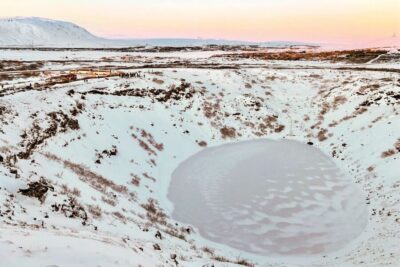
Golden Circle Full-Day Tour with Kerid Crater
Read our review →
Small-Group Golden Circle, Blue Lagoon with Ticket & Kerid Crater
Read our review →
Golden Circle Classic Day Tour from Reykjavik
Read our review →
Golden Circle, Kerid Crater, & Blue Lagoon Tour
Read our review →
Golden Circle with Kerid Volcanic Crater Day Tour from Reykjavik
Read our review →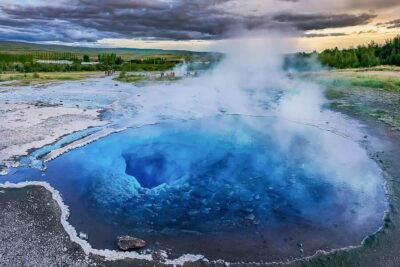

Small-group Golden Circle Classic Tour from Reykjavik
Read our review →Browse the lists this tour appears in