
Review · SILFRA SNORKELING TOURS
Silfra: Diving Between Tectonic Plates
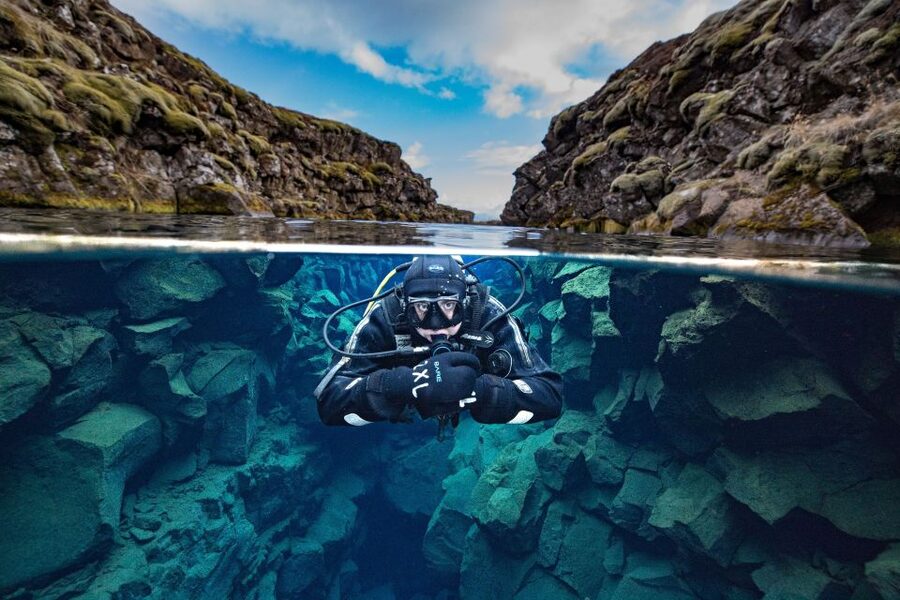
The clearest water comes with a chill. Silfra offers a rare underwater trip between the North American and Eurasian tectonic plates, with visibility of more than 100 meters and the striking setting of Thingvellir National Park. I like the almost aquarium-like clarity and the small-group format, which lets your guide keep the experience calm and personal. The main catch is that this is a serious cold-water activity, not a casual swim, and you need both scuba and dry-suit qualifications.
I also like that the tour includes the equipment, entry fee, a heated changing van, and hot chocolate afterward. Guides such as Filip and Giancarlo have earned praise for friendly, attentive instruction. At $289 per person, the price is fair for a specialist Icelandic outing, but it makes the most sense if you already have the required experience and truly want this unusual underwater view.
Silfra is not a sightseeing stop where you simply wander up and take a quick look. You spend about 45 minutes in the water, moving through four distinct sections while wearing a dry suit in water that remains about 2°C all year. The cold is manageable for properly prepared participants, but the gearing-up process takes time and the actual underwater portion is shorter than some people may expect.
In This Review
- Key points to know before booking
- What makes Silfra different from an ordinary scuba trip
- Starting at Thingvellir National Park
- One hour of preparation before the water
- Big Crack: the narrowest part of the route
- Silfra Hall and the long view
- Silfra Cathedral reaches 23 meters
- Silfra Lagoon and the end of the water session
- Is $289 a fair price?
- Who should book this experience?
- Practical ways to make the day better
- FAQ
- Where does the Silfra scuba tour take place?
- How cold is the water at Silfra?
- How long are you in the water?
- What scuba qualifications do I need?
- What sections of Silfra will I see?
- Is transportation from Reykjavik included?
- What is included in the $289 price?
- Should you book Silfra?
Key points to know before booking
- More than 100 meters of visibility: The water is so clear that the rock walls, rather than the water, limit your view.
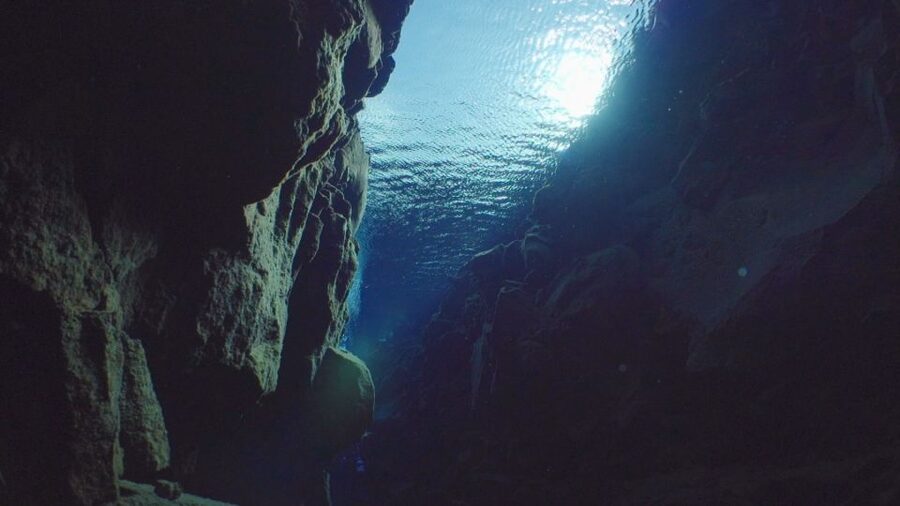
- A rare tectonic setting: You move through a fissure between the North American and Eurasian plates in Thingvellir National Park.
- Cold-water scuba in a dry suit: The water stays close to 2°C year-round, so proper equipment and prior dry-suit experience are essential.
- Four underwater sections: The route passes through Big Crack, Silfra Hall, Silfra Cathedral, and Silfra Lagoon.
- A compact half-day outing: Allow about three to five hours in total, including transport, preparation, the water session, and changing afterward.
- Strict qualification rules: You need PADI Open Water or an equivalent certificate, plus recent documented dry-suit experience.
What makes Silfra different from an ordinary scuba trip
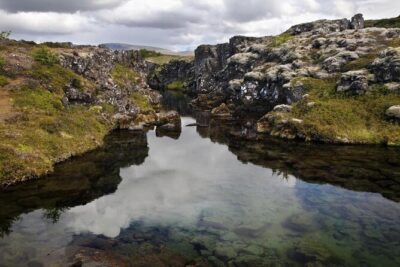
Silfra is special because of its setting as much as its water. The fissure lies in Thingvellir National Park, a UNESCO World Heritage Site and one of the major stops along Iceland’s Golden Circle. The underwater route takes you through a crack in the earth where the North American and Eurasian tectonic plates are pulling apart.
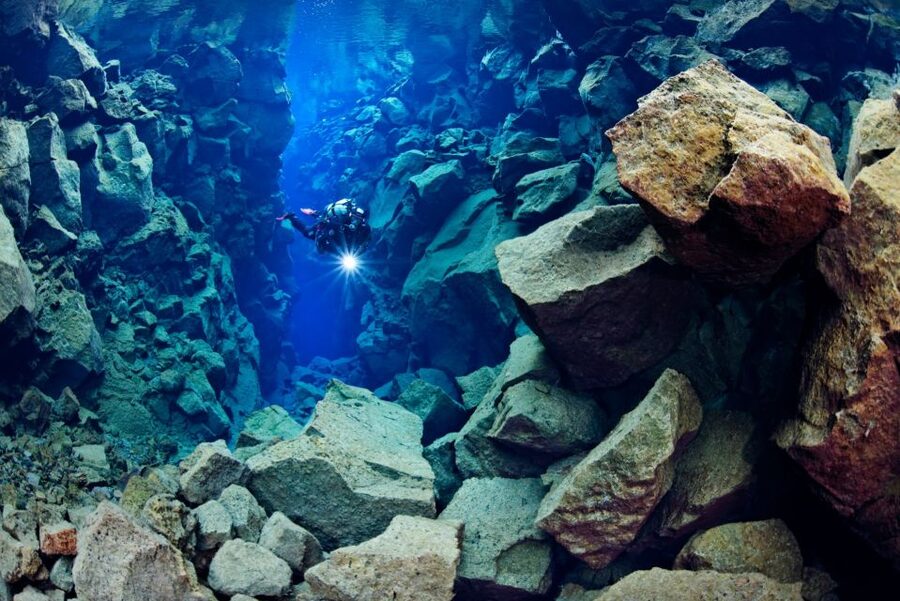
The phrase between two continents is a little simplified, since the actual geology concerns tectonic plates. Still, it describes the feeling well. The rock walls close in around you in places, and Big Crack is narrow enough for you to reach toward both sides. You are not simply looking at a sign explaining plate movement. You are moving through the result of it.
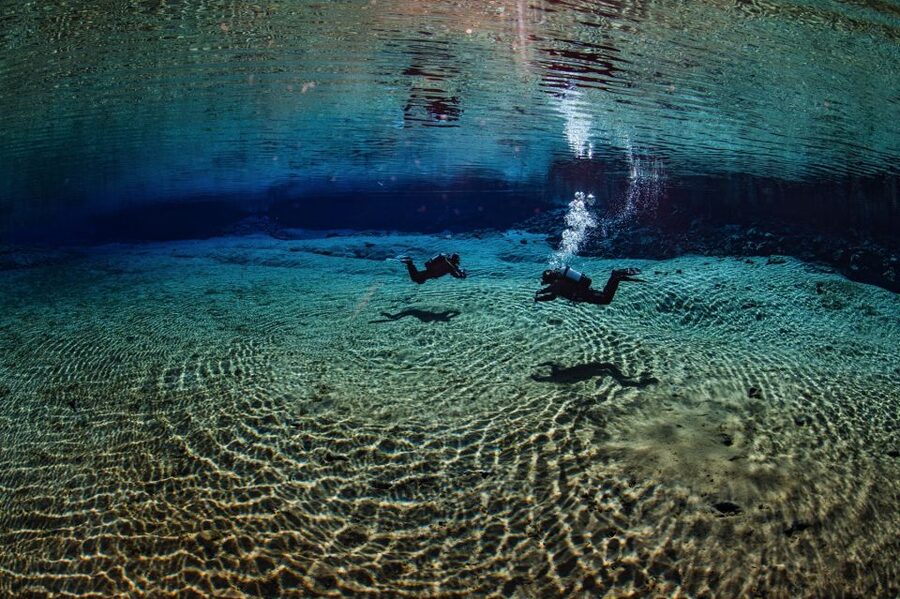
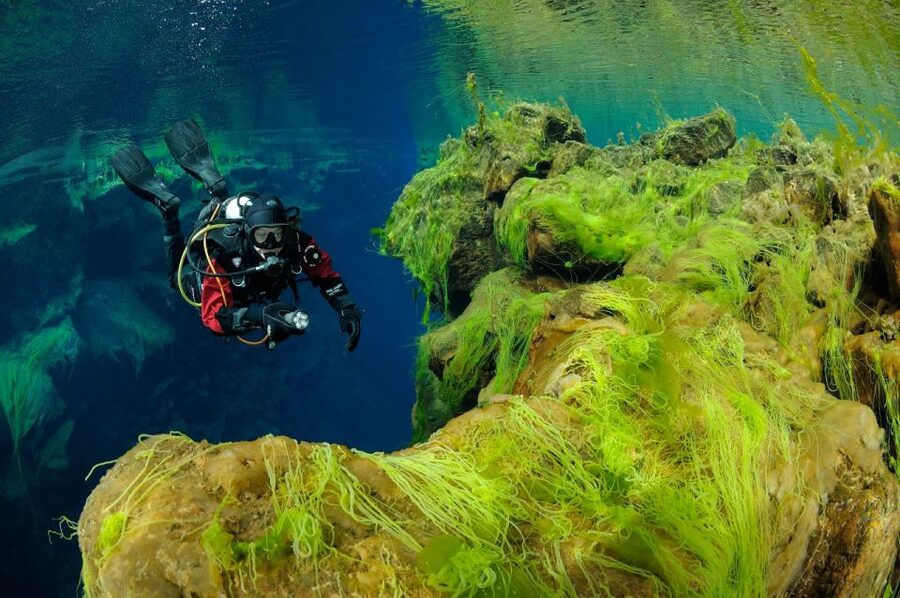
The water comes from filtered groundwater, which helps explain the remarkable clarity. Visibility can exceed 100 meters, and one section offers a view toward Thingvallavatn more than 150 meters away if you catch the right angle. This is the sort of clarity that changes the whole experience. You notice subtle blue and green tones, sharp rock edges, and the long view ahead without the usual underwater haze.
There is no warm tropical water, colorful coral, or abundant sea life to distract you. Silfra’s appeal is geological and visual. If you want fish and reefs, this is the wrong place. If you want a stark, almost otherworldly view through Icelandic rock, it is a strong choice.
More Silfra snorkeling trips:
- Silfra: Snorkeling Between Tectonic Plates – Meet on Location
★ 5.0 · 5,001 reviews - Reykjavík: Silfra Fissure Snorkeling between Two Continents
★ 4.7 · 1,712 reviews - Silfra Drysuit Snorkeling with Free Photos – Meet on Location
★ 5.0 · 1,299 reviews
Starting at Thingvellir National Park
You can meet the guide directly at Silfra or choose transport from Reykjavik. The transfer takes about 45 minutes by bus or coach, and hotel pickup and drop-off are available with the transport option.
Pickup is offered from a long list of Reykjavik hotels and designated bus stops, including central stops near City Hall, Harpa, Hallgrimskirkja, and the Culture House. Check the exact location and time on your ticket, then be ready before the stated pickup time. Vehicles are marked with the Dive.is logo.
If you drive yourself, the meeting point is Silfra in Thingvellir National Park. Arrive at least 15 minutes before the start time. The optional transfer is useful if you do not have a rental car, though it adds to the overall time and makes the day less flexible.
Thingvellir gives the outing a useful sense of place. Even if the underwater section is your main reason for booking, you are visiting one of Iceland’s most important protected and cultural sites. The park is part of the Golden Circle, so this activity can fit into a broader day of sightseeing, though you should allow enough time for the tour rather than trying to squeeze it between tightly scheduled stops.
One hour of preparation before the water
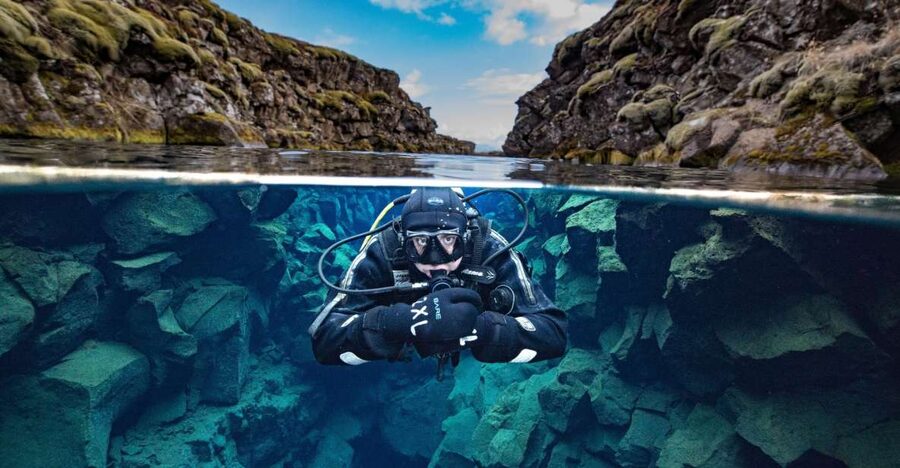
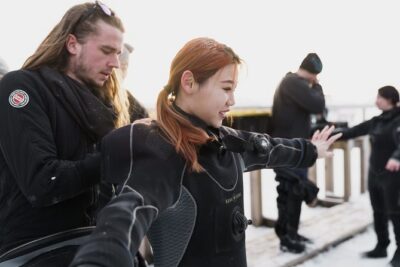
The first part of the experience is not glamorous, but it matters. Your guide explains the route, checks your paperwork, and helps you into the dry suit and scuba equipment. The briefing and preparation take about one hour.
A dry suit keeps water out, with a warm undersuit beneath it. That does not make the water warm. It simply gives you the protection needed to remain in 2°C water for the planned session. The fit is important, so tell the guide if anything feels too tight, too loose, or uncomfortable before you enter.
The operation uses small groups. The activity information describes a maximum of three participants, while the preparation details describe groups of up to six with one guide. Since those figures do not match perfectly, I would confirm the expected group size when booking if personal attention is important to you.
The guide is also your safety point of contact. You receive instruction in English, and a live guide or PADI instructor accompanies the group. The positive comments about Filip and Giancarlo point to an important part of the experience: a friendly instructor can make unfamiliar dry-suit equipment feel far less awkward.
You must complete a medical diving statement and sign a liability release at the start. These are not forms to ignore. Read the medical requirements before paying, particularly if you have any health concerns.
Big Crack: the narrowest part of the route
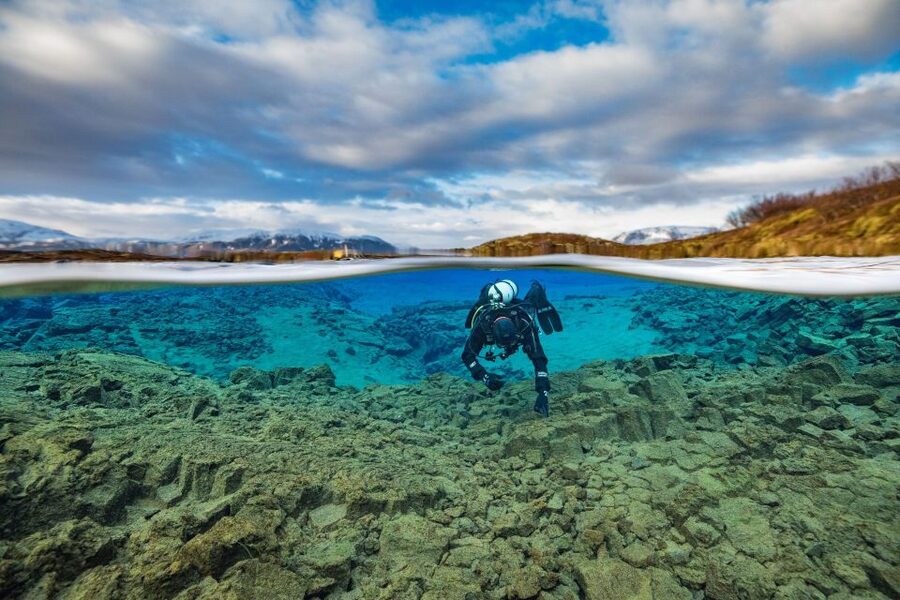
Once you enter from the platform, the underwater route lasts about 45 minutes. The first major section is Big Crack, where the tectonic walls are closest together.
This is the part that most clearly delivers the central idea of the outing. You can reach toward the rock on both sides and understand the scale of the fissure with your own body. The clarity lets you inspect the walls rather than simply seeing dark shapes in the distance.
Big Crack is also where the surroundings may feel most confined. If narrow spaces make you uneasy, this section deserves some thought before booking. The tour is guided, and the route continues through wider areas, but the fissure does not begin with an open-water feeling.
More diving in Reykjavik:
- Silfra: Diving Between Tectonic Plates and Pick Up from Reykjavik
★ 5.0 · 590 reviews - Dive the Divide: Silfra Fissure Scuba Tour | Meet at Thingvellir
★ 4.5 · 172 reviews - Dive the Divide: Silfra Fissure Scuba Tour | Reykjavik Pickup
★ 4.5 · 94 reviews - Thingvellir: Silfra Fissure Diving with Optional Pickup
★ 4.6 · 73 reviews
Silfra Hall and the long view
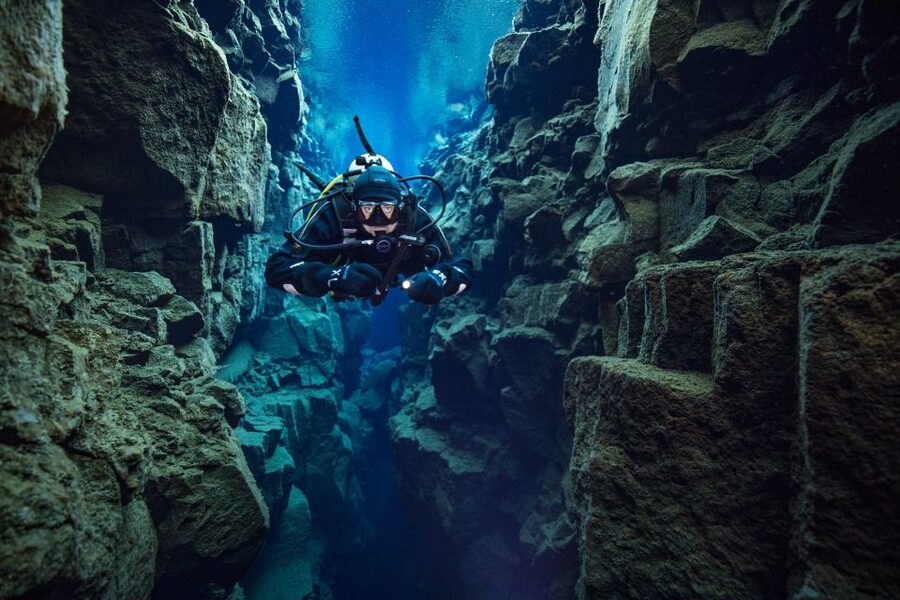
The fissure widens into Silfra Hall. Here, the space opens up and the colors become more apparent. The exceptionally clear water allows you to look farther than expected, with the rock formations remaining sharply visible.
At a particular angle, you may be able to see toward Thingvallavatn, more than 150 meters away. That long view is one reason the clarity feels unusual. Your eyes are not fighting murky water, bubbles, or suspended particles. The view is limited mainly by the shape of the rock.
This section rewards patience. You do not need to rush from one feature to the next. Your guide controls the route and pace, but the setting itself encourages you to slow down and look carefully. The water is cold, and the suit can feel bulky, so calm movement is more useful than trying to cover a lot of ground.
Silfra Cathedral reaches 23 meters
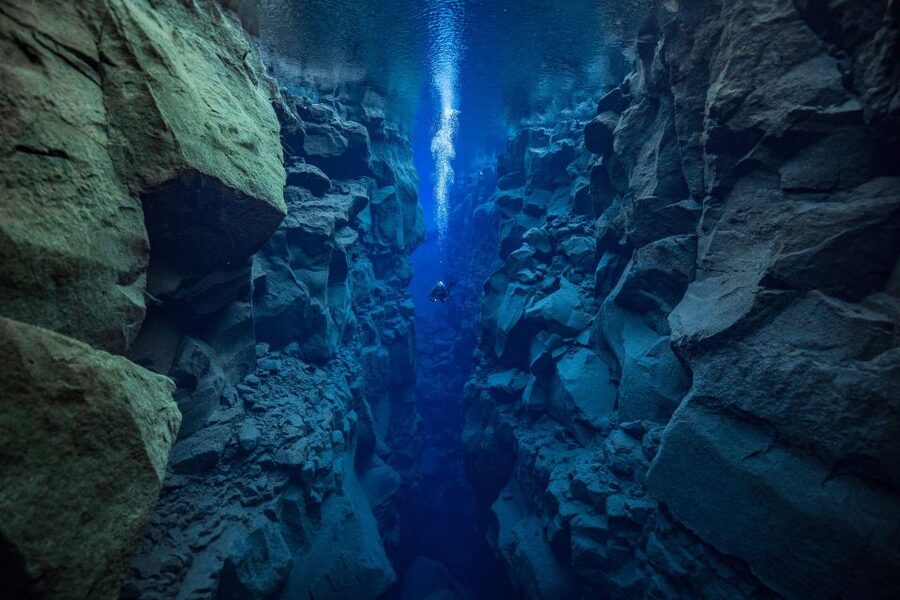
Near the opening toward Thingvellir Lake, the route enters Silfra Cathedral. The depth reaches 23 meters here, giving this section a greater sense of scale than the narrower passage at the start.
The name may suggest an elaborate cavern, but the attraction is the combination of depth, rock, and visibility. You can look along the fissure and see the structure of the underwater passage without the darkness that often limits deeper sites.
This is also a reminder that you are taking part in a genuine scuba activity, not simply floating in a protected pool. You need to be comfortable managing buoyancy, following your guide, and handling cold-water equipment. The required qualifications are there for a reason.
Silfra Lagoon and the end of the water session
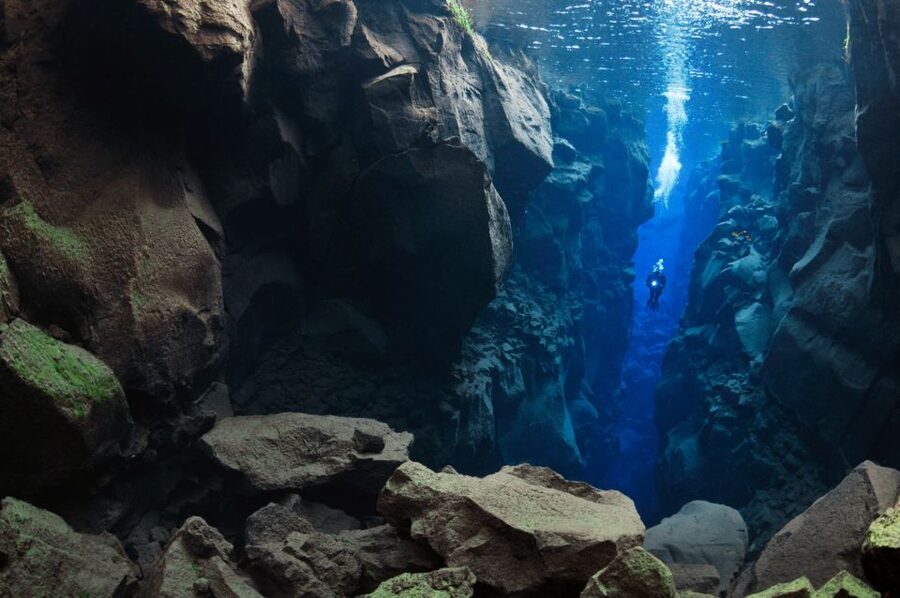
The route finishes in Silfra Lagoon, described as the final section with seemingly endless visibility. After leaving the water at the platform, you walk roughly 250 meters back to the meeting point.
That walk may sound minor, but it is worth remembering when choosing clothing and footwear. You will be wearing wet equipment or moving through a cold outdoor setting after the water session. Warm layers make the transition much easier.
Back at the meeting area, hot chocolate and cookies provide a simple but welcome finish. You can talk with the guide, ask questions, and look at photographs taken during the activity. If you used hotel transport, you board the shuttle back to Reykjavik when ready.
The photo portion is a useful touch. Underwater photography is difficult when you are busy managing a mask, regulator, dry suit, and buoyancy. Having photographs available means you can focus more on the experience itself, though the information does not specify how many images are included or whether every participant receives the same coverage.
Is $289 a fair price?
At $289, Silfra is expensive for a three to five-hour activity. You are paying for a specialized cold-water operation, professional instruction, a national park entry fee, scuba equipment, dry suit and undersuit, a heated changing van, and refreshments.
The value depends heavily on your starting point. If you already hold the required certifications and have been looking for a memorable cold-water site, the price is easier to justify. You are not paying for a long day in the water. You are paying for access to an unusual geological site with specialist gear and a qualified guide.
The cost is harder to defend if you are only curious about Silfra or if you mainly want to see Thingvellir. Non-diving visitors can experience the park without the training, paperwork, cold-water equipment, and strict physical requirements. This tour is best treated as a bucket-list scuba experience, not a general Golden Circle add-on.
Optional transport adds convenience, especially if you are staying in Reykjavik without a car. Self-driving may give you more control over the rest of your day, but the included pickup option removes the need to plan the route yourself.
Who should book this experience?
I would recommend Silfra to certified scuba participants who enjoy unusual environments and are comfortable with demanding preparation. It suits you if geological features interest you as much as marine life, and if the idea of extreme clarity appeals more than a warm, colorful underwater setting.
You need to be at least 17 years old. Participants under 18 need a legal guardian’s signature. The listed limits also exclude anyone under 45 kilograms, over 120 kilograms, shorter than 120 centimeters, or taller than 200 centimeters.
You should not book if you are pregnant, under the minimum age, or unable to provide the required qualifications. You need PADI Open Water certification or an equivalent certificate from another organization.
You must also have dry-suit certification and a logged dry-suit session within the last two years. An alternative is at least 10 logged dry-suit sessions within the last two years, supported by written confirmation from a diving instructor. Bring proof. Do not assume a general scuba qualification will be enough.
The experience is not suitable for someone hoping to learn scuba on the spot. The dry suit, cold, depth, and narrow rock sections demand prior experience.
Practical ways to make the day better
Wear warm clothing for the time before and after the water session. The supplied dry suit and undersuit handle the main exposure, but your time outdoors still includes transport, preparation, walking, and changing.
Read the medical statement before booking. If you are unsure about eligibility, resolve that question early rather than arriving at the park with expensive plans already in place.
Allow the full three to five hours. The water time is about 45 minutes, but the briefing, equipment fitting, changing, transport, and return process take much longer. If you choose pickup, do not schedule an important appointment immediately afterward.
Expect the dry suit to feel unfamiliar. Follow the guide’s instructions and tell them promptly if you have a problem with the fit. Friendly guides such as Filip and Giancarlo have been singled out for making the instruction approachable, which matters when the equipment feels cumbersome.
Finally, bring realistic expectations. The water is the star, but the actual route is not a long expedition. One participant felt the underwater portion offered less than expected, although the guide helped make the outing worthwhile. That is useful advice: the quality of the guide and your interest in geology can shape your enjoyment as much as the site itself.
FAQ
Where does the Silfra scuba tour take place?
The activity takes place at Silfra in Thingvellir National Park in Iceland’s Southern Region. You can meet the guide directly at Silfra or select transport from Reykjavik.
How cold is the water at Silfra?
The water remains about 2°C year-round, regardless of the weather. A dry suit and warm undersuit are included to help keep you warm and dry.
How long are you in the water?
The underwater portion lasts about 45 minutes. The complete activity takes about three to five hours, depending on transport and the selected start time.
What scuba qualifications do I need?
You need PADI Open Water certification or an equivalent qualification from another diving organization. You also need dry-suit certification and a logged dry-suit session within two years, or at least 10 logged dry-suit sessions within two years with written instructor confirmation.
What sections of Silfra will I see?
The route includes Big Crack, Silfra Hall, Silfra Cathedral, and Silfra Lagoon. Big Crack is the narrowest section, Silfra Cathedral reaches 23 meters, and Silfra Lagoon is the final section.
Is transportation from Reykjavik included?
Hotel pickup and drop-off are included only when you select the transport option. You can also meet the guide directly at Silfra in Thingvellir National Park.
What is included in the $289 price?
The tour includes a live English-speaking guide or PADI instructor, Silfra’s entry fee, scuba equipment, a dry suit, warm undersuit, a heated van for changing, hot chocolate, and cookies. Pickup and drop-off are included only with the applicable transport option.
Should you book Silfra?
Book it if you already have the right scuba and dry-suit experience, want an unusual geological setting, and consider 100-meter visibility worth the price. The combination of clear water, narrow plate boundaries, Thingvellir National Park, and a small guided group is genuinely unusual.
Skip it if you want a relaxed sightseeing stop, warm water, abundant sea life, or a longer underwater session. Silfra is cold, tightly regulated, and equipment-heavy. For the properly qualified scuba participant, though, it offers one of Iceland’s most distinctive experiences, with the rock walls and extraordinary clarity doing most of the talking.
Added around Reykjavik recently
- Reykjavik: Whale and Puffin Watching RIB Boat Tour★ 4.6 · 179 reviews
- Reykjavik: Whale Watching & Lava Show★ 5.0 · 4 reviews
- Reykjavik: Whale & Marine Adventure Tour★ 4.3 · 71 reviews
- Reykjavik: Whale Watching Express★ 4.3 · 227 reviews
- From Reykjavík: Viking Horseback Tour in Hafnarfjörður★ 4.9 · 112 reviews
- Reykjavík: Horse Riding Tours★ 4.9 · 127 reviews
- Day Trip to Snæfellsness Peninsula from Reykjavik★ 5.0 · 7 reviews
- Private Luxury Transfer from Reykjavik to Blue Lagoon★ 5.0 · 1 review
Silfra Snorkeling Tours, compared.
Snorkeling Between Tectonic Plates – Meet on Location
Read our review →
Fissure Snorkeling Tour with Underwater Photos
Read our review →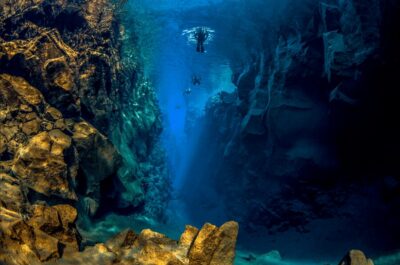
Silfra Fissure Snorkeling between Two Continents
Read our review →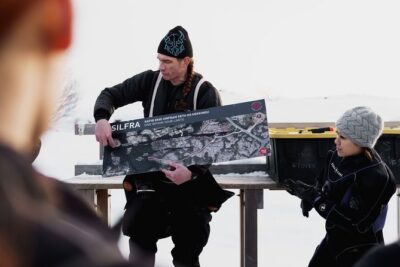
Silfra Drysuit Snorkeling with Free Photos – Meet on Location
Read our review →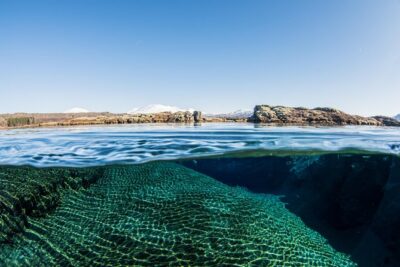
Snorkeling Between Tectonic Plates Pick Up from Reykjavik
Read our review →
Half-Day Snorkeling Day Trip with Underwater Photos
Read our review →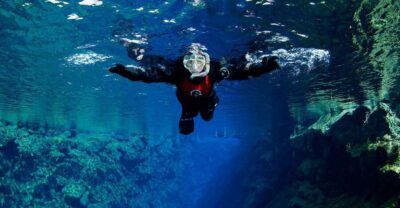
Silfra Drysuit Snorkeling Tour with Free Photos – From Reykjavik
Read our review →Browse the lists this tour appears in