
Review · WHALE WATCHING
Reykjavik: Whale Watching Tour, Whales of Iceland Exhibition
Whales can make Iceland feel wonderfully wild. This Reykjavik outing pairs a boat trip across Faxaflói Bay with the Whales of Iceland Exhibition, so you get the excitement of searching for live animals and the context of seeing life-size models afterward. I especially like the warm thermal overalls and the free return ticket if no wildlife appears. The main drawback is simple: whales are wild, and sightings are never guaranteed.
I also like the guides’ lively approach. Guides including Lucas, Daniel, Ivan, Oskar, and Andrea have been praised for explaining how to spot animals and keeping the group interested during quiet stretches. The boat can be windy and cold, especially upstairs, so layers and sturdy warm shoes matter more than fashionable Icelandic outfits.
In This Review
- Key things to know before booking
- From Reykjavik’s Old Harbor to Faxaflói Bay
- What the boat ride feels like
- The wildlife search: excitement with no guarantee
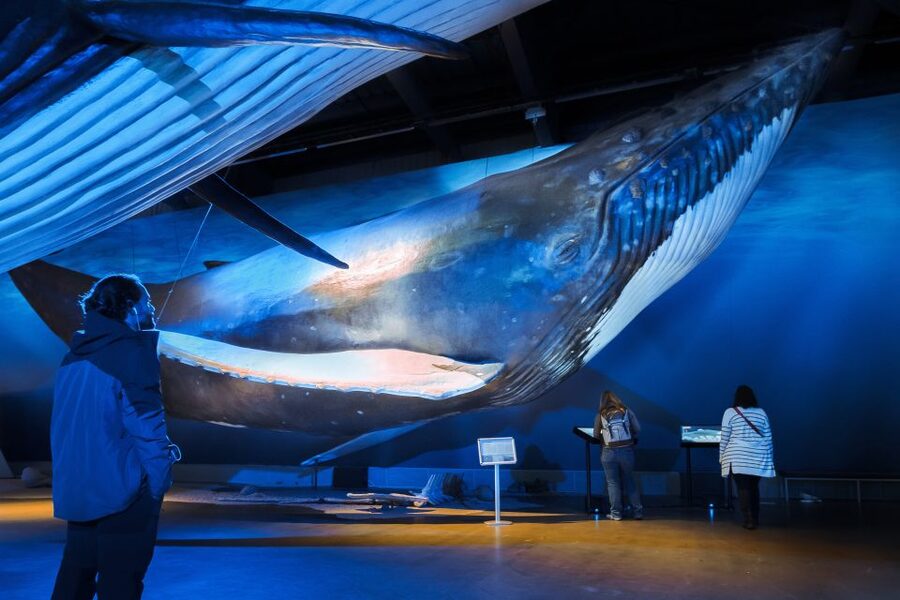
- The Whales of Iceland Exhibition gives scale to the sea
- Timing the two parts of the experience
- Is $123 good value?
- Who will enjoy this most?
- Should you book it?
- FAQ
- Where does the boat tour depart?
- Where is the Whales of Iceland Exhibition?
- What whales and animals might I see?
- Is wildlife guaranteed?
- When is the best time for whale watching?
- What languages are available?
Key things to know before booking
- Faxaflói Bay offers several possible sightings: Minke whales, humpback whales, white-beaked dolphins, harbor porpoises, seals, and seabirds may appear.
- The museum has 23 full-size whale models: It gives you a much better sense of scale than photographs ever can.
- The boat is one of Iceland’s largest whale-watching vessels: You get indoor space, outdoor viewing areas, WiFi, and thermal overalls.
- Summer generally gives you better odds: April through September is considered the best period, though winter trips can still produce memorable sightings.
- A no-sighting return ticket reduces the risk: You can visit again free if the boat finds no wildlife.
- You choose the order: Take the boat first and museum second, or visit the exhibition before sailing.
From Reykjavik’s Old Harbor to Faxaflói Bay
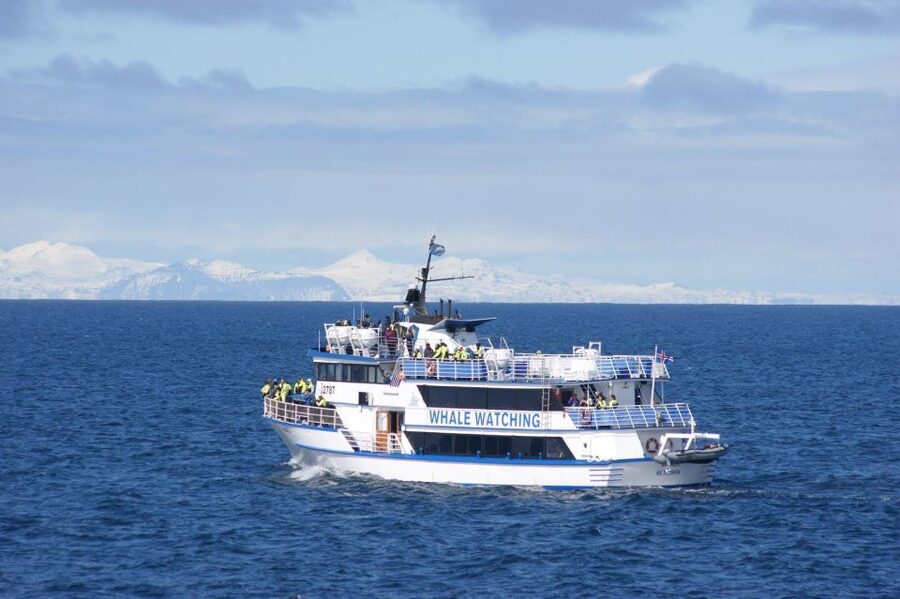
The boat portion begins at Reykjavik’s Old Harbor. From there, you sail into Faxaflói Bay, the broad body of water that opens west from the capital. The trip lasts about three hours, making the full experience roughly three and a half hours once the museum visit is included.
That length matters. Whale watching is not a quick harbor cruise. The crew needs time to reach areas where animals may be feeding, and then time to wait, watch, and adjust course. You may spend stretches scanning an apparently empty sea before a fin, back, or puff of breath suddenly changes the mood on board.
The guides help turn that waiting into part of the experience. A good guide teaches you what to look for, such as a small dark shape on the surface, a blow, or a group of birds working over a feeding area. Ivan was praised for showing people how to spot whales for themselves, which is useful because the guide cannot point at every animal at the same instant.
The bay most commonly offers minke whales, white-beaked dolphins, harbor porpoises, and humpback whales. You might also see seals and seabirds. Northern gannets have been spotted hunting around the boat, and their fast plunges add action even when the larger animals stay below.
More Whale Watching in Reykjavik:
- Reykjavík: Whale Watching and Marine Life Cruise
★ 4.6 · 9,838 reviews - Reykjavík: Whale Watching Cruise on the Amelia Rose Yacht
★ 4.5 · 2,911 reviews - The Original Classic Whale Watching from Reykjavik
★ 4.5 · 2,626 reviews
What the boat ride feels like
The operator uses one of Iceland’s largest whale-watching boats, with room to move around and indoor areas where you can warm up. Thermal overalls are provided, including children’s sizes, and this is one of the tour’s most practical features. Iceland’s air can feel much colder on open water than it does on land.
I would still wear a warm base layer, fleece or wool, a waterproof outer layer, and gloves. One person who watched from upstairs found the views worth the cold, but stressed that the upper deck was very chilly. That is a good trade if you want a wide view, but you should be ready to step inside.
The upper level can be a fine place to watch the horizon, while indoor seating gives you a break from wind. The boat also offers refreshments for purchase, and motion-sickness tablets are available before departure and on board. Food and drinks are not included in the price, so bring a little extra money if you want something during the ride.
WiFi is included. That is handy, though I would treat it as a bonus rather than the point of the trip. You are on the water to watch for animals, not to spend three hours refreshing your phone.
One practical weakness is that visibility through some ship windows may not be perfect. Dirty windows were noted as a minor annoyance. Outdoor viewing is likely to give you the clearest look, but it also exposes you to wind and spray.
The wildlife search: excitement with no guarantee
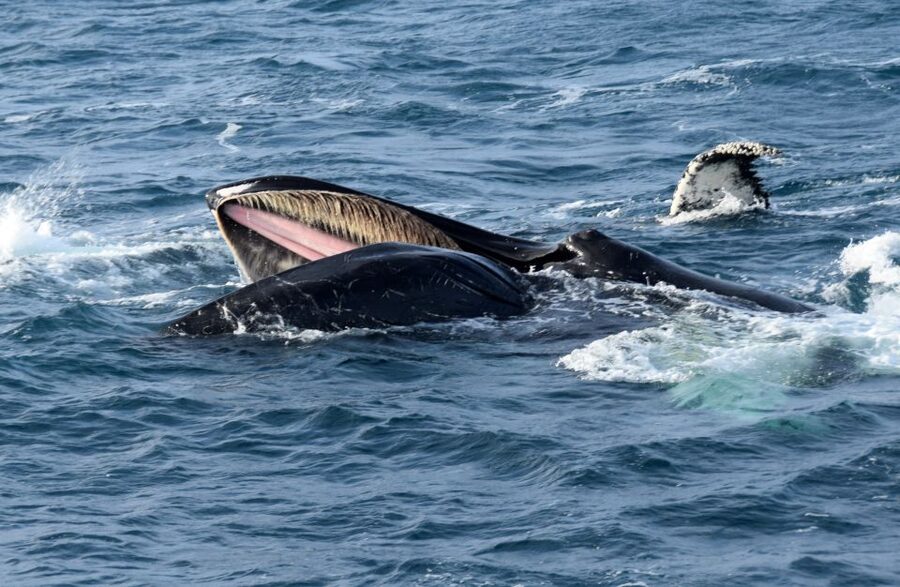
Whale watching works best when you accept uncertainty. You may see several humpbacks close to the boat, as some outings have, or you may get a more modest encounter with a young humpback, a minke whale, or a pod of dolphins. A few trips have included multiple humpbacks, dolphins, porpoises, and even a seal.
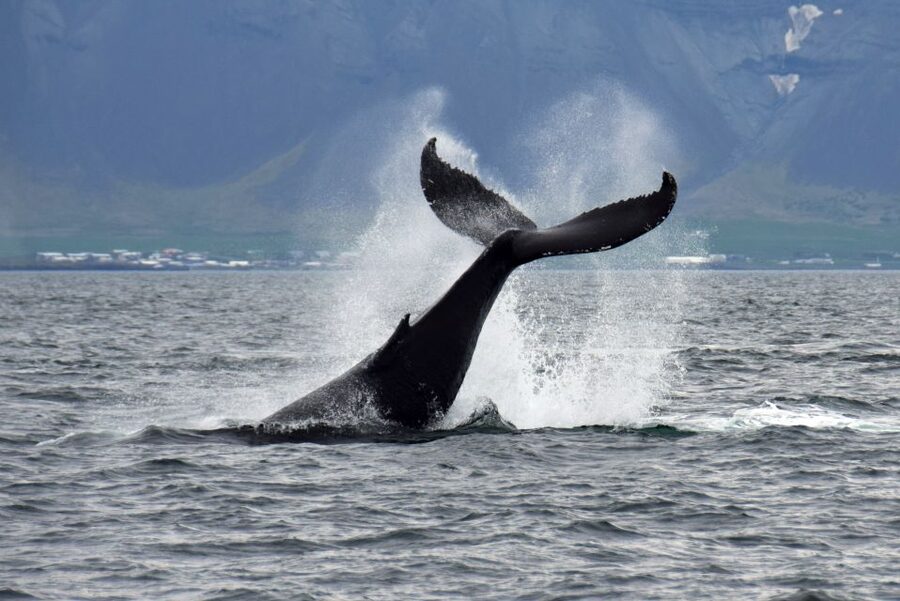
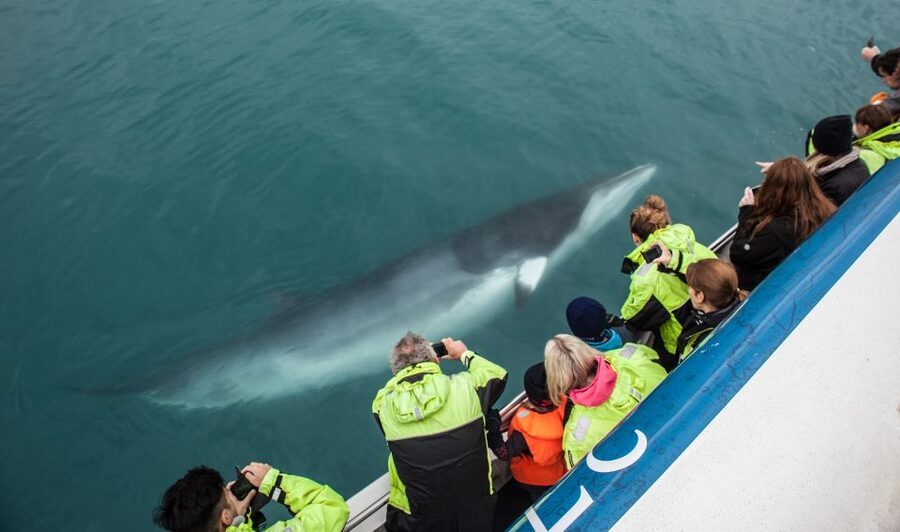
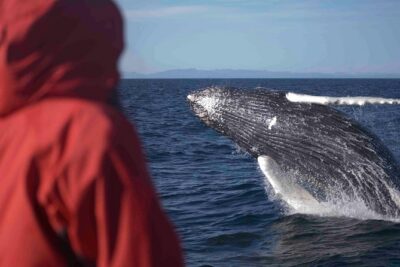
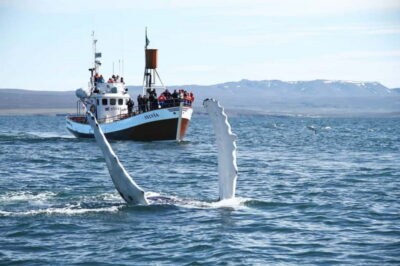
The most dramatic moments come without warning. Humpbacks may surface near the vessel, linger in shallow water, or show a back and tail before disappearing. One outing included a breach, while another group watched three humpbacks stay near the boat for a long period. These are special events, not promises built into the ticket.
Minke whales can be harder to follow because they surface quickly. Dolphins may be easier to notice when several animals move together, but they too can vanish in seconds. You will need patience and a willingness to keep scanning rather than stare at one fixed point.
A particularly memorable detail is the smell of a whale’s breath. It is not pleasant, but it makes the animal feel startlingly real. A photograph shows shape and scale. A close breath gives you a stronger sense that a living, powerful creature is right beside the boat.
The tour guides are central to the experience. Lucas received praise for both his explanations and his ability to keep the trip moving. Daniel was singled out for finding a humpback early, then continuing the search when the first animal stayed difficult to see. Oskar was praised for finding minke whales and keeping the mood light. Andrea was described as speaking almost continuously about whale behavior and facts.
Wind can make a guide difficult to hear outdoors. If you miss a detail, move closer when possible or ask the guide to repeat it. The English live tour is supported by audio guides in English, German, Icelandic, Chinese, Spanish, Portuguese, Japanese, French, Polish, and Finnish at the museum. German is also available as a second language on the Andrea from May 1 through September 30.
The Whales of Iceland Exhibition gives scale to the sea
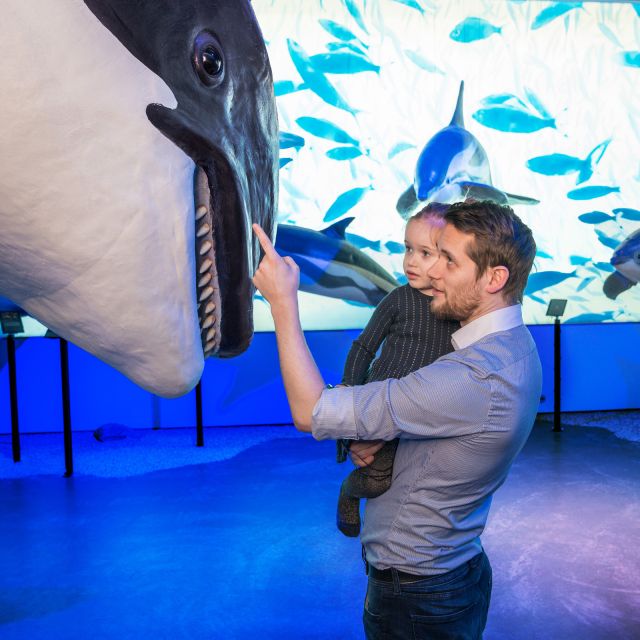
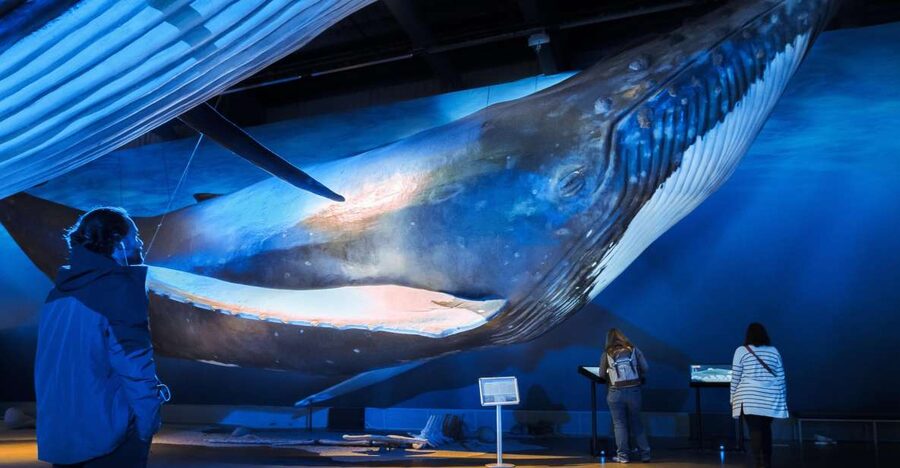
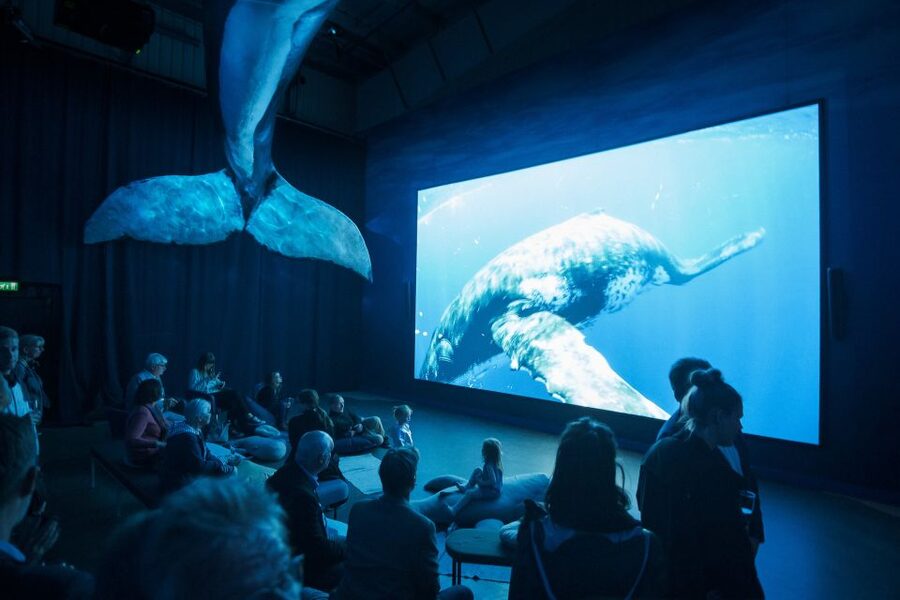
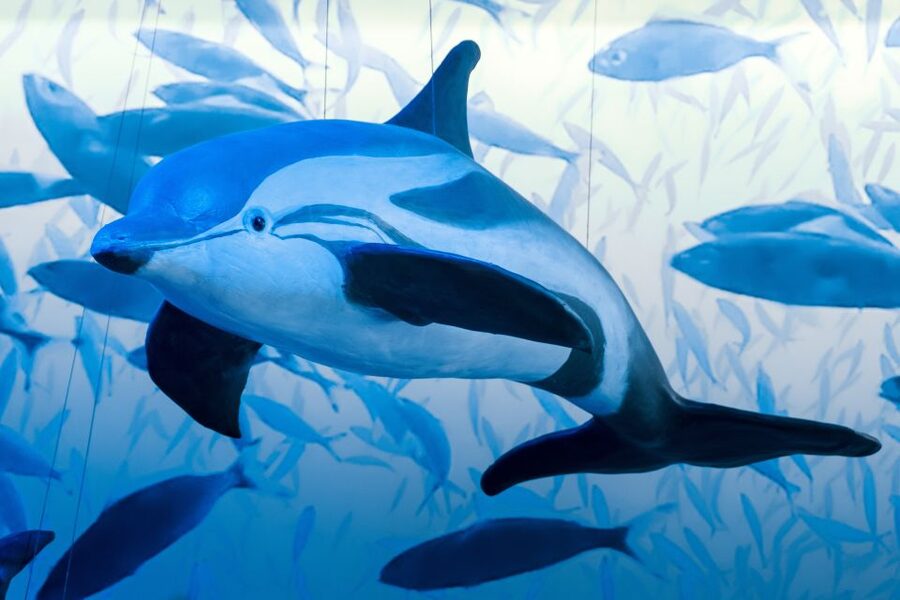
The museum at Fiskislod 23 is not a traditional collection of bones and dusty cases. Its main feature is a group of 23 life-size models representing the whale species found in Icelandic waters.
This is where the second half of the outing earns its place. At sea, you may see only part of a whale as it surfaces. In the exhibition, you can stand beside a full-sized model and understand how large these animals really are. A minke whale and a humpback no longer feel like abstract names from a guidebook.
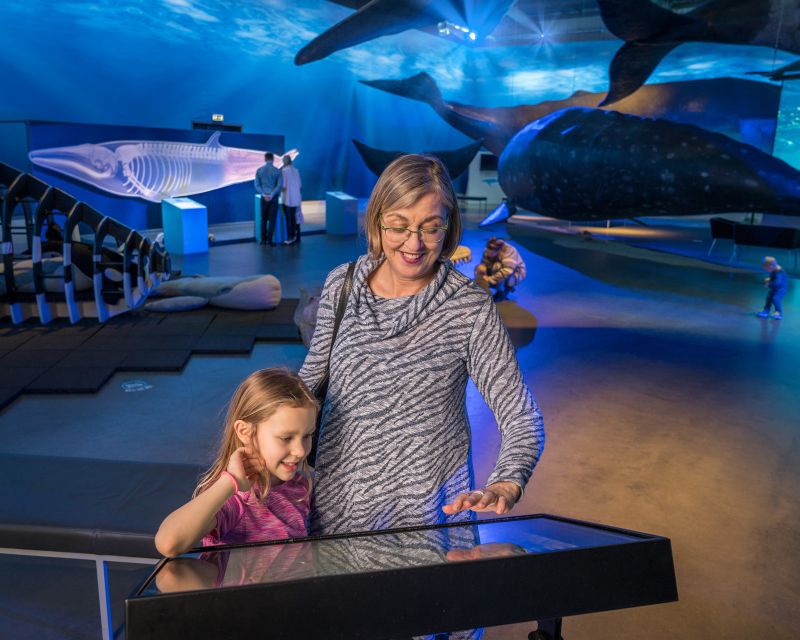
The exhibition also includes information stands, videos, audio guides, and virtual reality headsets. These tools give you several ways to learn, so you can move quickly through the displays or spend more time with the species that interested you most on the boat.
The models are the strongest part for many people, but the museum is not enormous. One person found it small and focused mainly on the whale models. That is not necessarily a problem, especially if you have just returned from the bay and want a clear visual reminder of what you saw.
Allow enough time to visit before closing. A past visitor arrived near closing and found that the audio guide was unavailable, while another person discovered the museum closed at 5 PM and could not return the next day. Check the museum’s opening hours against your plans, especially if you are visiting Reykjavik just before a flight.
The museum offers live-guided tours at 10:30 AM and 1:30 PM, free for ticket holders. These give you another way to understand the displays if the boat guide’s commentary was hard to hear in the wind.
Afterward, the café offers coffee and pastries. The setting is designed to feel calm and dreamlike, which makes it a pleasant place to warm up after the boat. Since refreshments are not included, plan to pay separately.
More museums in Reykjavik:
- Reykjavik: Perlan Museum Wonders of Iceland Entrance Ticket
★ 4.7 · 2,575 reviews - Reykjavík: Hop-On Hop-Off Bus and Perlan Museum Entry Ticket
★ 4.3 · 719 reviews - Reykjavik: Whales of Iceland Museum Entrance Ticket
★ 4.4 · 493 reviews - Reykjavík: National Museum of Iceland Entry Ticket
★ 4.4 · 432 reviews
Timing the two parts of the experience
You can choose the order of the boat trip and museum visit. That flexibility is useful because the best choice depends on your boat departure and museum hours.
If you want the live wildlife search first, visit the exhibition afterward. This lets you compare the animals you saw with the full-size models while the experience is still fresh. A minke whale that seemed like a quick flash on the bay becomes easier to picture when you can see its complete body indoors.
If weather or timing makes the museum more convenient first, that order works too. The models can help you recognize body shapes and size differences before you head out. Just allow enough time to reach the boat meeting point at the local partner’s office.
The advertised total duration is three and a half hours, though individual boat trips have taken around three hours. Arrive with enough time to check in, collect clothing, and find a viewing position without rushing. Families may want extra time because children’s overalls are available, but getting dressed on a cold dock can take longer than expected.
The experience is wheelchair accessible, though one family arrived early to make sure a disabled daughter could manage the gangplank and secure a seat. If you have mobility concerns, contact the operator in advance and arrive early. That gives the crew a chance to help you board comfortably.
Is $123 good value?
At $123 per person, this is not a cheap add-on, but it includes two separate attractions: the guided boat trip and the museum entrance. Thermal overalls, WiFi, parking, and a free return boat ticket if there are no sightings add practical value.
The no-sighting policy is especially useful outside the stronger April through September season. It does not make the first trip successful, but it reduces the sting of paying for a quiet day at sea. You still need time for a second attempt, so the ticket is most valuable if you have a flexible Reykjavik schedule.
The price makes the most sense if you want both the live search and the educational museum. If your only goal is to see a whale and you have very limited time, the museum may feel like an extra. If you enjoy wildlife, photography, marine science, or family activities, the combination is easier to justify.
The museum also helps on a day when sightings are limited. It cannot replace seeing a living animal in the bay, but it prevents the experience from ending with only a long boat ride and a cold walk back to town.
Free cancellation up to 24 hours before departure and the option to reserve now and pay later make the booking less rigid. Still, the key decision is your schedule, not just the refund policy. Leave room for weather changes and a possible return trip if wildlife stays hidden.
Who will enjoy this most?
I would recommend this outing to families, first-time whale watchers, and anyone who wants a clear introduction to Iceland’s marine life. Children get the excitement of scanning the water, the warmth of provided overalls, and large museum models that make the animals easy to understand.
It also suits visitors who prefer a guided experience. You do not need to know how to identify a minke whale or a white-beaked dolphin before boarding. The guides explain what you are seeing and help you learn how to search for animals yourself.
It may be less suitable if you dislike cold, wind, uncertain results, or several hours on open water. The museum adds value, but the main event still depends on nature. If your schedule is tight, make sure the boat and museum hours fit neatly into your day.
Photography is possible, and guides may take pictures that are uploaded for free access. That is helpful when the moment comes too quickly for you to frame it yourself. Bring a camera if you want, but do not spend the entire ride looking through a screen. The best sightings can happen on any side of the boat.
Should you book it?
Book this tour if you want a well-rounded Reykjavik wildlife outing rather than a boat ride alone. The strongest reasons are the patient guides, the chance to see several types of marine life, the warm overalls, and the museum’s 23 full-size models.
Book during April through September if you want the best general odds, but do not dismiss winter. Trips in December, February, and March have produced humpbacks, dolphins, porpoises, and close encounters. Just dress properly and accept that nature makes no appointment.
I would choose it for a family day, a first whale-watching trip, or a schedule with enough flexibility for a second attempt. I would skip it only if you cannot spare three and a half hours or would be deeply disappointed by a no-sighting trip, even with the return ticket.
FAQ
Where does the boat tour depart?
The boat tour begins at Reykjavik’s Old Harbor. You should meet at the local partner’s office for the tour.
Where is the Whales of Iceland Exhibition?
The exhibition is located at Fiskislod 23 in Reykjavik.
What whales and animals might I see?
Faxaflói Bay most commonly offers minke whales, white-beaked dolphins, harbor porpoises, and humpback whales. Seals and seabirds may also appear.
Is wildlife guaranteed?
No. Sightings cannot be guaranteed. If you see no wildlife during your tour, you receive a complimentary ticket to visit again.
When is the best time for whale watching?
April through September is generally the best period for whale watching in Iceland. Sightings may be less likely at other times of year.
What languages are available?
The live tour guide speaks English. Museum audio guides are available in English, German, Icelandic, Chinese, Spanish, Portuguese, Japanese, French, Polish, and Finnish. German is available as a second language on the Andrea from May 1 through September 30.
Added around Reykjavik recently
- Reykjavik: Whale and Puffin Watching RIB Boat Tour★ 4.6 · 179 reviews
- Reykjavik: Whale Watching & Lava Show★ 5.0 · 4 reviews
- Reykjavik: Whale & Marine Adventure Tour★ 4.3 · 71 reviews
- Reykjavik: Whale Watching Express★ 4.3 · 227 reviews
- From Reykjavík: Viking Horseback Tour in Hafnarfjörður★ 4.9 · 112 reviews
- Reykjavík: Horse Riding Tours★ 4.9 · 127 reviews
- Day Trip to Snæfellsness Peninsula from Reykjavik★ 5.0 · 7 reviews
- Private Luxury Transfer from Reykjavik to Blue Lagoon★ 5.0 · 1 review
Whale Watching, compared.

Whale Watching Cruise on the Amelia Rose Yacht
Read our review →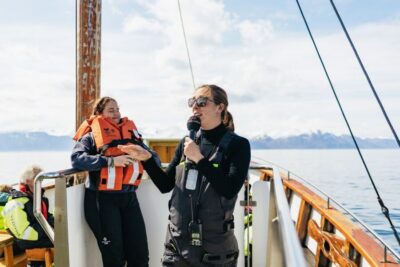
The Original Classic Whale Watching from Reykjavik
Read our review →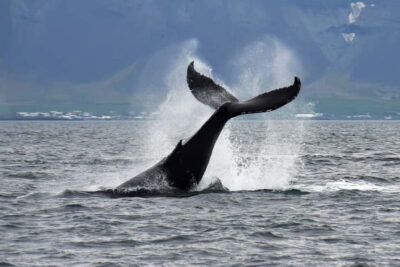
Traditional Whale Watching by Local Family Company
Read our review →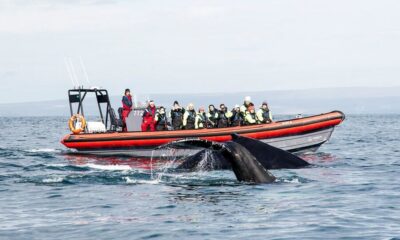
Browse the lists this tour appears in